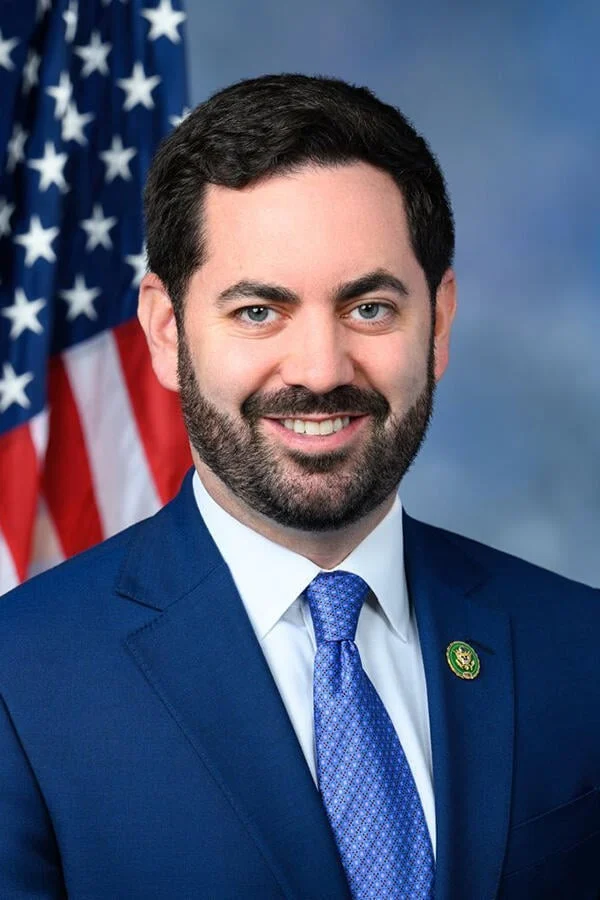
In a political climate defined by fiscal tightening and rigorous oversight of higher education, a bipartisan effort is gaining momentum in the House of Representatives to protect graduate students’ access to federal financial aid. Rep. Michael Lawler (R-N.Y.) has introduced the Professional Student Degree Act, a legislative maneuver designed to codify which graduate programs qualify for higher federal loan caps. This move comes as a direct response to a protracted struggle between the Trump administration’s Department of Education and the higher education sector over the definition of "professional degrees."
At the heart of the debate is the ability for graduate students to borrow up to $50,000 annually—the higher of two loan limits established under the Republican-led One Big Beautiful Bill Act of 2025. While the administration initially attempted to impose a narrow, restrictive definition that limited this access, a federal court intervention earlier this summer temporarily blocked those constraints, forcing the Department to broaden its scope. Now, Lawler aims to move beyond temporary relief by enshrining a more expansive list of 24 professional degree programs into federal law.
The Legislative Landscape: A Chronology of Conflict
The current tension traces its roots back to the passage of the One Big Beautiful Bill Act in July 2025, a sweeping legislative package that sought to fundamentally reshape higher education funding and accountability. As part of that effort, Congress established two tiers of federal loan caps for graduate students. However, the Department of Education’s subsequent interpretation of which programs qualified as "professional"—and thus eligible for the $50,000 cap—sparked immediate backlash from universities and professional associations.
By early 2026, the administration had limited the "professional" designation to just 11 specific programs. This triggered a wave of litigation from higher education institutions and professional advocacy groups who argued that the narrow list ignored critical workforce needs in sectors like nursing and occupational therapy.
In June 2026, a federal court sided with the plaintiffs, issuing an order that forced the Department of Education to revise its list. While the Department complied, the resulting list remained insufficient for many in Congress. Lawler’s Professional Student Degree Act (H.B. 6718) represents the legislative attempt to seize control of this definition, moving the power to designate professional status from the executive branch to the halls of Congress.
The Case for Expansion: Beyond Health Care
Lawler’s proposal is distinct in its breadth. While the administration’s list focused heavily on a limited subset of medical professions, the Professional Student Degree Act explicitly includes 24 programs, encompassing not only nursing, physician assistantship, and occupational therapy, but also social work, education, and architecture.
"It’s a bigger issue than just health care," Lawler explained in an interview with Inside Higher Ed. "When we evaluated this, we looked across the country at what were the most common degrees that require advanced degrees and certification. We came up with a pretty extensive list because we felt these are professions that are needed. These are professions where we’re having workforce shortages, and we don’t want to make it more expensive or difficult to obtain a graduate degree."
Lawler’s approach reflects a shift in Republican strategy toward higher education—one that prioritizes workforce development and the economic viability of degrees over a blunt, across-the-board reduction in federal student aid. By targeting programs that lead directly to careers with high social utility and acute labor shortages, Lawler is attempting to frame his bill as a pro-growth, pro-worker initiative.
Building Bipartisan Consensus
One of the most notable aspects of the Professional Student Degree Act is its bipartisan support. In an era of deep polarization, the bill has attracted 26 co-sponsors, split between 16 Republicans and 10 Democrats.
For Lawler, who represents one of the nation’s most competitive swing districts in New York, the bill serves as both a policy priority and a testament to his ability to navigate the fractured political landscape. He suggests that the bill’s best path forward is not as a standalone measure, but as an attachment to a "must-pass" legislative vehicle, such as the upcoming appropriations package.

"There’s been a real push, both in terms of the appropriations process to try and address this, but obviously to try and advance the bill as a stand-alone," Lawler said. "But realistically, the best vehicle will be one of the kind of must-pass bills, inclusive of appropriations, and to try to get that through before the end of the year."
Implications for Higher Education and Workforce Development
The broader debate surrounding this legislation touches on the fundamental role of higher education in American society. Critics of the current administration’s policies argue that by restricting access to loans, the government is effectively pricing students out of essential, service-oriented careers. Conversely, proponents of tighter loan caps argue that they are necessary to pressure institutions to rein in the skyrocketing costs of tuition and ensure that degrees offer a meaningful return on investment.
Lawler agrees that the status quo is unsustainable but advocates for a nuanced approach. "The cost of a four-year degree has gotten insane," he noted. "The second thing is the fact that a lot of these kids are coming out of college without a job. So, the workforce aspect of this is paramount."
His vision for the future of higher education is one of greater integration with the private sector and a stronger emphasis on vocational and professional readiness. He also expressed concerns about the ideological climate on college campuses, suggesting that federal oversight is necessary to ensure that institutions remain centers of free inquiry rather than "indoctrination."
"Higher ed obviously does tremendous work when it comes to research, medical research," Lawler observed. "There has always been a close working relationship between the government and higher ed on those issues, and that should continue. It’s necessary. But there also needs to be accountability."
Looking Ahead: The Accountability Challenge
As the House moves toward the end-of-year legislative session, the fate of the Professional Student Degree Act remains uncertain but influential. If successful, the bill would set a new precedent for how the federal government classifies graduate programs and manages the student loan pipeline.
Beyond the specific loan limits, the legislation signals a broader shift in the Republican platform regarding higher education. By focusing on workforce shortages and the specific economic outcomes of degree programs, Lawler and his supporters are attempting to reconcile the conservative impulse to reduce federal spending with the reality that certain professional degrees are essential to the nation’s economic and social infrastructure.
For students, the passage of this bill would provide immediate, tangible relief, ensuring that they can continue to finance their education in fields that are vital to the American economy. For universities, it represents a potential reprieve from the ongoing volatility of the current Department of Education’s regulatory agenda.
As the debate continues, one thing is clear: the dialogue between Washington and higher education is no longer just about costs and funding. It is a fundamental negotiation over what society expects from its universities and how the government should balance the need for fiscal discipline with the necessity of a highly skilled, well-trained workforce. For Rep. Lawler, the Professional Student Degree Act is not just about loan caps; it is about ensuring that the next generation of professionals has the tools and the opportunity to build the workforce of tomorrow.