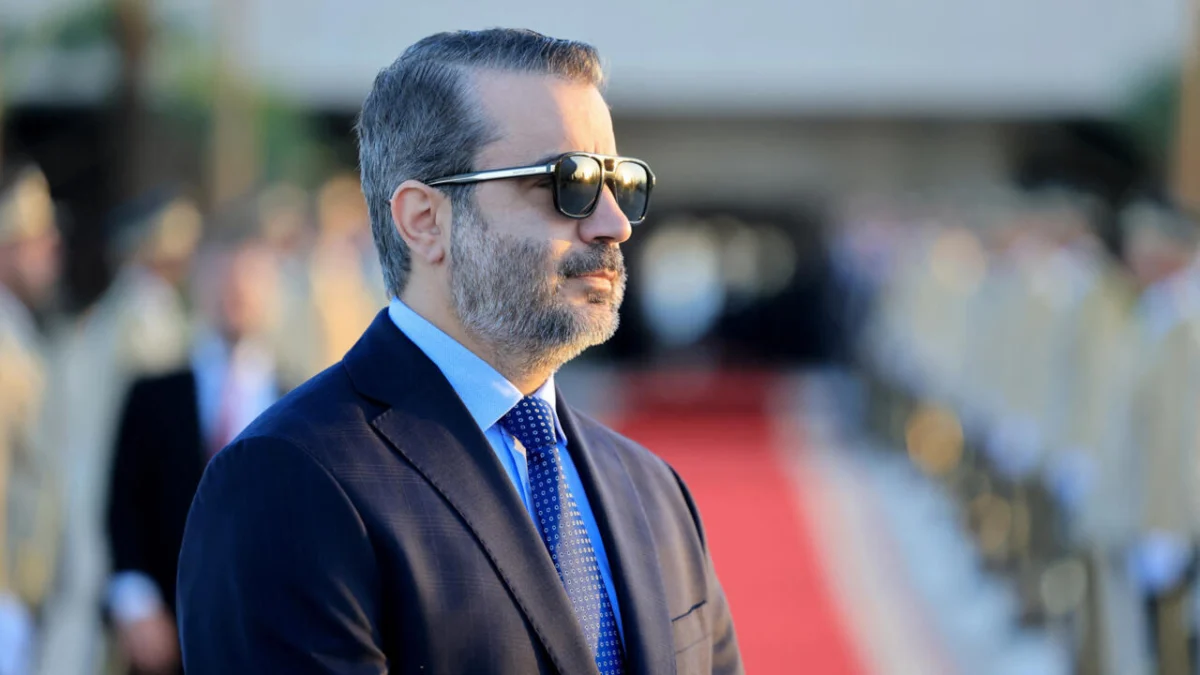
In the streets of Tripoli, Lebanon’s northern Sunni stronghold, the scene on July 2, 2026, was one of unbridled political fervor. As flares pierced the twilight and bonfires cast flickering shadows against the city’s ancient facades, thousands of supporters roared for a man who, just a few years prior, had been a shadowy figure operating within the militant ranks of the Syrian insurgency. Syrian Foreign Minister Asaad al-Shaibani, the de facto engine behind the country’s stunning geopolitical pivot, was hoisted onto the shoulders of a jubilant crowd as his motorcade struggled to reach the gates of Dar al-Fatwa, the highest Sunni religious institution in Lebanon.
This rockstar welcome was not merely a local curiosity; it was a testament to the seismic transformation of the Syrian state since the collapse of the Assad regime in December 2024. For a nation that spent decades under the icy grip of international isolation, Syria has emerged as a player in a new, high-stakes game of "smart pragmatism." At the heart of this metamorphosis stands Shaibani—a former jihadist turned polished diplomat—who has managed to steer Damascus from the fringes of global pariah status to the center of Middle Eastern power-brokering.
A Week of Diplomatic Dominance: The Chronology of Change
The first week of July 2026 served as a masterclass in the new Syrian diplomatic doctrine. Following his triumphant tour of Lebanon, Shaibani arrived in Doha to coordinate regional strategy with his Qatari counterpart. By mid-week, he was back at Damascus International Airport, welcoming French President Emmanuel Macron—the first major Western leader to visit the Syrian capital in the post-Assad era.
The culmination of this whirlwind schedule occurred in Turkey, on the sidelines of a NATO summit. There, Syrian President Ahmed al-Sharaa—the former militant leader who once went by the name "Abu Mohammed al-Jolani"—held a high-profile meeting with US President Donald Trump. The meeting bore immediate, tangible fruit: a formal letter from the American president initiating the removal of Syria from the US State Department’s list of state sponsors of terrorism. For the Syrian leadership, the message was clear: the era of isolation is over.
From Jihadist Tunnels to Diplomatic Salons
The journey of Asaad al-Shaibani is a biography of the Syrian civil war itself. Born in 1987 in the Hasaka province, Shaibani was a student of English literature at Damascus University when the 2011 uprising began. He soon joined the Nusra Front, where he crossed paths with the future president, Ahmed al-Sharaa.

During the grueling years of conflict, Shaibani—then operating under the nom de guerre "Zaid al-Attar"—demonstrated a rare talent for administration and political maneuvering. While his counterparts were focused solely on the battlefield, Shaibani was building the foundations of the "Salvation Government" in Idlib. He was the rare militant leader who maintained open channels with international NGOs and foreign institutions, effectively grooming himself for the international stage before the regime even fell.
Wassim Nasr, a FRANCE 24 specialist on jihadist movements who interviewed the pair in 2023, recalls Shaibani as a "thoughtful, secretive, and highly efficient" operative. "He was the architect of the diplomacy under Hayat Tahrir al-Sham (HTS)," Nasr explains. "Because he was never under international sanctions and had spent years interacting with the international community, he was perfectly positioned to transition into the foreign ministry when they seized power in Damascus."
Supporting Data: The Saudi-American Pivot
The rehabilitation of the Syrian state was not a spontaneous development. It was meticulously orchestrated, starting with Shaibani’s high-stakes visit to Riyadh on January 1, 2025. This move, which signaled the end of the post-2011 diplomatic freeze between Damascus and the Gulf, acted as the first domino.
By May 2025, the results were visible to the world. During a visit to Saudi Arabia, President Trump stunned global observers by announcing a shift in policy toward Syria, crediting Saudi Crown Prince Mohammed bin Salman (MBS) for brokering the reconciliation. The subsequent integration of Syria into the Western-aligned regional security framework has been driven by a shared desire to curtail Iranian influence, an objective that has forced both Washington and Damascus into a marriage of convenience.
Official Responses and the "Smart Pragmatism" Doctrine
The Syrian government’s shift has been described by analysts as "smart pragmatism." By presenting President Sharaa as a strong, stabilizing figure capable of maintaining order, the new administration has successfully reframed the Syrian narrative.

"They realized that Trump responds well to strongmen," notes Mohamad Bazzi, director of the Hagop Kevorkian Center for Near Eastern Studies at NYU. "Sharaa was presented as the man who was able to end the chaos of the Assad years. By using MBS as an intermediary, they successfully leveraged their way into a new relationship with the United States."
However, the Syrian government is careful not to overplay its hand. In his statements on X (formerly Twitter), Shaibani has been quick to frame these developments as a definitive break with the past. "We have closed a dark chapter in Syria’s history," he wrote, "by lifting the classification imposed in 1979 due to the policies of the defunct regime."
Geopolitical Implications: The Israeli Friction Point
Despite the diplomatic successes in Washington and Riyadh, the "new Syria" faces significant hurdles, most notably the stalled negotiations with Israel. While Damascus has expressed an eagerness for normalization, the reality on the ground remains volatile.
Since the collapse of the Assad regime in December 2024, Israel has maintained a consistent military presence in southern Syria, carving out buffer zones and expanding its influence. Despite multiple rounds of negotiations in Paris, Baku, and the UAE, little progress has been made. Analysts suggest that the Syrian outreach to Russia—evidenced by Shaibani’s 2025 visit to Moscow and subsequent meetings with Vladimir Putin—is a calculated attempt to find a counterweight to Israeli expansionism.
"The fear of Israel’s intervention does not mean the new leadership is prepared to fully restore Russia’s influence," explains Nikita Smagin of the Carnegie Russia Eurasia Center. "But Damascus is not currently strong enough to afford a complete break with Moscow. It is a precarious balancing act."

Managing the Lebanese Shadow
The most delicate aspect of Syria’s new foreign policy lies in Lebanon. As the US puts pressure on Damascus to disarm Hezbollah, the Syrian government has opted for a policy of careful distance. Damascus is acutely aware that involving itself in the internal security of Lebanon could drag Syria back into a civil war scenario, undoing the progress of the last eighteen months.
Shaibani’s recent visits to meet with diverse Lebanese figures—from the "untouchable" Shiite speaker Nabih Berri to the Druze leader Walid Jumblatt—illustrate a strategy of engagement without entanglement. By positioning himself as a regional interlocutor, Shaibani is attempting to ensure that Syria is seen as a source of stability rather than a exporter of conflict.
Conclusion: A New Chapter or a Temporary Truce?
The cheers of the crowd in Tripoli last week were the sound of a region desperate for stability. Whether the "new Syria" can sustain this trajectory depends largely on its ability to manage the competing interests of its neighbors and its fragile relationship with Washington. Asaad al-Shaibani, the former rebel who once avoided journalists to protect his secrets, is now the public face of this transformation. His success in navigating these treacherous waters will define not just the future of his country, but the geopolitical map of the Middle East for the next generation. As the world watches, Damascus is betting that the pragmatism of the past two years is only the beginning of a long-term return to the global stage.