By [Your Name/Journalist Name]
In 2020, Jeff Bezos, the founder of Amazon and one of the world’s most influential entrepreneurs, made a pledge that sent shockwaves through the philanthropic community. He committed $10 billion—what remains the largest individual philanthropic gift ever dedicated to climate and nature—to be fully disbursed by 2030 through the Bezos Earth Fund. It was a "moonshot" for the planet, intended to catalyze systemic change in the face of an accelerating environmental crisis.
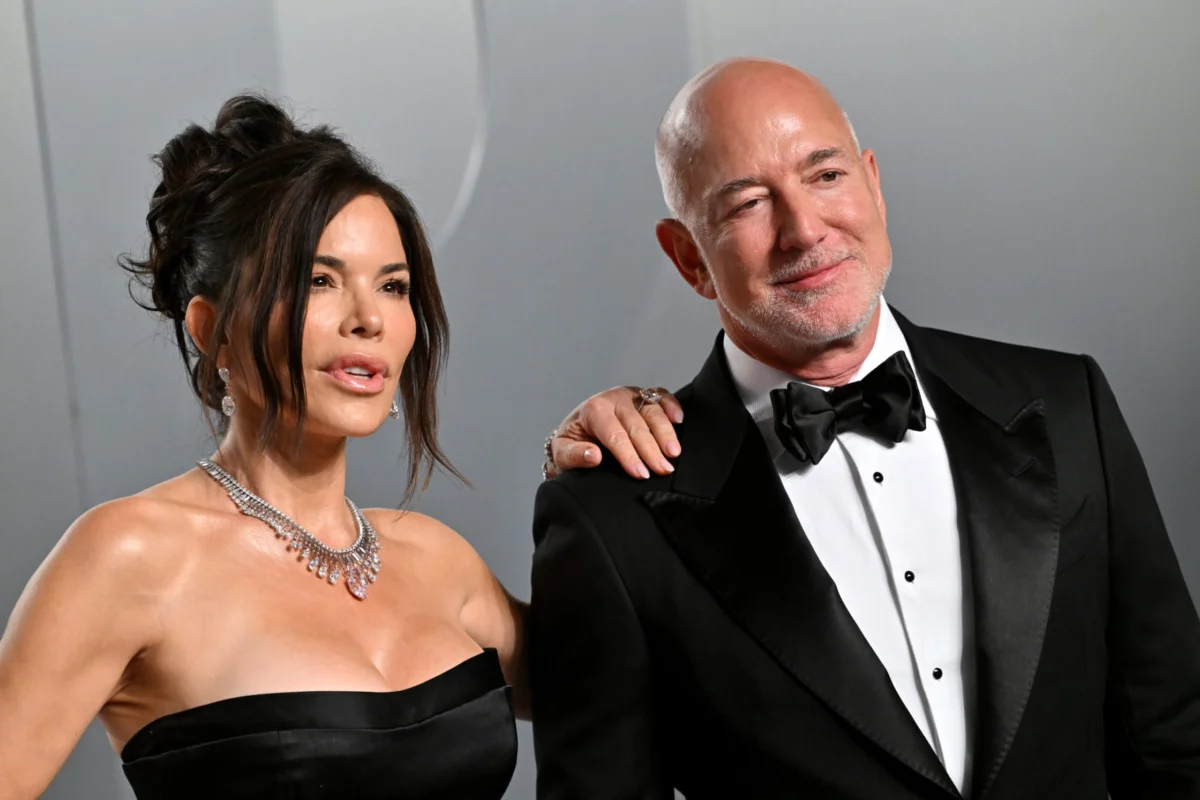
Now, five years into that ten-year mandate, the fund finds itself at a critical juncture. As of mid-2025, the Bezos Earth Fund has deployed approximately $2.4 billion of its total commitment. While a staggering sum by any standard, it leaves roughly $7.6 billion to be distributed before the decade ends. This urgency has sparked a visible shift in leadership, strategy, and public presence, with Lauren Sánchez Bezos—who married the billionaire in the summer of 2024—taking a central role in steering the fund’s ambitious agenda.
Main Facts: A Pivot Toward Operational Execution
The Bezos Earth Fund is no longer just a high-concept promise; it has become a sprawling operational machine. As Vice Chair, Lauren Sánchez Bezos has moved from a supportive role into the fund’s primary public face, setting a pace that combines high-tech innovation with traditional conservation.
The fund’s current status is defined by three primary pillars:
- The Disbursement Challenge: With 75% of the $10 billion still in the vault, the fund must significantly ramp up its annual grant-making to meet its 2030 "spend-down" goal.
- Leadership Realignment: In July 2025, the fund tapped Tom Taylor, the former head of Amazon’s Alexa division, as CEO. The move signals a transition from the diplomatic, policy-heavy leadership of former CEO Andrew Steer toward a focus on "Amazon-style" operational scaling and technological integration.
- The "Sánchez Era" Strategy: Sánchez Bezos has championed specific initiatives that reflect her personal interests and professional background, including the use of Artificial Intelligence (AI) for environmental solutions and a heavy focus on ocean conservation.
Chronology: Five Years of Growth and Transition
The trajectory of the Bezos Earth Fund reflects the evolution of Jeff Bezos’s own approach to legacy-building.
- 2020: The Announcement. Bezos launches the Earth Fund with a $10 billion commitment, focusing on scientists, NGOs, and activists.
- 2021-2022: Foundation Building. Andrew Steer, a veteran of the World Resources Institute, is hired as CEO. The fund begins making large-scale grants to established organizations like the World Wildlife Fund (WWF) and The Nature Conservancy.
- 2023-2024: Broadening the Scope. The fund expands into food systems, habitat restoration, and the "Courage & Civility" awards. Lauren Sánchez Bezos becomes increasingly involved in grant selection and public advocacy.
- 2025: The Acceleration.
- September: Sánchez Bezos announces $37.5 million for Pacific Island marine protection.
- October: The unveiling of a $30 million Phase II award for the AI Grand Challenge.
- December: A $102.5 million commitment to combat homelessness through the Day 1 Families Fund (a parallel Bezos philanthropic vehicle).
- Early 2026: The New Guard. The fund announces a $3.5 million grant to accelerate nuclear energy deployment, marking a shift toward "hard tech" solutions under the new leadership of Tom Taylor.
Supporting Data: Where the Billions are Going
The Bezos Earth Fund’s portfolio is remarkably diverse, reflecting a "portfolio theory" approach to philanthropy where funds are spread across high-risk innovation and proven conservation methods.
1. Conservation and Nature-Based Solutions
The fund has committed $1 billion specifically to transforming food and agriculture systems, recognizing that food production is a primary driver of deforestation and carbon emissions. Additionally, $100 million was awarded to the WWF for nature-based climate solutions, and $110 million was earmarked for habitat restoration and climate science monitoring.
2. The AI Grand Challenge
Under Sánchez Bezos’s guidance, the fund launched the "AI Grand Challenge for Climate and Nature," a program committing up to $100 million. In late 2025, $30 million was awarded to innovators using machine learning to reimagine food growth, wildlife protection, and grid optimization.
3. Oceans and Island Nations
The "Pacific-led ocean protection" initiative is one of the fund’s most ambitious. The $37.5 million grant announced in September 2025 is part of a larger $100 million commitment to support 12 Pacific Island nations. These funds are designed to help local governments create marine protected areas that are resilient to climate change.
4. Human-Centric Philanthropy (Day 1 Families Fund)
While separate from the Earth Fund, the Day 1 Families Fund remains a core part of the Bezos philanthropic orbit. With a $2 billion commitment, it has donated over $850 million to date. The December 2025 grant of $102.5 million targeted organizations across all 50 states, focusing on immediate needs for families experiencing homelessness.
Official Responses: The Philosophy of "Hard Work"
The leadership of the fund has been vocal about the difficulties of "giving well." Jeff Bezos has frequently compared the challenges of philanthropy to the early days of building his e-commerce empire.
"It’s not easy. Building Amazon was not easy," Bezos told CNN in a rare interview regarding his wealth. "It took a lot of hard work, a bunch of very smart teammates… and I’m finding that charity, philanthropy, is very similar." This "Day 1" mentality—a famous Amazon management philosophy—is now being applied to the Earth Fund.
Lauren Sánchez Bezos has echoed this sentiment, though her rhetoric often leans more toward the emotional and human impact of their giving. Speaking on the Pacific Island initiative, she stated: "The Pacific isn’t just a beautiful backdrop, it’s a lifeline. Pacific Island nations and territories are setting the pace. We’re here to match that ambition."
Regarding the fund’s move into AI, Sánchez Bezos emphasized the role of optimism and technology: "AI can be a powerful ally to help make the world a better place. These innovators are showing us new possibilities."
Implications: The Comparison and the Road to 2030
The Bezos Earth Fund does not exist in a vacuum. It is frequently compared to the philanthropic efforts of MacKenzie Scott, Jeff Bezos’s ex-wife. This comparison highlights two very different philosophies of wealth redistribution.
The Scott vs. Bezos Disparity
According to Forbes and Bloomberg data, the disparity in "giving pace" is stark:
- MacKenzie Scott: Has donated an estimated $26 billion over the last five years, representing well over half of her net worth. In 2025 alone, she donated $7.2 billion—more than Bezos’s estimated lifetime giving of $4.7 billion. Her "no-strings-attached" model focuses on trust-based philanthropy.
- Jeff Bezos: His lifetime giving of $4.7 billion represents less than 2% of his $266 billion net worth. However, Bezos argues that his "structured" approach—building organizations like the Earth Fund to solve specific technical problems—will have a more durable long-term impact than simply writing checks.
The 2030 Deadline
The hire of Tom Taylor as CEO is perhaps the most significant indicator of the fund’s future. By replacing a policy expert (Steer) with a product and engineering veteran (Taylor), Bezos is signaling that the next four years will be about results and deployment.
To meet the 2030 deadline, the fund must now disburse approximately $1.9 billion per year. This will require a massive scaling of internal operations. There are risks associated with such a rapid "spend-down," including the potential for "philanthropic indigestion," where recipient organizations are overwhelmed by more capital than they can effectively manage.
The Legacy of Lauren Sánchez Bezos
As the most visible figure in the couple’s philanthropic efforts, Sánchez Bezos is carving out a legacy that blends her personal history with global causes. Her $5 million grant to David Flink and the Neurodiversity Alliance, for instance, was rooted in her own childhood struggle with undiagnosed dyslexia. This suggests that as the Earth Fund moves toward its 2030 goal, the giving may become increasingly personal and narrative-driven.
Conclusion
The Bezos Earth Fund represents a grand experiment in whether the "Amazon way"—data-driven, technologically focused, and operationally intense—can solve the world’s most complex ecological problems. With $7.6 billion left to spend and five years on the clock, the world is watching to see if this record-breaking commitment will result in a measurable shift for the planet or remain a modest fraction of a historic fortune.
As Lauren Sánchez Bezos noted on Good Morning America regarding their multi-billion dollar commitments: "This is just the beginning… and we’re going to continue doing it." The next half-decade will determine if that "beginning" can meet the scale of the crisis it seeks to avert.