By Austin Nivison | October 10, 2026
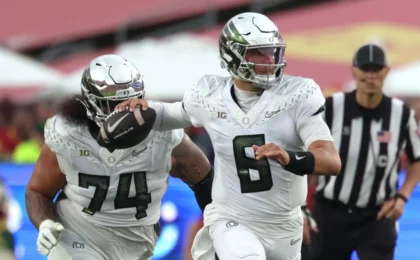
Less than two months ago, the Oregon Ducks stood at the precipice of a golden era. With one of the most expensive and talent-laden rosters in the history of the sport—reportedly valued at $40 million in NIL and operational investment—and the return of star quarterback Dante Moore, who famously bypassed a top-10 NFL Draft projection to chase a national title, the expectations in Eugene were singular: championship or bust.
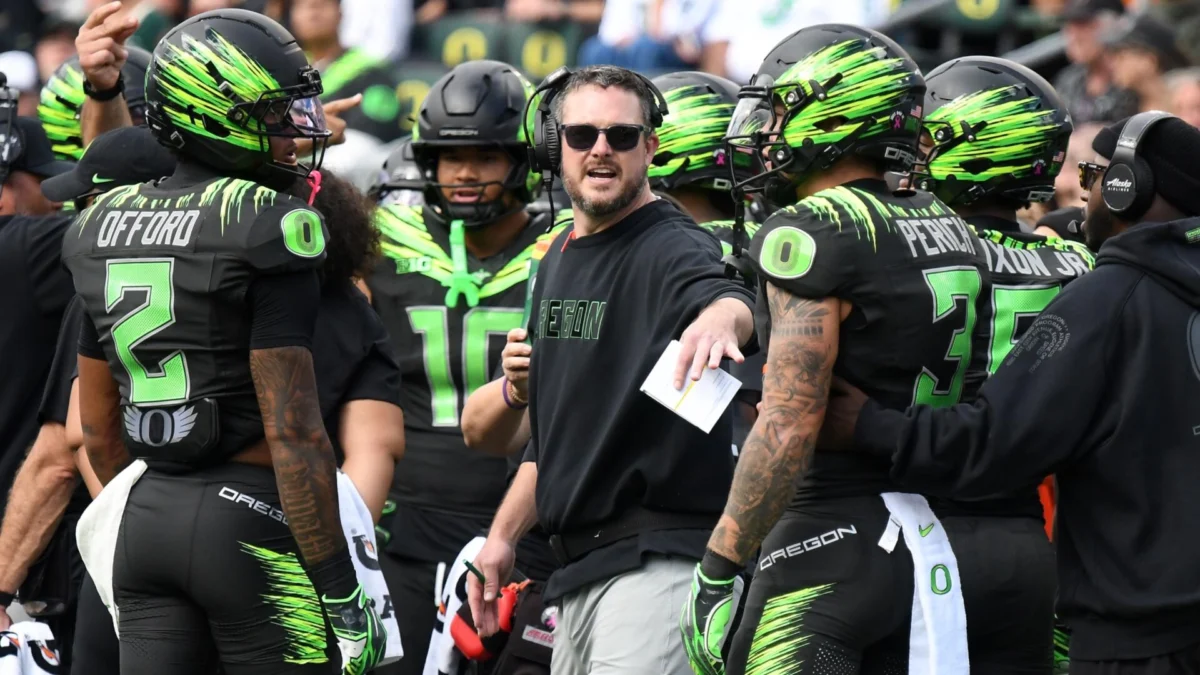
Today, those expectations have been replaced by a somber reality. Following a 17-15 collapse against No. 21 UCLA at Autzen Stadium, the Ducks find themselves at a crossroads. Sitting at 3-2 with their margin for error entirely evaporated, Oregon has firmly entrenched itself as the most disappointing team in the 2026 college football season.
The Chronology of a Collapse
The trajectory of Oregon’s season shifted dramatically in mid-September. After a gutsy road victory against USC in Week 4—a game where the Ducks survived the temporary loss of Dante Moore—there was a palpable sense that this team was battle-tested and prepared for a deep College Football Playoff run.
The coaching staff, led by Dan Lanning, utilized a well-timed open date to prepare backup quarterback Dylan Raiola. The narrative was perfect: the team had already proven it could win without its star, and now, with an extra week of preparation, the offense would be fine-tuned for a home showdown against UCLA.
Instead, what unfolded in Eugene was an offensive catastrophe. The game began with a sequence of errors that set the tone for the afternoon. Dylan Raiola, who had looked like a savior against the Trojans, regressed into a liability. He finished the day 6-of-19 for 43 yards with two interceptions before being mercifully pulled in the second half. The rushing attack, typically a point of pride, managed a meager 2.7 yards per carry. In total, the Ducks committed seven turnovers, a figure that almost guarantees a loss at any level of competitive football.
Despite the litany of errors, Oregon found itself with a glimmer of hope late in the fourth quarter. Following a facemask penalty on UCLA, the Ducks were positioned for a two-point conversion to force overtime. With the ball on the one-yard line, the vaunted Oregon offensive line—a unit touted as the best in the nation—was physically dominated at the point of attack. Jordon Davison was stuffed for no gain, sealing a defeat that felt inevitable given the team’s abysmal execution throughout the game.
Supporting Data: A Statistical Nightmare
The numbers behind Oregon’s 17-15 loss to the Bruins are difficult to reconcile with the caliber of talent on the field.
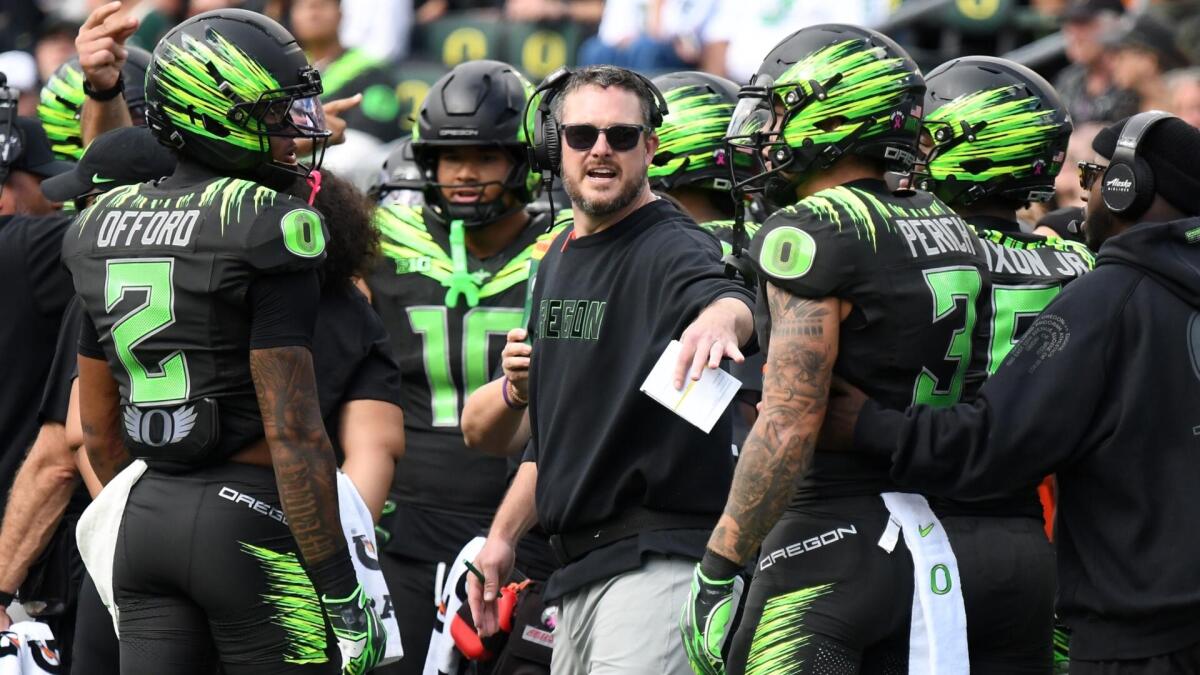
- Third-Down Inefficiency: The Ducks converted just one of 12 third-down attempts (8.3%). In modern college football, sustaining drives is the hallmark of a championship contender; Oregon’s inability to move the chains paralyzed their offense.
- The Turnover Margin: Seven turnovers are statistically anomalous for a team of this pedigree. Whether it was miscommunication, poor pocket awareness from Raiola, or sheer lack of focus, the lack of ball security reflects a deeper systemic issue within the team’s current preparation.
- Quarterback Regression: Dylan Raiola’s performance was the most startling indicator of the team’s fragility. Having completed 75% of his passes for 289 yards against USC, his 33% completion rate against UCLA suggests that the coaching staff’s confidence in their depth may have been misplaced.
- The Injury Context: While UCLA was also forced to play a backup, Ty Dieffenbach, due to an injury to starter Nico Iamaleava, they managed the game with far greater discipline. Oregon, conversely, looked disjointed and unprepared for the personnel shifts.
Official Responses and Internal Scrutiny
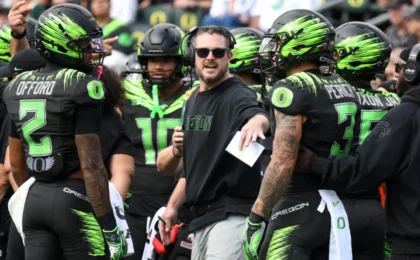
In the immediate aftermath of the loss, the atmosphere in Eugene was one of profound shock. Head coach Dan Lanning, usually known for his calculated confidence, faced intense scrutiny regarding the team’s readiness. When asked about the lack of offensive rhythm, Lanning noted, "We didn’t execute at a standard that is acceptable at Oregon. When you put the ball on the ground and struggle to convert on third down, you’re asking for a result like this. It’s on us to fix it."
The "quarterback controversy" that was briefly silenced by Raiola’s performance against USC has now reignited, albeit with a focus on depth. If Dante Moore is unable to return for the upcoming game against Nebraska, the staff faces a difficult decision: continue to rely on the struggling Raiola or turn to veteran backup Brock Thomas. The lack of a clear, reliable contingency plan has cast doubt on the team’s long-term planning for the 2026 season.
The Implications: Is the Season Salvageable?
With a 3-2 record and three weeks until Halloween, the Ducks are officially out of "mulligans." To reach the College Football Playoff, Oregon must essentially run the table, finishing 7-0. This would include a grueling road trip to Columbus to face Ohio State on November 7.
The Remaining Path
- Oct. 17: vs. Nebraska
- Oct. 24: at Illinois
- Oct. 31: vs. Northwestern
- Nov. 7: at Ohio State
- Nov. 14: vs. Michigan
- Nov. 20: vs. Michigan State
- Nov. 28: vs. Washington
The schedule is not impossible. Nebraska is coming off a deflating loss of its own, and the mid-November slate against Michigan and Michigan State offers the Ducks an opportunity to re-establish their identity against traditional powerhouses who have struggled offensively. However, the mental toll of this early-season collapse cannot be overstated.
For a team that built its brand on being "the next big thing," the psychological challenge of playing for pride rather than a guaranteed title path is new territory. If Dante Moore returns to the lineup and displays his usual elite form, the Ducks possess the raw talent to overwhelm most of the remaining teams on their schedule. Yet, talent alone has not been enough. The 2026 season has proven that without discipline, chemistry, and a secure handle on the football, even the most expensive roster in the nation is susceptible to failure.
The road to the College Football Playoff now runs directly through Columbus. For the Ducks to have any hope of salvaging their season, they must transform from a collection of high-priced individuals into a cohesive unit. The talent is there; the question is whether the spirit of this team can recover from the most humbling six-week stretch in recent program history.
As of today, the Ducks remain a cautionary tale for the new era of college football: money and stars are the foundation, but they are not the structure. Unless Dan Lanning can orchestrate a historic turnaround in the final seven games, the 2026 season will be remembered as the year that the Oregon Ducks’ championship dreams evaporated in the humidity of a mid-October afternoon.