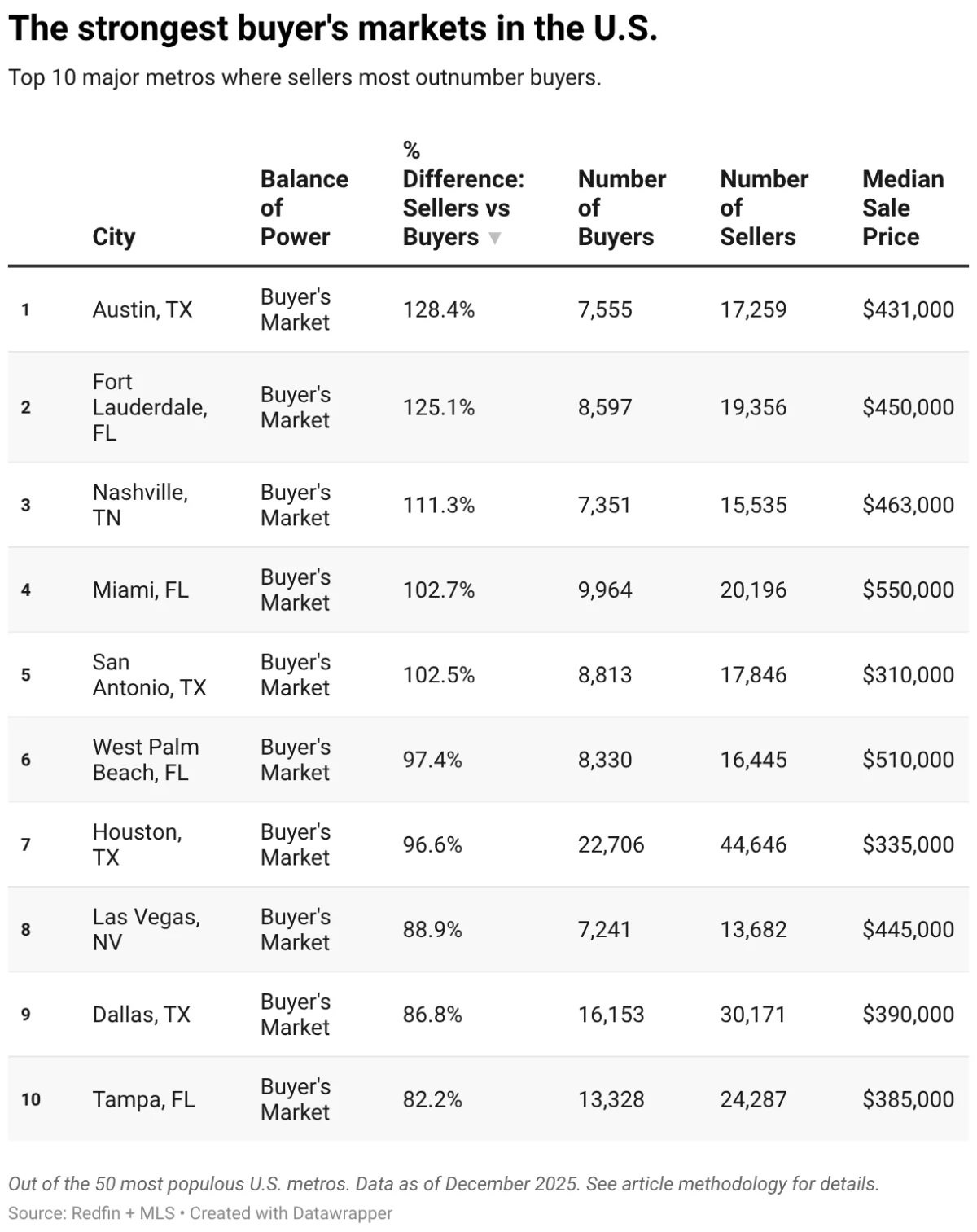
The American housing landscape has undergone a seismic shift. After years of frenzied bidding wars and inventory shortages that defined the pandemic-era real estate market, 2026 has emerged as a watershed moment for prospective homeowners. For the first time in recent history, the United States is officially experiencing one of the most robust buyer’s markets on record.
Data from the latest market analysis reveals that sellers now outnumber buyers by a staggering 48.5%. In absolute figures, the market is currently balancing approximately 1.49 million sellers against a pool of just 1.01 million active buyers. While the surge in interest rates and economic uncertainty has cooled the demand side, the resulting surplus of inventory has finally tipped the scales of power back into the hands of those looking to purchase.
The State of the Market: Main Facts
At the heart of the current real estate climate is a paradoxical reality: while the market is technically "buyer-friendly" in terms of supply, the broader national affordability crisis prevents a full-scale return to normalcy.
Most consumers remain on the sidelines, waiting for mortgage rates to stabilize or home prices to reach a more palatable entry point. Consequently, those who do have the capital to enter the market now possess significant leverage. They are no longer forced into the "blind" bidding wars of 2021; instead, they are finding themselves in a position to negotiate home prices, request repairs, and demand seller concessions—terms that were largely non-negotiable just a few years ago.
A Chronology of the Shift: From Pandemic Boom to 2026 Correction
To understand the current state of the market, one must look back at the trajectory of the last five years.
- 2021-2022 (The Pandemic Peak): The market was characterized by an extreme "seller’s market." Low interest rates and a sudden shift in lifestyle preferences sent buyers fleeing urban centers for the Sun Belt. Demand far outpaced supply, leading to rapid price appreciation and record-breaking sales speeds.
- 2023-2024 (The Cooling Phase): As inflation rose and the Federal Reserve began tightening monetary policy, mortgage rates climbed sharply. The affordability barrier began to rise, pricing out entry-level buyers and cooling the frantic pace of the previous years.
- 2025 (The Inventory Surge): A wave of new construction—particularly in states like Florida and Texas—began to hit the market. However, as interest rates remained elevated, many of these new units sat empty, causing inventory levels to reach record highs in several regions.
- 2026 (The Buyer’s Rebirth): The cumulative effect of high rates, slowing price growth, and ballooning inventory has officially flipped the script. The "seller’s market" has largely dissolved, replaced by a selective, buyer-driven environment.
Supporting Data: Regional Divergence
While the national trend heavily favors buyers, the real estate market is rarely monolithic. The current data highlights a clear geographic divide:
The Sun Belt: Ground Zero for the Buyer’s Advantage
The Southeast and Southwest have transitioned from the hottest markets in the country to the most buyer-friendly. Miami, Florida, currently leads the nation in buyer leverage. Austin, Texas, follows closely, serving as the primary example of the "cooldown" effect that has swept across former pandemic boomtowns.
In these regions, the surplus of supply is the primary driver. During the pandemic, developers rushed to break ground to meet astronomical demand. Today, those same markets are grappling with high inventory levels, exacerbated by rising insurance costs and growing concerns over climate risks.
The Midwest and Northeast: The Last Bastion for Sellers
Conversely, a small number of metros—only seven nationwide—remain firm seller’s markets. These regions are primarily located in the Midwest and Northeast. Here, population growth and new housing starts have consistently lagged, creating a persistent supply deficit.
Interestingly, San Francisco has emerged as an outlier in this group. Despite the broader national cooling, the city has experienced a surge in demand driven largely by the massive influx of AI-related wealth, keeping the market competitive and favoring sellers.
Official Perspectives and Expert Analysis
Market analysts emphasize that "buyer’s market" does not necessarily mean "cheap." The cost of construction remains at an all-time high, and the nation’s aging housing stock requires significant investment to maintain.
"We are seeing a market correction, not a market collapse," says one industry economist. "The pendulum has swung because buyers have finally hit a wall regarding affordability. Sellers who are unwilling to acknowledge the new reality—that they cannot dictate terms as they did in 2021—are finding their properties sitting on the market for significantly longer."
The consensus among analysts is that the era of "easy gains" for sellers has concluded. With inflation, ongoing geopolitical tensions—such as the conflict in the Middle East—and fluctuating tariffs affecting material costs, the market is expected to remain volatile. However, there is a silver lining: in 39 of the top 50 U.S. metros, home prices have begun to tick downward, offering a long-awaited reprieve for prospective homeowners.
Implications for the Future
The current landscape has profound implications for both sides of the transaction:
For Buyers: Strategic Patience is Key
The primary advice for buyers is to leverage the current environment. Because competition is lower, buyers have the time to conduct thorough inspections and negotiate terms. However, experts warn against waiting for the "bottom" of the market, as homeownership remains a long-term play. The key is to secure a property that fits one’s budget and lifestyle, rather than trying to time the market perfectly.
For Sellers: The End of "As-Is" Pricing
Sellers must adjust their expectations. The days of listing a home "as-is" and receiving multiple offers above asking price are effectively over. To succeed in the 2026 market, sellers must prioritize home presentation, be realistic about pricing, and be prepared to offer incentives to attract a dwindling pool of buyers.
Navigating the Shift: A Toolkit for Participants
How can an individual determine which market they are in? Research is paramount.
- Utilize Data Portals: The Redfin Data Center and similar resources provide monthly updates on buyer-seller dynamics. These tools offer a high-level view of whether your metro area leans toward buyers or sellers.
- Analyze "Months of Supply": This is perhaps the most reliable metric. A supply of under four months typically favors sellers, while five to six months or more signals a buyer’s market.
- Consult Local Experts: A local real estate agent provides the ground-level intelligence that broad statistics miss. They can identify if specific neighborhoods are bucking the national trend due to school districts, transit improvements, or localized economic shifts.
- Monitor Mortgage Rates: As rates fluctuate, so does buyer sentiment. A dip in rates can trigger a sudden increase in demand, effectively tightening a buyer’s market overnight.
Conclusion
The 2026 housing market is defined by a necessary correction. After years of imbalance, the scales are returning to a more sustainable, albeit challenging, equilibrium. For buyers, this represents a rare window of opportunity to regain a seat at the table. For sellers, it is a call to adapt to a new, more discerning reality. As we move forward, the combination of slowing price growth and increased inventory suggests that the housing market is moving toward a more stable, predictable future—even if that future is currently shrouded in economic uncertainty.