Main Facts: A New Era of Monetary Policy
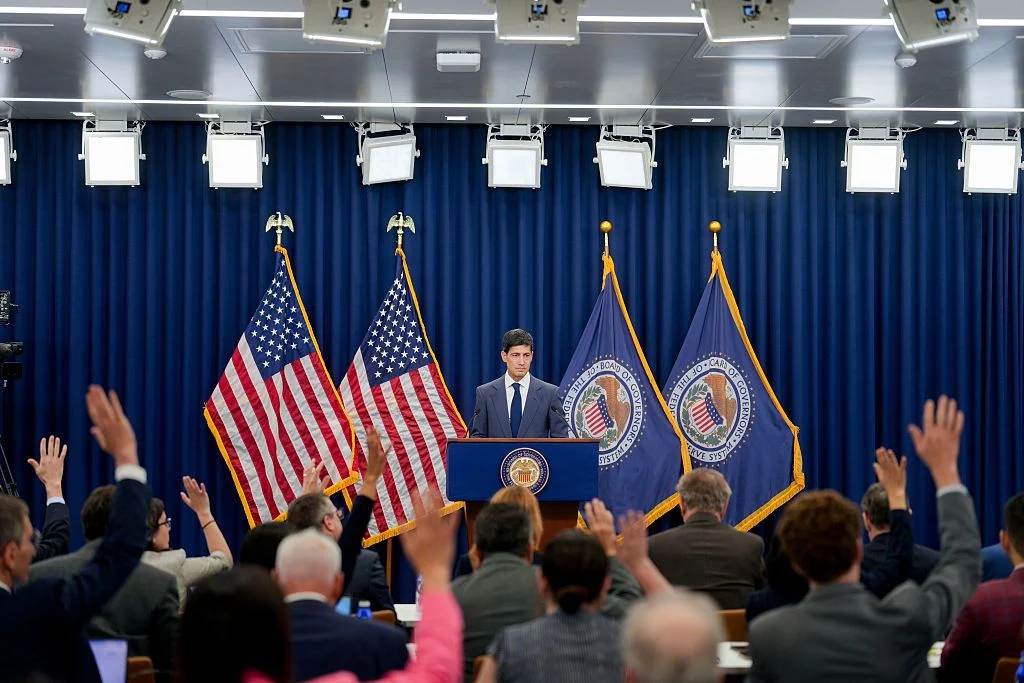
The financial markets experienced a day of palpable tension this Wednesday, as investors grappled with a shift in the leadership and communicative style of the Federal Reserve. Midday trading saw equity indexes oscillating in a sideways pattern, reflecting the market’s collective anxiety while awaiting the first official policy communication from the new Federal Reserve Chair, Kevin Warsh.
The transition marks a departure from the tenure of Jerome Powell. If the initial market reaction is any indicator, the "Warsh Fed" intends to be far more disciplined and concise than its predecessor. In a striking demonstration of this new mandate for brevity, the Federal Open Market Committee (FOMC) released a 132-word statement—a stark contrast to the 344-word statement issued during the April meeting, the final session under Powell’s leadership.
The core policy decision was unanimous, with a 12-0 vote to maintain the federal funds rate in the target range of 3.50% to 3.75%. The committee explicitly noted that this decision was made "in support of the Federal Reserve’s dual mandate" and reaffirmed its ongoing commitment to maintaining ample reserves within the banking system to ensure market stability.
Chronology of the Policy Shift
The transition to the Warsh era is not merely a change in personnel; it is a shift in institutional philosophy.
April 2026 (The Powell Finale): The final FOMC meeting under the outgoing Chair was characterized by a historically split decision and a lengthy, detailed communique that provided significant room for interpretation by Wall Street analysts.
June 2026 (The Warsh Debut): In contrast, today’s meeting resulted in a unified front. The brevity of the statement—a mere 132 words—signals a desire to minimize "noise" and reduce the risk of market misinterpretation. By keeping the communication terse, the committee aims to prevent the type of over-analysis that often leads to short-term volatility.
The Immediate Aftermath: Despite the unanimous decision to hold rates steady, the markets reacted with a sharp decline by the closing bell. The Dow Jones Industrial Average dropped 1%, settling at 51,493, even after touching a new intraday all-time high earlier in the session. The S&P 500 followed suit with a 1.2% decline to 7,420, while the technology-heavy Nasdaq Composite retreated 1.3% to 26,021.
Supporting Data and Economic Indicators
While the FOMC acknowledged solid economic growth, the committee did not shy away from the headwinds currently facing the global economy. The statement highlighted that strength in capital investment and productivity remains a bright spot. Furthermore, the labor market remains resilient, with job growth keeping pace with the expansion of the labor force, keeping the unemployment rate stable.
However, the shadow of global instability looms large. The committee specifically cited "elevated uncertainty" stemming from the ongoing conflict in the Middle East as a primary risk factor. This geopolitical tension was further evidenced by the energy markets; the front-month West Texas Intermediate (WTI) crude oil futures contract rose 0.3% to $75.49 per barrel, fueled by concerns regarding a memorandum of understanding between the U.S. and Iran that could impact transit through the Strait of Hormuz.
Inflation, meanwhile, remains the primary antagonist. The Fed acknowledged that price levels continue to hover above the 2% target, driven by supply-side shocks and energy costs. The committee’s concluding remarks were notably direct: "The Committee will deliver price stability."
Interest rate markets are also signaling a potential shift. The 2-year Treasury yield, which serves as a sensitive barometer for short-term monetary policy, climbed to 4.216% from Tuesday’s close of 4.047%. Data from the CME FedWatch tool suggests that the market is already pricing in the possibility of a rate hike as early as October, suggesting that investors believe the "Warsh Fed" may take a more hawkish stance if inflation proves sticky.
Corporate Spotlight: The Semiconductor Rally and Defensive Shifts
Amid the broader market decline, individual sectors showed significant divergence.
Broadcom’s Aggressive Rally
Broadcom (AVGO) served as a major catalyst for the semiconductor sector, climbing 4.3% on the day. This surge followed a bullish note from Morgan Stanley analysts Harlan Sur and Mayur Ramdhani, who reiterated an "Overweight" rating and categorized the stock as an "aggressive buy."
The analysts set a 12-month price target of $580, representing a 47.6% upside from Wednesday’s close. The bullish case rests on Broadcom’s "significant dominance" in advanced chip packaging and design, particularly in its decade-long partnership with Alphabet (GOOGL). While some market participants have expressed skepticism regarding the long-term nature of this relationship—given Google’s internal chipmaking ambitions—the analysts remain confident in the technological moat surrounding Broadcom’s offerings.
Defensive Struggles: Verizon vs. The Space Race
In the telecommunications sector, Verizon (VZ) fell 1.8% as it struggles to maintain its position as a "defensive" stock. The company faces increasing competitive pressure from "low Earth orbit" (LEO) service providers, most notably SpaceX (SPCX).
UBS analyst John Hodulik has been vocal about the existential threat LEO providers pose to terrestrial carriers like Verizon and AT&T. While management at these legacy firms has attempted to pivot by partnering with AST SpaceMobile (ASTS), investors are clearly wary of the technological disruption represented by SpaceX. Adding to the volatility, SpaceX (SPCX) saw its first decline since its historic IPO earlier this week, shedding 5.0% in today’s session.
Verizon is attempting to counter these pressures with new loyalty programs and service plans, which management expects will be "accretive to revenue and EBITDA growth." However, until these initiatives demonstrate tangible results in reducing customer churn, investors remain cautious.
Implications: What Lies Ahead?
The market’s negative reaction to the FOMC’s decision suggests a growing realization that the era of "easy money" communication is over. By moving toward a more guarded and terse style, Kevin Warsh is attempting to restore the Fed’s role as a steady, predictable anchor. However, in the short term, this transition is creating friction.
1. The "Inflation First" Mindset
The committee’s explicit focus on price stability suggests that the Fed is willing to endure market volatility if it means curbing inflation. The market’s anticipation of a potential October hike underscores a lack of confidence that the current 3.50%–3.75% range will be sufficient to bring inflation back to the 2% target.
2. The Geopolitical Premium
Investors must now factor in a "geopolitical premium" into their portfolios. The direct mention of the Middle East conflict in the FOMC statement highlights how global supply chain disruptions have become a permanent fixture in domestic monetary policy considerations.
3. Sector Rotation
The disparity between the performance of tech-oriented stocks like Broadcom and defensive stalwarts like Verizon indicates a market in transition. Investors are looking for companies that offer genuine growth potential through innovation, even if those companies are susceptible to macroeconomic shifts. The struggle of traditional telecommunications firms to fend off LEO-based challengers like SpaceX is a microcosm of the wider disruption occurring across all industrial sectors.
4. The Future of Communications
The "344 words vs. 132 words" comparison is not merely a curiosity; it is a signal. Investors who rely on "Fed speak" to read between the lines may find themselves frustrated by the Warsh Fed. The new leadership appears committed to a policy of "less is more," forcing the market to focus on hard data rather than the nuance of Federal Reserve prose.
As the trading week continues, all eyes will remain on the upcoming economic data releases to see if they align with the committee’s expectation of "solid growth." For now, the takeaway is clear: The Federal Reserve has shifted its tone, and the markets are still learning how to translate this new, more stoic language. Investors should prepare for a period of heightened sensitivity, where every data point, from job growth to energy prices, will be scrutinized under the lens of the Fed’s singular goal: the restoration of price stability.