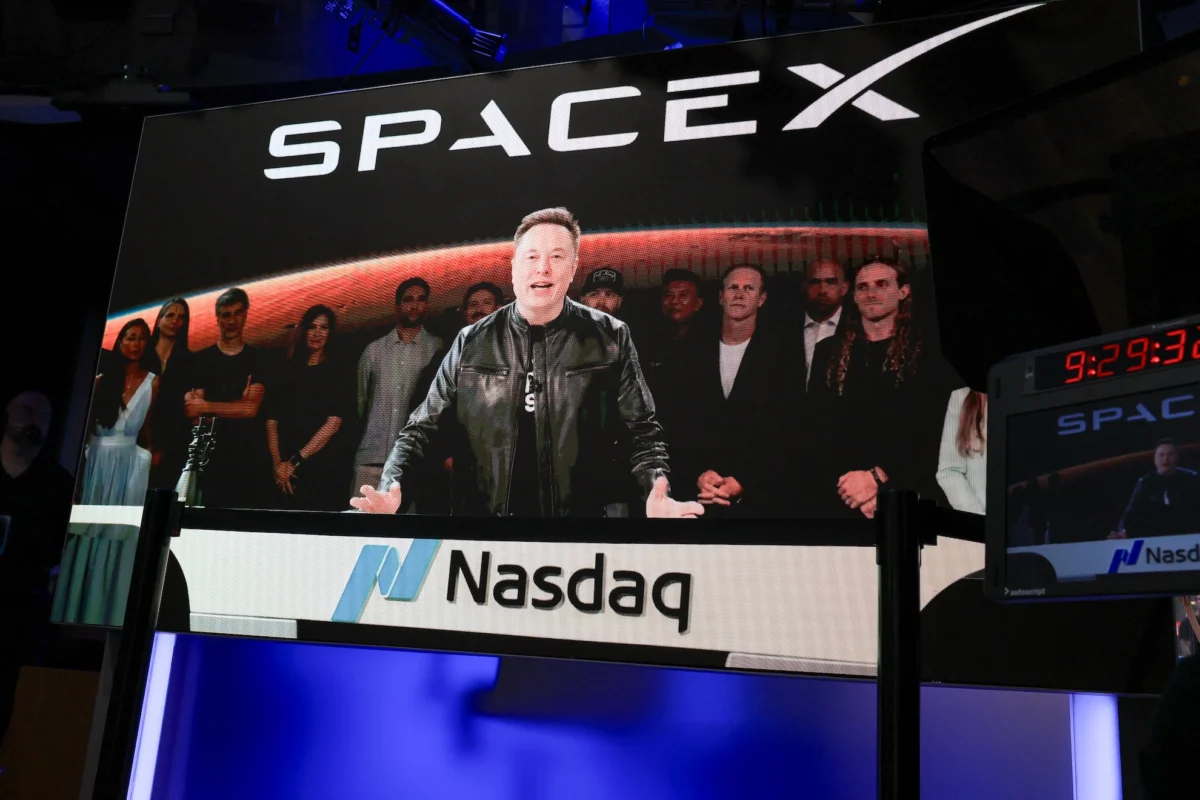
Just over a month after a historic initial public offering that raised $86 billion and briefly vaulted SpaceX into the valuation stratosphere alongside tech titans like Amazon and Microsoft, the aerospace giant is facing a turbulent reality. On Wednesday, shares of SpaceX dipped below the $135 threshold set by CEO Elon Musk and his underwriters, sliding to a low of $133 before fighting to reclaim the IPO price. This slide is not merely a technical fluctuation; it represents a fundamental recalibration of investor sentiment regarding one of the most ambitious companies in human history.
The Chronology of a High-Stakes Debut
The narrative of SpaceX’s public life has been one of extreme volatility. When the company hit the Nasdaq on June 12, the fervor was palpable. Enthusiastic investors pushed the stock price to upwards of $200 in the immediate aftermath of the listing, a valuation that suggested the market had bought into every promise Musk had made about interplanetary colonization, global satellite internet, and the future of human transportation.
However, the days that followed told a different story. Since reaching that early peak, the stock has experienced a steady, relentless decline. Week after week, the share price has bled value, signaling that the initial “pop” was driven more by speculative mania than by a sober assessment of the company’s long-term operational risks. By mid-July, the stock had surrendered all of its post-IPO gains, settling back toward—and eventually beneath—the $135 mark.
This descent mirrors a broader, cooling trend across the tech sector. As macroeconomic headwinds increase and interest rates remain a concern for growth-oriented assets, investors are moving away from speculative narratives and toward tangible balance sheets. SpaceX, despite its technological prowess, is now subject to the same scrutiny that dictates the fate of every other publicly traded entity.
Understanding the Volatility: The "Small Float" Dilemma
Market analysts point to a structural peculiarity as a primary catalyst for the stock’s wild swings: the "float." SpaceX chose to list only 4% of its total shares on the Nasdaq. In financial terms, a float that small means that a relatively low volume of trading can result in outsized price movements.
With so few shares available to the public, supply and demand are easily skewed by retail sentiment and algorithmic trading. When combined with the relentless media attention surrounding Elon Musk, this thin float has created a feedback loop of volatility. For the average investor, this makes SpaceX stock a high-risk vehicle, where the lack of market depth can turn minor news—or even rumors—into major price shifts. This phenomenon is often seen in companies with highly concentrated ownership, where the majority of shares remain locked in the hands of insiders and early institutional backers.
The "Sobering Up" of the Markets
Beyond the technicalities of the float, there is a clear shift in how the market views Musk’s “otherworldly” promises. For years, SpaceX operated with the luxury of being a private entity, where it could pursue long-term R&D without the pressure of quarterly earnings calls or stock-price-driven performance reviews. Now, that era is over.
The decline is not limited to the equity market. Bonds issued by the company in the wake of the IPO are also experiencing weakness. When both the equity and debt markets of a company move in tandem toward the downside, it is a bellwether for investor anxiety. The market is beginning to question whether the astronomical valuation assigned to SpaceX at its IPO is truly sustainable given the capital-intensive nature of its core business. Launching rockets is not just technically difficult; it is an incredibly expensive endeavor that requires constant, reliable cash flow.
Implications for the Tech IPO Pipeline
The performance of SpaceX is being treated as a canary in the coal mine for the wider tech industry. The company’s IPO served as the marquee event of the year, essentially clearing the path for other high-profile tech firms—most notably Anthropic and OpenAI—to consider their own public debuts. Both companies have reportedly filed confidentially for IPOs, watching the SpaceX saga with intense interest.
If SpaceX continues to struggle, it could dampen the enthusiasm of institutional investors for the next wave of "visionary" tech IPOs. Should the market decide that the "Musk premium"—the extra value assigned to his companies due to his personality and track record—is no longer enough to justify high valuations, then firms like OpenAI may face a much tougher environment when they eventually go public. The success of future tech offerings is now inextricably linked to whether SpaceX can prove that its business model can generate consistent, defensible value for shareholders.
The Starship Litmus Test: The "Fly, Fail, Fix" Philosophy
As the stock hovers at this critical juncture, SpaceX faces an immediate and high-profile test: the upcoming test launch of its Starship rocket. Scheduled for Thursday, this flight represents the first time the massive vehicle will take to the skies since the IPO, and it carries the weight of the company’s technological reputation.
SpaceX has long championed a development philosophy known as "fly, fail, fix." This iterative approach accepts that failures are not just likely, but necessary, to push the boundaries of aerospace engineering. However, what works for a private company’s internal development cycles can be a nightmare for a public company’s stock price.
The upcoming mission is particularly delicate. It follows a booster failure in May, and the company has already confirmed that it does not intend to attempt a recovery of the booster or the upper stage. Instead, both components are programmed to perform a simulated landing in the Gulf of Mexico, which effectively guarantees their destruction. While this is a standard operational procedure for a test flight to gather data, the optics of an "intentional explosion" of hardware could be misinterpreted by the broader, less-technical investment community.
For the shareholders, the flight is a binary event. A successful mission that demonstrates progress toward the vehicle’s final, operational form could provide the catalyst needed to stabilize the stock. A spectacular failure, however, could exacerbate the current downward trend, leading investors to question the timeline for when Starship will become a revenue-generating asset rather than a money-burning experiment.
The Road Ahead: Operational Reality vs. Future Vision
The conflict at the heart of the current situation is between the long-term vision of colonizing Mars and the short-term requirements of public market participants. Musk’s vision is measured in decades and requires a massive, sustained influx of capital. Public markets, however, are measured in quarters and prioritize profitability and risk mitigation.
SpaceX is essentially attempting to bridge two worlds. It must continue to innovate at a breakneck pace—which requires the "fly, fail, fix" approach—while simultaneously providing the financial stability and transparency that public market investors demand.
As the company approaches its next launch, the pressure is mounting. The dip below $135 is a warning shot from the market. Whether SpaceX can use the success of its Starship program to silence the skeptics and regain its valuation remains to be seen. But one thing is certain: the era of blind faith in the "Musk effect" has passed. Investors are now demanding proof that the rocket fuel powering the company’s vision is backed by the solid bedrock of financial reality.
For the foreseeable future, every launch, every earnings report, and every tweet from the CEO will be scrutinized through the lens of a stock price that has finally learned how to experience gravity. The journey from a private pioneer to a public utility is rarely smooth, and for SpaceX, the most difficult part of the ascent may be yet to come.