By JURIST Legal Correspondent
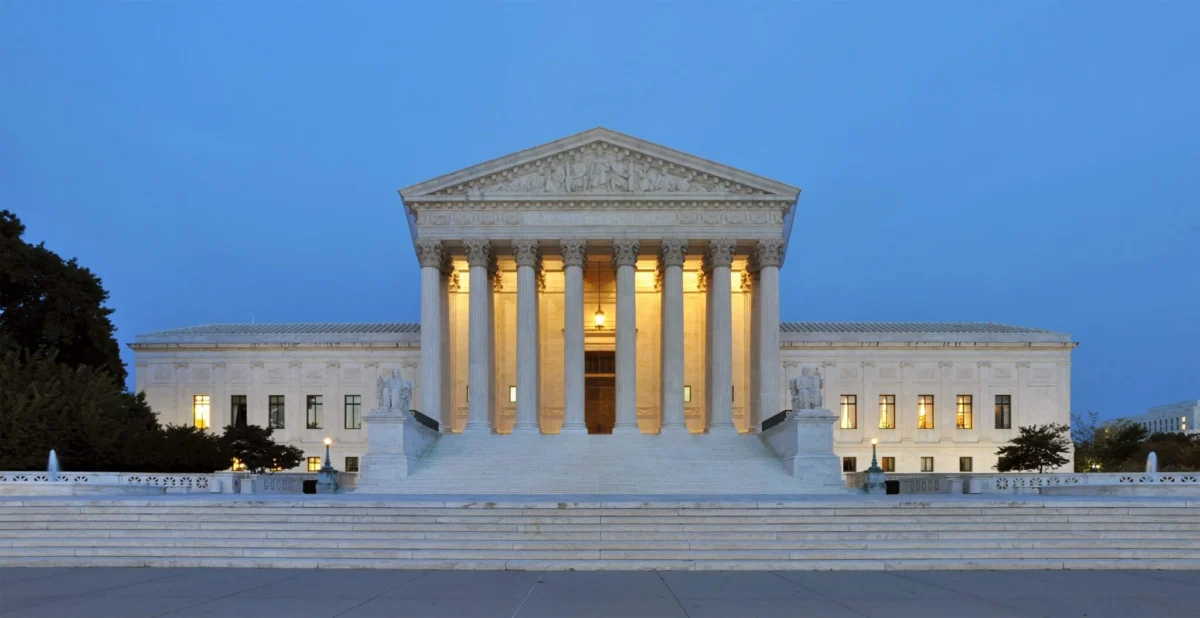
On August 24, 2026, the United States Supreme Court issued a high-stakes emergency ruling that temporarily cleared the path for the Trump administration to pursue a sweeping executive directive aimed at federalizing components of state-run elections. While the Court’s unsigned per curiam opinion provided an immediate procedural victory for the White House, the decision conspicuously avoided the underlying constitutional debate over the extent of presidential power in the administration of U.S. elections.
The ruling addresses a fundamental tension in American democracy: the traditional autonomy of states to manage their own elections versus the expanding reach of federal executive authority. As the 2026 midterm elections approach, the judiciary finds itself increasingly caught between the competing pressures of timing, jurisdiction, and constitutional interpretation.
The Core Facts: A Federal Push into Local Territory
The controversy centers on an executive directive issued by President Trump in March 2026. The order seeks to exert unprecedented federal influence over state-administered election processes. Its primary provisions include:
- Citizenship Verification: Mandating that the Department of Homeland Security (DHS) compile state-level citizenship-verification lists to be cross-referenced with voter rolls.
- Enforcement Prioritization: Instructing the Department of Justice (DOJ) to intensify enforcement against the distribution of federal ballots to individuals ineligible to vote, with a specific focus on noncitizens.
- Postal Service Intervention: Directing the United States Postal Service (USPS) to initiate formal rule-making regarding envelope barcoding standards and the specific handling procedures for mail-in ballots.
These measures represent a significant departure from the historical norm, where the "time, place, and manner" of elections have been firmly in the hands of state legislatures, as outlined in the Elections Clause of Article I, Section 4 of the Constitution.
Chronology of the Legal Conflict
The trajectory of this dispute illustrates the rapid-fire nature of modern election litigation:
- March 2026: President Trump issues the executive directive, sparking immediate outcry from a coalition of state attorneys general.
- Mid-2026: A coalition of states files suit in the U.S. District Court for the District of Massachusetts, arguing that the directive violates the constitutional authority of states.
- August 2026: U.S. District Judge Indira Talwani issues a preliminary injunction, blocking the federal government from implementing the directive. The First Circuit Court of Appeals denies a motion to stay that injunction.
- August 24, 2026: The Supreme Court grants the administration’s emergency request to stay the injunction, ruling that the states’ lawsuit was premature under Article III standing and ripeness doctrines.
- August 26, 2026: The Postal Service issues a final rule regarding ballot handling as per the executive directive.
- August 27, 2026: A federal district court intervenes again, temporarily blocking specific portions of the newly issued USPS rule in a separate case, League of Women Voters of Massachusetts v. Trump.
Threshold Doctrines: Standing, Ripeness, and the "Too Early" Defense
The Supreme Court’s decision to stay the injunction was not based on the merits of the policy, but on the threshold requirements for bringing a lawsuit in federal court. The Court focused heavily on the doctrines of standing and ripeness.
Article III Limitations
Under Article III of the Constitution, a plaintiff must demonstrate an "injury-in-fact" that is concrete, particularized, and actual. The majority opinion argued that the states failed to meet this threshold because the executive order, at the time of the initial filing, was not "self-executing."
The Court reasoned that the directive functioned as an internal set of instructions to executive agencies—essentially "homework" for the departments—rather than a binding mandate that immediately forced state officials to change their election procedures. The Court stated: "Federal courts review final rules, not proposed rules—and certainly not antecedent internal directives to propose a rule."
The Ripeness Doctrine
Related to standing, the doctrine of ripeness prevents courts from adjudicating disputes that rely on speculative future events. The Court held that because the administration had not yet finalized the rules regarding citizenship lists or ballot handling, the states were suing over a hypothetical scenario rather than a tangible policy. By staying the injunction, the Court effectively signaled that the executive branch has the right to formulate policy internally before the judiciary can intervene.
Official Responses and Judicial Dissents
The Supreme Court’s ruling was not unanimous. Three justices authored or joined vigorous dissents, highlighting the risks of the Court’s procedural rigidity.
Justice Sotomayor’s Caution
Justice Sonia Sotomayor, joined by Justice Elena Kagan, underscored that the majority’s opinion was narrowly focused on the timing of the suit. She wrote: "Today’s decision does not address whether the President’s attempts to interfere with States’ administration of the November 2026 elections are lawful." Sotomayor argued that the administrative burdens placed on states by the mere existence of the directive were sufficient to constitute an immediate, concrete injury.
Justice Jackson’s "Purcell" Dilemma
Justice Ketanji Brown Jackson offered a striking critique, invoking the Purcell v. Gonzalez principle. Purcell is the standard by which courts generally avoid changing election rules shortly before an election to prevent voter confusion and administrative chaos.
Jackson noted the irony that, under the current Court’s logic, election challengers are trapped in a "Catch-22." If they sue too late, they are blocked by Purcell for disrupting the election; if they sue too early, they are blocked for lack of ripeness. "Today’s revelation is that such claims can also come too early," Jackson wrote, warning that the Court’s decision "needlessly injects chaos and uncertainty into the upcoming midterm elections."
Broader Implications: The Future of Election Governance
While the administration may resume its preliminary work—such as drafting rules and assembling data—the battle is far from over. The Supreme Court explicitly stated that its ruling does not grant the government a "green light" to implement unlawful measures.
A Shifting Battlefield
The legal fight has already migrated to new venues. The active lawsuit in League of Women Voters of Massachusetts v. Trump demonstrates that the administration will face challenges at every stage of the rule-making process. Once agencies finalize their regulations, they will be subject to scrutiny under the Administrative Procedure Act (APA), as well as constitutional challenges under the Elections Clause.
The Constitutional Unknown
The fundamental question remains: Does the President have the statutory or constitutional authority to exert such control over how states register voters and count ballots? By focusing on procedural thresholds, the Supreme Court has effectively kicked this question down the road.
If the administration persists in implementing these policies, the Supreme Court will eventually be forced to address the merits. At that point, the Court will have to decide whether the executive branch’s "inherent powers" extend into the heart of state election administration. For now, election administrators across the country are left in a state of suspended animation, waiting to see if the internal directives of the executive branch will solidify into permanent changes to the American voting process.
As noted in the Court’s own opinion: "The Court’s disposition of this application does not mean that any measure taken by the Government to implement the Order will necessarily be lawful. On that score, time will tell." For the states, for the voters, and for the legal system, the clock is now ticking toward November.