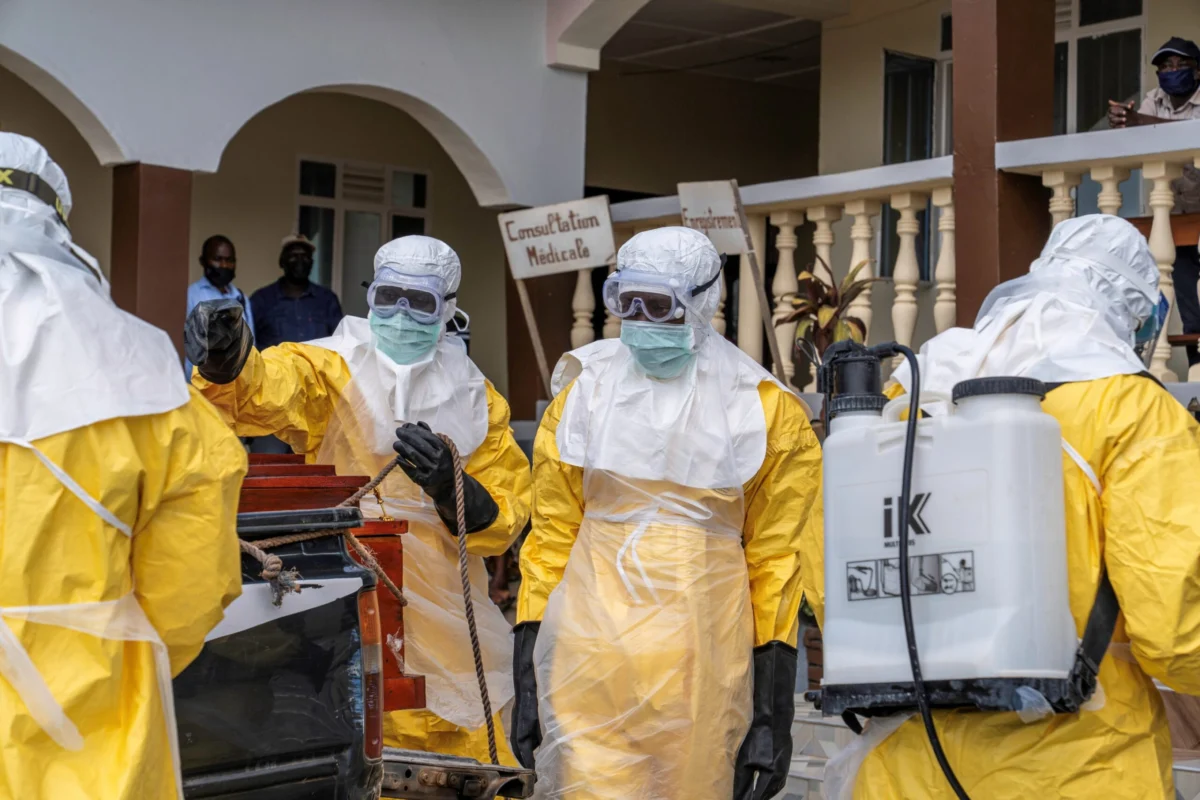
KINSHASA, Democratic Republic of Congo – The Democratic Republic of Congo (DRC) is currently grappling with a humanitarian catastrophe as a resurgent Ebola outbreak claims more than 500 lives. While the virus is a biological enemy, global health experts and humanitarian organizations are pointing to a man-made catalyst: the aggressive dismantling of international aid infrastructure. The convergence of a lethal, under-treated viral strain and a massive retreat in U.S. foreign assistance has created what officials call a "perfect storm" of preventable mortality.
Main Facts: An Outbreak Without a Safety Net
Since the official declaration of the outbreak on May 15, the DRC’s Ministry of Health has recorded 1,561 cases of Ebola, resulting in 506 confirmed deaths. The World Health Organization (WHO) has characterized the initial month of this surge as the most severe on record, outstripping the early velocity of previous epidemics.
The current crisis is compounded by the specific nature of the pathogen. Unlike the 2018–2020 outbreak, which was driven by the Zaire strain—for which vaccines and treatments like Ervebo exist—the current spread involves the Bundibugyo strain. This variant lacks a widely available vaccine or standardized therapeutic protocol, making containment through traditional public health measures like contact tracing, isolation, and rapid laboratory testing the only viable defense.
However, these defenses have been systematically weakened. The International Rescue Committee (IRC) reports that the DRC’s frontline healthcare systems are currently more fragile than they were during the 2018 crisis, which killed over 2,000 people. The primary culprit, according to the IRC and other NGOs, is a historic reduction in global aid funding that has "dismantled" the country’s pandemic preparedness.
Chronology: From Stability to Fragility (2024–2026)
To understand the current crisis, one must trace the rapid shift in U.S. foreign policy and its ripple effects on global health security over the last two years.
2024: The Baseline of Preparedness
In 2024, the United States maintained a robust humanitarian presence in Central Africa. Total U.S. humanitarian funding stood at approximately $14 billion. This funding supported a permanent infrastructure of laboratories, cold-chain logistics for vaccine and sample transport, and a network of trained local community health workers.
February 2025: The DOGE Intervention
Following the inauguration of the Trump administration, the Department of Government Efficiency (DOGE)—a special advisory group led by Elon Musk and Vivek Ramaswamy—began a radical restructuring of federal spending. In February 2025, DOGE moved to "gut" the U.S. Agency for International Development (USAID). Within weeks, approximately 83% of USAID’s programs were eliminated or suspended under the auspices of eliminating waste.
May 15, 2025: The Outbreak Begins
The first cases of the Bundibugyo strain were detected in eastern DRC. Unlike previous years, where USAID would have immediately activated local laboratory networks, the response was delayed by a lack of personnel and resources on the ground.
July 4, 2025: The Dissolution of DOGE
While DOGE officially concluded its advisory mandate on July 4, 2025, the structural damage to USAID remained. The agency’s budget for the 2025 fiscal year was slashed to $3.7 billion, leaving a massive vacuum in the global health response.
June 2026: The Emergency Reversal
By June 2026, with the death toll in the DRC climbing past 500, the White House was forced to request an emergency $1.4 billion from Congress to address the Ebola spread. This included $800 million specifically for humanitarian response—a move critics argue is "too little, too late" to replace the preventative systems that were destroyed a year prior.
Supporting Data: The "Brutal Arithmetic" of Aid
The scale of the funding collapse is unprecedented in the post-WWII era. According to data from Refugees International, the drop from $14 billion in 2024 to $3.7 billion in 2025 represents a near-total withdrawal of the U.S. as the world’s "lender of last resort" for humanitarian crises.
The human cost of these cuts extends beyond the DRC. Estimates from the Impact Counter dashboard suggest that the broader reduction in foreign aid over the last year has contributed to more than 750,000 preventable deaths globally, stemming from a lack of clean water, basic immunization, and maternal healthcare.
In the context of Ebola, the data highlights a critical failure in "cold chain" logistics. Dr. Craig Spencer, an emergency physician who famously survived Ebola in 2014, noted in a New York Times op-ed that recent samples sent to a laboratory in Kinshasa arrived at incorrect temperatures. Under the previous USAID-funded framework, such logistics were managed by specialized contractors with rigorous oversight. Without that funding, the samples became unviable, delaying diagnosis and allowing the virus to spread undetected for several additional days.
Official Responses: A Conflict of Narratives
The fallout from the USAID cuts has sparked a fierce political debate between the architects of the "efficiency" drive and the humanitarian community.
The DOGE Perspective
Elon Musk has consistently defended the cuts, though his narrative has shifted. In February 2025, Musk admitted that DOGE had "accidentally" ended funding for certain Ebola prevention measures but claimed the funding was "quickly restored" with no interruption to actual programming.
More recently, Musk has taken to his platform, X, to dispute the severity of the crisis. When Democratic Representative Ro Khanna accused Musk and DOGE of "killing millions of children" through aid cuts, Musk dismissed the claim as hyperbolic. "And they cannot cite a single name of someone who died out of the ‘millions’ they falsely claim have died. Not a single name!" Musk wrote in a post that garnered significant engagement.
The Humanitarian Perspective
Bob Kitchen, Vice President of Emergencies at the IRC, offers a starkly different view. "The warning signs are flashing red," Kitchen stated. "Increased conflict and cuts to global aid funding have dismantled defenses at exactly the wrong moment. The lesson from every previous outbreak is clear: delays cost lives."
The Academic Critique
Phuong Pham, an associate professor at the Harvard T.H. Chan School of Public Health, emphasized that emergency injections of cash cannot replace years of institutional building. While she acknowledged that the State Department’s recent $23 million emergency grant for clinics in Congo and Uganda is "much needed," she warned that "emergency response cannot fully substitute for the sustained investments that are needed before an outbreak begins."
Implications: Global Health Security in an Age of Isolationism
The ongoing crisis in the DRC serves as a case study for the risks of a "reactive" versus "proactive" global health strategy. The implications of this shift are three-fold:
1. The Erosion of the "First Line of Defense"
USAID’s traditional role was not just to provide aid, but to act as a liaison between local communities, the WHO, and UNICEF. By training local healthcare workers to identify early symptoms, the U.S. essentially built a global "tripwire" for pandemics. Without this permanent presence, the world remains blind to the early stages of viral mutations and outbreaks.
2. The Economic Paradox of Austerity
While DOGE sought to save taxpayers billions by cutting USAID, the resulting Ebola outbreak has already forced the White House to ask for $1.4 billion in emergency funds. This "firefighting" approach to global health is often significantly more expensive than the "fire prevention" approach of sustained development aid.
3. The Risk of International Spreading
The Bundibugyo strain’s lack of a vaccine makes its potential for cross-border transmission a major concern. With 50 clinics currently being scrambled into existence by the State Department, the goal is isolation. However, if the virus reaches major urban centers like Kinshasa or crosses into neighboring Uganda and Rwanda—countries also dealing with reduced aid footprints—the death toll could shift from hundreds to thousands.
As the DRC enters another month of the outbreak, the "brutal arithmetic" described by the IRC remains the dominant reality. The resources are shrinking while the risks are growing, leaving the people of the Congo to face one of the world’s most terrifying diseases with a fractured health system and a global community that is increasingly looking inward.
The State Department has yet to provide a formal response to requests for comment regarding the specific impact of the 2025 cuts on current Ebola mortality rates. For now, the "names" that Elon Musk challenged his critics to provide are being recorded in the ledgers of overcrowded morgues in the eastern Congo.