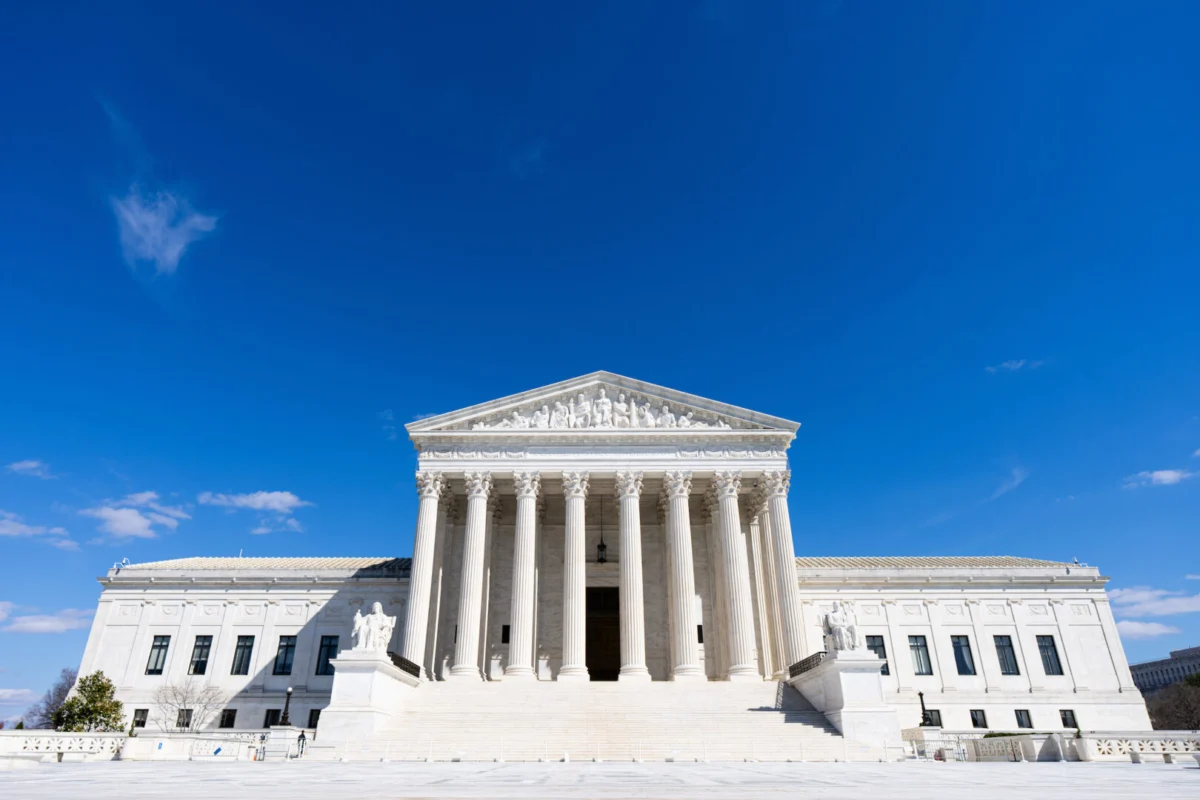
WASHINGTON — In a major legal setback for the executive branch’s sweeping effort to overhaul federal election administration, the Supreme Court of the United States on Monday rejected an emergency application by the Trump administration to reinstate a restrictive U.S. Postal Service (USPS) rule targeting mail-in voting.
The justices’ unsigned, one-paragraph order leaves intact a preliminary injunction issued by U.S. District Court Judge Indira Talwani of the District of Massachusetts. Judge Talwani had previously ruled that the administration’s new postal restrictions likely violated federal law and the U.S. Constitution, which explicitly delegates the primary authority over federal election administration to state and local officials.
Monday’s decision effectively halts the White House’s attempt to curtail mail-based absentee voting ahead of the 2026 midterm elections, providing immediate operational certainty to state election directors and millions of voters nationwide.
Main Facts: The High Court’s Ruling and the Legal Split
The Supreme Court’s majority concluded that the executive branch failed to meet the high legal bar required for emergency interventions on the court’s shadow docket.
“The government is unlikely to succeed on the merits of its challenge to the District Court’s preliminary injunction,” the Supreme Court’s order stated. “And the equitable factors applicable for obtaining emergency relief from this Court do not favor a stay.”
While the core order was unsigned and brief, the justices were visibly divided on the broader statutory and operational questions surrounding federal oversight of election mail.
Breakdown of the Judicial Opinions
- The Unsigned Majority: The court determined that the federal government was unlikely to prevail on the legal merits of the case and failed to demonstrate that irreparable harm would occur without an immediate stay of the lower court’s injunction.
- Justice Brett M. Kavanaugh (Concurring): Justice Kavanaugh voted with the majority to keep the injunction in place, but authored a separate concurring opinion focusing on timing and logistical feasibility. Kavanaugh suggested that while the USPS might possess the abstract legal authority to regulate election mail requirements, forcing state and local election administrators to adopt drastic operational shifts immediately prior to the 2026 midterms was unlawful. State officials, Kavanaugh observed, simply lacked the operational bandwidth to adjust their voting procedures on such short notice without severe disruption.
- Justices Samuel A. Alito Jr. and Clarence Thomas (Dissenting): In a joint dissent authored by Justice Alito, the court’s two most conservative members argued that the emergency stay should have been granted. Alito wrote that federal law grants the USPS broad statutory discretion to govern what passes through the federal mail system, arguing that the administration’s rule fell squarely within Congress’s delegation of authority over postal regulations.
Chronology: Path of the Presidential Order and Legal Challenges
The legal battle over the federal government’s attempt to restrict mail-in voting unfolded rapidly over several months, originating in executive directives and culminating in Monday’s high-stakes Supreme Court decision.
March 2026
Presidential Executive Order Issued
  │
  ├─► Directs DHS to compile eligible citizen voter rosters.
  ├─► Directs USPS to restrict election mail delivery exclusively to list members.
  └─► Threatens DOJ investigations & funding cuts for non-compliant states.
  │
Spring 2026
Multistate Injunction Filed
  │
  ├─► 23 States & D.C. file lawsuit in U.S. District Court (District of Massachusetts).
  └─► Parallel legal challenges launched in Washington, D.C.
  │
Late Summer 2026
District Courts Block the Policy
  │
  ├─► Judge Indira Talwani issues preliminary injunction against USPS rule.
  └─► D.C. District Court issues secondary block on federal election mail restrictions.
  │
Early Autumn 2026
Supreme Court Emergency Appeal
  │
  ├─► Trump Administration files emergency application for a stay with SCOTUS.
  └─► Supreme Court denies stay, preserving state control for 2026 Midterms.
March 2026: The Presidential Executive Order
The origin of the policy dates back to March 2026, when President Trump signed an executive order titled "Ensuring Citizenship Verification and Integrity in Federal Elections." Citing what the order framed as an "unavoidable duty" to fortify the security of mail-in ballots, the White House launched a multi-agency strategy aimed at reining in absentee voting—a method of voting that President Trump has repeatedly attacked without evidence as susceptible to fraud.
The order contained several directives:
- Department of Homeland Security (DHS) Mandate: Directed DHS and related federal entities to cross-reference federal databases, construct centralized lists of confirmed eligible citizen voters, and distribute those rosters to state election authorities.
- USPS Delivery Mandate: Ordered the Postal Service to adopt a binding rule restricting the processing and delivery of election mail strictly to individuals explicitly identified on the federal voter lists.
- Enforcement Mechanisms: Instructed the Department of Justice (DOJ) to investigate state and local officials who failed to comply with the federal directive, while threatening to withhold federal grant funding from non-compliant municipalities.
The Lower Court Injunctions
Following the issuance of the executive order, a broad coalition of state attorneys general filed lawsuits across multiple jurisdictions. The primary challenge landed in the U.S. District Court for the District of Massachusetts under Judge Indira Talwani.
Judge Talwani issued a preliminary injunction pausing the USPS rule, determining that the executive branch had exceeded its authority and impermissibly interfered with state-level constitutional prerogatives. A second federal district court judge in Washington, D.C., reached a similar conclusion in a parallel lawsuit, finding the USPS policy likely unlawful and granting a secondary freeze.
When lower appellate courts declined to overturn Judge Talwani’s injunction, the Justice Department submitted an emergency application to the Supreme Court, setting up Monday’s ruling.
Supporting Data & Key Legal Arguments
The legal contest pitted core constitutional mandates regarding federalism against the federal government’s regulatory authority over the nation’s postal infrastructure.
┌────────────────────────────────────────────────────────────────────────┐
│                      CONSTITUTIONAL TENSION                            │
├────────────────────────────────────────┬───────────────────────────────┤
│          THE ELECTIONS CLAUSE          │       THE POSTAL CLAUSE       │
│         (Art. I, § 4, Cl. 1)           │     (Art. I, § 8, Cl. 7)      │
├────────────────────────────────────────┼───────────────────────────────┤
│ Grants primary authority to States     │ Grants Congress (and USPS)    │
│ to determine the "Times, Places and    │ authority to establish and    │
│ Manner" of holding federal elections.  │ regulate national post offices│
│                                        │ and mail requirements.        │
└────────────────────────────────────────┴───────────────────────────────┘
The State Coalition
The challenge against the executive order was anchored by a coalition of 23 states and the District of Columbia, led by California Attorney General Rob Bonta. The plaintiff coalition included:
- Western States: Arizona, California, Colorado, Nevada, New Mexico, Oregon, Washington
- Midwestern States: Illinois, Michigan, Minnesota, Wisconsin
- Eastern States: Connecticut, Delaware, Maine, Maryland, Massachusetts, New Jersey, New York, Pennsylvania, Rhode Island, Vermont, Virginia
- District of Columbia
Core Legal Arguments of the Challengers
In their filings before the Supreme Court, the states and co-plaintiff civil rights organizations outlined three primary arguments:
- Infringement on the Elections Clause: Article I, Section 4 of the U.S. Constitution assigns primary responsibility for prescribing the procedures of federal elections to the individual states, subject to congressional override via statute—not unilateral executive decree.
- Logistical Impossibility & Disenfranchisement: State election officials submitted data demonstrating that updating voter registration databases, re-keying postal processing equipment, and verifying millions of addressee records against new federal lists within weeks of the midterm elections was technically impossible. Opponents noted that any administrative glitch, delay, or record mismatch by federal agencies would result in lawful voters being denied their ballots.
- Statutory Limits of USPS Authority: The plaintiffs argued that while the Postal Reorganization Act permits USPS to manage general mail logistics, it does not grant the agency arbitrary authority to act as a federal gatekeeper deciding which citizens are eligible to receive election mail.
"USPS’s unprecedented experiment with our Nation’s most cherished franchise—the right to vote—is unlawful," the challengers stated in their brief to the court. "Millions of voters would be unable to vote by mail, and some would not be able to vote at all."
The Administration’s Defense
Representing the Trump administration, the Justice Department argued that federal power over the Postal Service is supreme and supersedes state-level election management when state elections utilize federal mail systems.
In its emergency application, the Justice Department written:
"While the States have primary authority to regulate the manner of elections, they cannot choose to use the federal mails to carry out their elections but then insist that their election-related mail is somehow exempt from the Postal Service’s rulemaking authority, conferred by Congress, to regulate envelope design and addressee information."
The administration contended that requiring standard address formats and eligibility verification on election envelopes fell within routine administrative oversight of the post office, aimed at ensuring election security and preventing improper mail processing.
Official Responses and Judicial Positions
The court’s action drew immediate responses from legal analysts, civil rights leaders, state attorneys general, and conservative legal groups.
Statements from the States
Following the ruling, state leaders praised the Supreme Court’s decision to preserve local control over election mechanics. California Attorney General Rob Bonta released a statement describing the order as a vital safeguard for democratic access.
"The Supreme Court’s order stops an unconstitutional attempt to weaponize the U.S. Postal Service just weeks before Americans cast their ballots," Bonta said. "States have managed elections safely, securely, and effectively for centuries. The administration’s attempts to interfere with mail-in voting threatened to disenfranchise millions of legitimate voters."
State election directors also expressed relief over the procedural continuity. Local clerks across swing states such as Wisconsin, Michigan, and Pennsylvania had warned that altering postal standards so late in the election cycle would cause severe backlogs, misplaced ballots, and voter confusion.
The Administration’s Stance
While the White House did not immediately issue a formal statement following Monday’s ruling, administration officials pointed to ongoing litigation concerning other provisions of the March executive order.
The Justice Department still has a separate pending emergency application before the Supreme Court focused on the Department of Homeland Security’s authority to construct federal voter eligibility lists and share them with state agencies. Administration officials maintain that federal executive departments hold an obligation to assist states in verifying voter citizenship, regardless of how mail delivery is handled.
Analyzing the Judicial Split
Legal scholars noted that the court’s split reflects a practical divide over procedural timing and federal agency powers.
- The Pragmatic Consensus: Justice Kavanaugh’s concurrence highlighted a recurring principle in Supreme Court jurisprudence known as the Purcell principle—the doctrine holding that federal courts (and executive agencies) should generally not alter election rules shortly before an election due to the risk of voter confusion and administrative disruption.
- The Textualist Dissent: Conversely, Justices Alito and Thomas focused strictly on statutory postal management power, viewing the USPS mandate not as an election law intervention, but as a permissible administrative rule governing federal postal property and processing protocols.
Implications for the 2026 Midterm Elections and Federalism
Monday’s ruling carries far-reaching consequences for the immediate 2026 midterm elections and sets an important precedent regarding executive authority over federal elections.
┌─────────────────────────────────────────────────────────────────────────┐
│                    KEY IMPACTS OF SCOTUS RULING                         │
├──────────────────────────────────┬──────────────────────────────────────┤
│ IMMEDIATE IMPACT                 │ LONG-TERM IMPACT                     │
├──────────────────────────────────┼──────────────────────────────────────┤
│ • Mail voting procedures remain  │ • Reaffirms state sovereignty over   │
│   unaltered for 2026 Midterms.   │   election mechanics (Art. I, § 4).   │
│ • Local election clerks avoid    │ • Prevents executive re-definition   │
│   last-minute logistical overhaul│   of postal rules for elections.     │
│ • Millions of absentee ballots   │ • Sets boundaries on emergency       │
│   will be processed as normal.   │   shadow docket interventions.       │
└──────────────────────────────────┴──────────────────────────────────────┘
Operational Relief for Election Officials
The immediate beneficiary of the ruling is the nation’s decentralized network of local election administrators. Had the Supreme Court granted the Trump administration’s stay, municipal clerks across all 50 states would have been forced to pause absentee ballot mailings, integrate untested federal lists, and alter long-standing postal distribution systems during peak pre-election preparations.
With the injunction remaining in place:
- Absentee and mail-in ballots will continue to be processed according to established state guidelines.
- State laws regarding mail ballot drop boxes, return deadlines, and address verification remain fully operational without federal postal interference.
- The USPS will process all official election mail using standard non-partisan delivery protocols.
Broad Limits on Executive Regulatory Power
Beyond the immediate mechanics of the 2026 midterms, the ruling underscores significant judicial skepticism toward executive attempts to bypass Congress or state legislatures in regulating federal elections. By declining to stay the lower court order, the Supreme Court signaled that presidential executive orders cannot easily commandeer independent regulatory agencies—such as the Postal Service—to alter fundamental voting procedures.
Outstanding Legal Questions
While Monday’s decision resolves the issue of mail-in voting delivery rules for the upcoming 2026 cycle, the underlying legal fight over presidential power in federal elections remains active:
- The Main Substantive Appeal: The Supreme Court’s ruling focused strictly on the emergency request for a stay, not the final legal merits of the underlying lawsuit. The case now proceeds through the standard federal appellate system, meaning the U.S. Court of Appeals for the First Circuit will eventually rule on the long-term constitutionality of the USPS policy.
- Ongoing Litigation on DHS Lists: The administration’s separate application concerning federal voter list creation and distribution remains before the justices. If approved, federal agencies could still pressure states to use federal citizenship databases to audit state voter rolls, even if the Postal Service cannot refuse to deliver ballots.
For now, the Supreme Court’s action ensures that mail-in voting procedures across the United States will remain governed by state and local laws as voters prepare to cast their ballots in the 2026 midterm elections.