Washington D.C. – In a significant move signaling a potential seismic shift in the financial landscape of American sports, Republican and Democratic tax writers in the House of Representatives have initiated discussions to fundamentally alter how collegiate and professional athletics are treated under the federal tax code. A recent, nearly four-hour hearing by the House Ways and Means Committee brought to light a bipartisan desire to address a myriad of sports-related tax issues, with particular emphasis on the burgeoning Name, Image, and Likeness (NIL) income for college athletes and the contentious use of tax incentives for professional sports teams.
While the ambition for comprehensive reform is evident, committee members acknowledged that a bipartisan consensus leading to immediate legislative action remains a distant prospect. The complexities of the issues, coupled with a packed legislative agenda, suggest that any significant changes are a long way off.
"Sports have always evolved. Our tax code should keep up, and it should evolve in a way that supports communities, protects taxpayers, promotes fair competition, and gives young athletes every opportunity to succeed both on and off the field," stated Rep. Mike Thompson, the top Democrat on the panel’s Tax Subcommittee. His sentiment underscored a shared recognition that the current tax framework is ill-equipped to handle the modern realities of the sports industry, from collegiate athletes navigating sudden wealth to professional franchises leveraging public funds for private gain.
The Genesis of a Tax Conundrum: NIL and Athlete Compensation
The impetus for re-evaluating the tax code for college athletes stems directly from a landmark 2021 Supreme Court decision. In NCAA v. Alston, the high court sided with former student-athletes, ruling that the NCAA’s restrictions on education-related benefits violated antitrust law. While the ruling itself didn’t directly address NIL, it opened the floodgates for states and the NCAA to develop policies allowing college athletes to monetize their name, image, and likeness. This dramatic shift transformed amateur athletics, introducing a new era where young adults, often with limited financial experience, are now handling substantial and complex income streams.
Former NFL player Sam Acho, testifying before the committee, articulated the core challenge succinctly: "The tax code wasn’t written for a 17-year-old college football player who’s coming into sudden wealth." He emphasized that simply limiting NIL pay wouldn’t solve the underlying problem of tax illiteracy and financial unpreparedness. Athletes engaging in NIL deals are typically classified as self-employed individuals, meaning they are responsible for calculating and paying their own income and self-employment taxes, often without any tax withholding from their earnings. This immediate immersion into complex tax situations, frequently without adequate guidance, has led to a growing crisis.
Thad Madden, a former IRS employee and now an NIL tax consultant, painted a stark picture for the committee, revealing that he has witnessed "more and more athletes leaving college with large tax liabilities and no current means of repaying it." The consequences of this oversight are severe, potentially leading to audits, penalties, and long-term financial distress for individuals who are just beginning their adult lives.
Lawmakers floated various solutions, including the implementation of some form of mandatory tax withholding for student-athletes’ NIL earnings. This would mirror the system for traditional employees, ensuring that taxes are incrementally paid throughout the year rather than accumulating into a daunting lump sum. Beyond immediate tax compliance, there was a strong consensus on the critical need for comprehensive financial literacy programs. Rep. Greg Murphy (R-N.C.) highlighted this, noting, "There’s so much financial literacy that does not happen in so many places, and then to have so much money dumped on them, it’s great for them, but doesn’t usually last very long." Such programs would not only help athletes fulfill their tax obligations but also equip them with the skills to manage, save, and invest their newfound wealth responsibly, potentially preventing common pitfalls associated with sudden financial windfalls.
The Siren Song of Stadium Deals: Professional Sports and Public Funds
Beyond the collegiate arena, the committee also turned its attention to the contentious practice of public financing for professional sports venues. This issue, deeply rooted in local economic development strategies, involves cities and states vying for professional teams by offering lucrative tax incentives and utilizing tax-exempt bonds to fund stadium construction and renovations. This "race to the bottom," as some critics describe it, often sees municipalities offering increasingly generous packages, ostensibly to attract or retain teams and the perceived economic benefits they bring.
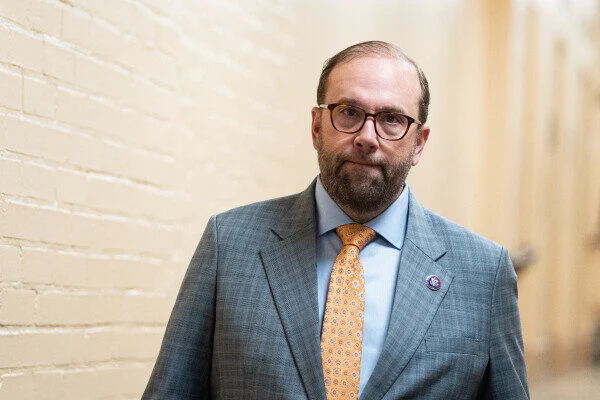
House Ways and Means Committee Chairman Jason Smith (R-Mo.) brought the issue home, lamenting the potential relocation of the Kansas City Chiefs from Missouri to Kansas. He condemned the move as "corporate greed triumphing over community benefit," arguing that such decisions are driven by where teams "can extract the most taxpayer dollars." Smith’s impassioned remarks underscored a broader concern that professional sports franchises, or at least their leadership, prioritize their bottom line over long-standing loyalty to their fan bases and communities.
Lawmakers from both sides of the aisle expressed strong reservations about professional sports teams’ reliance on these local incentives. A key point of contention is the use of tax-exempt bonds. While these bonds allow state and local governments to borrow at lower interest rates for public projects, critics argue that stadium financing often fails to deliver the promised economic returns. Moreover, the use of tax-exempt bonds for privately owned, for-profit entities effectively shifts the tax burden to federal taxpayers who subsidize the interest payments through lost federal tax revenue. This forces state and local governments to seek alternative revenue sources or cut essential public services to fund these large-scale construction projects, often at the expense of schools, infrastructure, or public safety.
The debate over stadium financing is not new, but the renewed congressional scrutiny suggests a growing impatience with a system perceived as favoring wealthy team owners over the average taxpayer. Committee members questioned the true "public benefit" derived from these deals, with many concluding that the economic impact studies often presented by teams are overly optimistic and fail to account for the opportunity costs of public investment.
Unpacking the Economic Impact: Data and Debates
While the hearing provided a platform for discussion, the absence of specific, comprehensive data on the aggregate economic impact of current sports tax policies was palpable. For NIL, while individual deals garner headlines, precise figures on the total volume of earnings, the number of athletes involved, and, crucially, the collective tax liabilities incurred are still being compiled and understood. The dynamic nature of NIL, with varying state laws and institutional policies, makes a unified data collection challenging, yet essential for informed policy decisions. The anecdotal evidence presented by Madden regarding rising tax liabilities suggests a significant, though unquantified, problem.
Similarly, for professional sports team incentives, the debate often hinges on differing economic analyses. Proponents of public financing often cite job creation, increased tourism, and enhanced civic pride as justifications. However, numerous independent economic studies have consistently challenged these claims, often finding that the economic benefits are exaggerated, temporary, or simply displace existing economic activity. Tax-exempt bonds for stadium construction alone can run into hundreds of millions, if not billions, of dollars per project, representing a substantial public investment with often questionable returns. The cumulative effect of these deals across the country, siphoning public funds from other priorities, represents a significant fiscal drain that lawmakers are now openly questioning.
The committee’s discussions highlighted the need for more rigorous, transparent data and independent economic impact assessments to properly evaluate the efficacy and equity of existing tax policies in both collegiate and professional sports. Without robust data, it becomes challenging to move beyond anecdotal evidence and political rhetoric to craft truly effective and fair legislation.
Voices from the Field and the Experts’ Bench
The hearing featured a range of perspectives, from former athletes to tax consultants, each offering unique insights into the challenges and potential solutions. Sam Acho’s testimony was particularly poignant, providing a firsthand account of the pressures and realities facing young athletes. His call for the committee to leverage its unique position to "change college sports in a meaningful way" resonated deeply, emphasizing that the tax code’s anachronisms disproportionately affect those least equipped to navigate them.
Thad Madden, drawing on his IRS background, provided the technical expertise necessary to illustrate the mechanics of NIL taxation and the pitfalls of self-employment for financially unsophisticated individuals. His advocacy for education and simplified tax processes underscored a pragmatic approach to mitigating the current crisis.
The lawmakers themselves, through their questions and comments, revealed a spectrum of concerns. Rep. Thompson’s emphasis on fairness and community support highlighted the progressive desire to ensure the sports economy benefits a broader base. Chairman Smith’s focus on "corporate greed" and taxpayer protection reflected a conservative inclination to curb what he perceives as excessive corporate welfare. Rep. Murphy’s call for financial literacy echoed a universal concern about equipping young people with essential life skills. These varied perspectives, while potentially leading to different policy prescriptions, collectively underscore a bipartisan recognition of the urgent need for reform.
Navigating the Legislative Labyrinth
Despite the apparent consensus on the need for change, the path to enacting sports-focused tax policy reforms is fraught with legislative hurdles. As Rep. Thompson candidly told Chairman Smith, "This has been an interesting hearing, Mr. Chairman, but what it tells me is we need a lot more." This sentiment reflects the early stage of these discussions and the extensive work required to bridge policy differences and build legislative coalitions.
The current tax code debate is also unfolding against a backdrop of related, yet distinct, legislative efforts concerning collegiate athletics. Lawmakers are simultaneously striving for consensus on a broader college sports bill that would impose federal NIL regulations, aiming to create a more uniform national framework rather than the current patchwork of state laws. However, even this related legislation has faced significant obstacles. An earlier iteration of a House GOP bill was pulled from consideration after the Congressional Black Caucus and the NAACP raised concerns, connecting the legislation to redistricting efforts in "red states" that impacted majority-Black House districts. This unexpected entanglement of sports policy with broader political issues highlights the complex and often unpredictable nature of legislative progress.
In the Senate, Commerce Chair Ted Cruz (R-Texas) and ranking member Maria Cantwell (D-Wash.) have authored their own version of a college sports package and have expressed openness to bipartisan discussions with their House counterparts. However, the legislative calendar for the 119th Congress is already heavily congested with must-pass bills and White House priorities, making it uncertain whether a consensus will be reached on any college sports legislation, let alone comprehensive tax reforms, by the end of the year. Senator Cruz, for his part, has voiced hope that Senate Majority Leader John Thune (R-S.D.) will bring the Senate bill to the floor for a vote before the end of July, indicating the urgency felt by some members to advance some form of legislation.
The Path Forward: Challenges and Potential Solutions
The challenges ahead are considerable. Crafting bipartisan tax legislation is notoriously difficult, requiring intricate compromises and careful balancing of competing interests. For NIL, solutions could involve:
- Mandatory Withholding: Implementing a system where a percentage of NIL earnings is automatically withheld for taxes, similar to W-2 income.
- Standardized Deductions: Creating simplified, standardized deductions for self-employed student-athletes to ease their tax burden and compliance.
- Educational Mandates: Requiring colleges or NIL collectives to provide robust financial literacy and tax education as a condition of participation.
- Trust Funds/Escrow Accounts: Exploring mechanisms where a portion of significant NIL earnings could be placed into managed accounts or trusts, accessible only under certain conditions or after graduation, to protect athletes from immediate overspending and ensure long-term financial stability.
For professional sports stadium financing, potential reforms could include:
- Limiting Tax-Exempt Bonds: Restricting or outright prohibiting the use of federal tax-exempt bonds for privately owned professional sports facilities.
- Increased Transparency: Mandating comprehensive, independent economic impact studies and public disclosure of all financial incentives offered to teams.
- "Clawback" Provisions: Implementing clauses that allow communities to reclaim public funds if teams fail to meet specific performance or community benefit targets.
- Federal Oversight: Establishing a federal body to review and approve public financing deals for sports stadiums, ensuring they meet strict criteria for public benefit.
Broader Implications for American Sports
The discussions in the House Ways and Means Committee signify a growing recognition that the current framework governing sports economics is unsustainable and inequitable. A failure to address these issues could have profound implications:
- For College Athletes: Continued financial hardship, tax delinquencies, and a perpetuation of the "bust" narrative for those who fail to manage sudden wealth. It could also lead to an uneven playing field, where athletes in states with better financial support or tax guidance have an advantage.
- For Communities: The continued drain on public resources due to often-unjustified stadium subsidies, leading to underfunded essential services and resentment among taxpayers. It could also exacerbate the perception that local governments prioritize corporate interests over citizen welfare.
- For the Integrity of Sports: A loss of public trust in both collegiate and professional sports if financial exploitation and corporate welfare are perceived as unchecked.
The committee’s hearing was merely the opening salvo in what promises to be a protracted and complex battle over the future of sports finance in America. While a final product may not be imminent, the bipartisan acknowledgment of the problem is a crucial first step toward a more equitable and sustainable system for athletes, taxpayers, and the communities that cherish their teams. The call for a tax code that supports communities, protects taxpayers, promotes fair competition, and empowers young athletes will likely guide these discussions for months, if not years, to come.