Main Facts: A Major Legislative Push to Fix Healthcare Arbitration
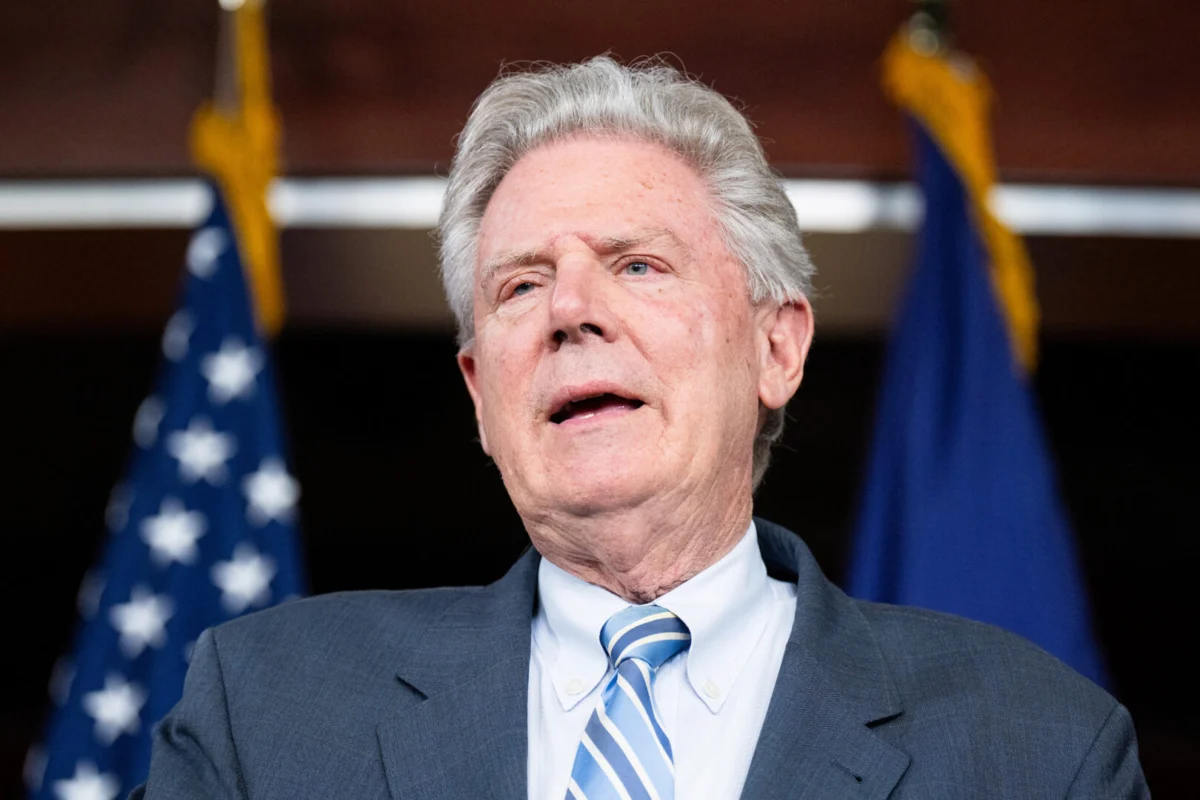
In a major bid to curb rising health insurance premiums and eliminate systemic gaming of federal healthcare laws, Representative Frank Pallone Jr. (D-N.J.), Ranking Member of the House Energy and Commerce Committee, introduced legislation aimed at sweeping reforms to the landmark 2020 No Surprises Act.
The proposed legislation seeks to dismantle the law’s independent dispute resolution (IDR) mechanism—a "baseball-style" arbitration process designed to settle payment disputes between health insurance companies and out-of-network healthcare providers. In its place, Pallone’s bill would institute a statutory payment standard tied directly to the median rate insurers pay for equivalent in-network services within a given geographic region. Additionally, the reform mandate would require health plans to issue payments to providers within 30 days of receiving a claim.
While the original No Surprises Act successfully achieved its primary consumer protection goal—stopping patients from receiving financially devastating balance bills for emergency medical care or unintended out-of-network services—the administrative system created to resolve billing behind the scenes has run into severe complications. Instead of serving as a rarely used mechanism of last resort, the IDR arbitration portal has turned into a high-stakes arena dominated by specialized medical entities and private equity-backed staffing groups.
According to policy analysts and congressional findings, arbitrated payouts have regularly dwarfed customary reimbursement rates, driving up overall spending across the healthcare ecosystem. In 2025 alone, arbitrators awarded healthcare providers an estimated $15 billion more than standard in-network baseline calculations, costs that are increasingly passed on to employers and working families through elevated health insurance premiums.
"Today, I’m pleased to say patients no longer receive these outrageous bills, but unfortunately the arbitration process is clearly not working," Pallone stated during the announcement of the legislation. "A few bad actors—largely backed by private equity—are gaming the system, creating backlogs, delaying payments, and driving up premiums."
+-----------------------------------------------------------------------------------+
|                        NO SURPRISES ACT REFORM COMPARISON                         |
+------------------------------------+----------------------------------------------+
| Current Framework (2020 Law)       | Proposed Overhaul (Pallone Bill)             |
+------------------------------------+----------------------------------------------+
| • Independent Dispute Resolution   | • Direct statutory fee schedule based on     |
|   (IDR) "baseball-style"           |   median in-network rate                     |
|   arbitration                      |                                              |
| • Providers win payouts averaging  | • Eliminates high-stakes arbitration process |
|   6x local in-network benchmarks   |   entirely                                   |
| • Widespread backlogs, delayed     | • Mandates claim settlement within 30 days   |
|   payments, and high legal costs   |   of filing                                  |
| • Financial strain on health plans | • Projected to stabilize insurance premiums  |
|   and premium hikes                |   by curtailing inflated reimbursement awards|
+------------------------------------+----------------------------------------------+
Chronology: The Evolution of Federal Balance Billing Reform
The road to Pallone’s current proposal spans nearly a decade of intense legislative maneuvering, regulatory disputes, and unintended economic consequences.
2018–2019: Mounting Public Cry
  └── Exposure of extreme surprise out-of-network balance bills sparks bipartisan push for reform.

December 2020: Passage of No Surprises Act
  └── Enacted under Consolidated Appropriations Act; includes "baseball-style" arbitration compromise.

January 2022: Implementation & Early Backlogs
  └── Act takes effect; initial claims flood federal IDR portal far beyond CMS estimates.

2022–2024: Legal Challenges & Procedural Bottlenecks
  └── Federal court rulings alter arbitration factors; private equity firms scale up IDR submissions.

2025: Massive Arbitration Windfalls
  └── Provider awards top $15B over baseline in-network rates; healthcare premiums surge nationwide.

October 2026: Pallone Introduces Overhaul Bill
  └── Legislation drafted to abolish IDR arbitration and institute median in-network fee schedules.
The Initial Crisis and Legislative Battles (2018–2020)
Public outcry over "surprise medical billing" reached a boiling point between 2018 and 2020. Patients routinely received unexpected, exorbitantly high bills after receiving care at emergency rooms or undergoing surgeries at in-network facilities where individual attending specialists—such as anesthesiologists, radiologists, or assistant surgeons—were out-of-network.
Congressional leaders agreed on protecting patients, but clashed over how insurers should pay out-of-network doctors:
- The Benchmark Approach: Favored by Rep. Pallone and the House Energy and Commerce Committee, this model proposed establishing a fixed benchmark fee tied to the local median in-network rate (the Qualifying Payment Amount, or QPA). Insurers strongly supported this model, while provider groups argued it granted health plans unchecked price-setting leverage.
- The Arbitration Approach: Championed by physician organizations, hospital associations, and key lawmakers—including then-House Ways and Means Committee Chairman Richard E. Neal (D-Mass.)—this approach advocated for an Independent Dispute Resolution (IDR) system. Under "baseball-style" arbitration, both parties submit a final payment offer, and an independent arbitrator selects one without modification.
When the No Surprises Act was ultimately enacted in December 2020 as part of the Consolidated Appropriations Act, 2021, the arbitration model won out, setting the stage for subsequent implementation challenges.
Rollout, Bottlenecks, and Systemic Friction (2022–2025)
When the law went into effect on January 1, 2022, the federal administrative apparatus was almost immediately overwhelmed.
- The Department of Health and Human Services (HHS), alongside the Department of Labor and the Department of the Treasury, originally anticipated roughly 17,000 IDR claims per year.
- Instead, disputing parties submitted hundreds of thousands of claims annually, creating massive backlogs that delayed payment settlements by months or even years.
- Subsequent federal lawsuits filed by provider groups—most notably the Texas Medical Association—successfully challenged executive guidance that instructed arbitrators to prioritize the median in-network rate. These judicial decisions opened the door for arbitrators to weigh broader, higher-cost criteria, shifting final decisions heavily in favor of medical providers.
By 2025, the system had deviated significantly from its original intent, leading to Pallone’s introduced overhaul in October 2026.
Supporting Data: Arbitrated Rates, Private Equity, and Economic Fallout
Data compiled by healthcare policy researchers, academic institutions, and federal regulatory bodies highlight the growing cost impact of the current IDR framework.
The Scale of Arbitration Decisions
Rather than driving out-of-network rates down toward standard market averages, the arbitration process significantly inflated reimbursement rates across multiple medical specialties.
       AVERAGE ARBITRATION WIN RATES & PAYOUT MULTIPLES (2025)
       =======================================================

Provider Win Rate [===================================-------] 80%+
Average Award [======] 6.0x Local Median In-Network Rate- Prevailing Party Metrics: Independent arbitrators ruled in favor of healthcare providers in over 80% of decided cases.
- Payout Multipliers: Winning arbitration awards averaged more than six times (600%) the prevailing local in-network rate for comparable medical procedures.
- Aggregate Windfall: Cumulative payments awarded through the IDR portal in 2025 yielded providers an extra $15 billion beyond standard in-network rates.
The Role of Private Equity
A central driver behind the surge in arbitration filings is the consolidation of physician practices by private equity (PE) firms, particularly within emergency medicine, radiology, anesthesiology, and routine hospitalist services.
    IDR ARBITRATION CASE CONCENTRATION BY ENTITY TYPE
    +-------------------------------------------------------+
    | [PE-Backed Corporate Staffing Firms]         | ~65%   |
    | [Large Hospital Networks & Health Systems]   | ~25%   |
    | [Independent/Small Physician Practices]     | ~10%   |
    +-------------------------------------------------------+
Private equity-backed corporate staffing entities accounted for nearly two-thirds of all federal IDR submissions. Policy analysts point out that these entities utilized algorithmic bulk-filing strategies to exploit procedural loopholes, turning the arbitration framework into a profitable business line rather than a tool to settle rare disputes.
Downstream Impact on Consumer Health Premiums
Because health plans are required to absorb elevated out-of-network arbitration judgments, insurance funds faced unexpected claims expenditures. Under federal MLR (Medical Loss Ratio) regulations, higher overall claims costs lead directly to increased premium charges for employer-sponsored health coverage and individual marketplace plans. Health policy groups estimate that systemic IDR inflation contributed up to 2.5 percentage points of total commercial premium growth between 2024 and 2026.
Official Responses and Stakeholder Perspectives
The introduction of Pallone’s legislation has reignited debate between insurers, healthcare providers, policy experts, and lawmakers.
                  STAKEHOLDER PERSPECTIVES ON NSA REFORM
                  =====================================

     INSURERS & EMPLOYERS                HOSPITALS & PHYSICIANS
  (AHIP, ERIC, Large Business)       (AHA, AMA, ACEP, PE Staffing)
               |                                   |
               v                                   v
    • Strongly Support Reform           • Strongly Oppose Reform
    • Statutory median rate ends        • Median rates grant insurers
      arbitration inflation               monopolistic leverage
    • Restores predictability &         • Threatens financial viability
      lowers plan premiums                of rural & safety-net ERs
Congressional Leadership
- Rep. Frank Pallone Jr. (D-N.J.): Maintains that statutory intervention is necessary to stop systemic abuse. "The current law successfully stopped patients from being caught in the middle, but it opened the floodgates for predatory financial plays. Replacing arbitration with a clean median in-network standard restores fairness, cuts administrative overhead, and lowers premiums for everyday Americans."
- Rep. Richard E. Neal (D-Mass.): While previously favoring arbitration to protect physician autonomy and reimbursement rates during the 2020 drafting, Neal has acknowledged execution flaws. He has publicly criticized executive agencies for poor procedural rollout and legal vulnerabilities, while cautioning against legislation that might hand unchecked bargaining leverage to private health plans.
The Health Insurance and Employer Sector
Commercial health plans, self-insured employer groups, and consumer advocacy groups overwhelmingly supported Pallone’s proposal:
- America’s Health Insurance Plans (AHIP): Commended the move away from arbitration, arguing that the IDR mechanism had turned into an inflated windfall generator for corporate medical groups.
- The ERISA Industry Committee (ERIC): Representing major self-insured employers, ERIC emphasized that capping out-of-network payments at local median rates would directly lower healthcare overhead for businesses and workers alike.
Hospital and Physician Associations
Conversely, provider groups—including the American Hospital Association (AHA), the American Medical Association (AMA), and the American College of Emergency Physicians (ACEP)—strongly criticized the legislative push:
- The American Hospital Association (AHA): Argued that replacing independent arbitration with statutory median rates effectively establishes price controls dictated by insurance companies, claiming insurers could artificially depress median rates by canceling physician contracts.
- Physician Specialty Groups: Contended that without an independent appeal mechanism, emergency departments, trauma facilities, and safety-net centers would face operational losses, potentially reducing specialized physician coverage in underserved and rural areas.
Broader Implications and Legislative Outlook
Short-Term Prospects: The Lame-Duck Session
The immediate prospects for Pallone’s bill in the remainder of the 119th Congress remain constrained. With limited legislative days left on the calendar for the post-election lame-duck session, major healthcare legislation faces significant procedural hurdles. The complex politics surrounding healthcare pricing, combined with strong lobbying campaigns from both health plans and provider networks, make near-term enactment unlikely before Congress adjourns.
               LEGISLATIVE SCENARIOS FOR NO SURPRISES ACT OVERHAUL
               ===================================================

       Lame-Duck Session (Current Congress)      Next Congress (Post-Election)
       ------------------------------------      -----------------------------
       [ Low Probability of Passage ]            [ High Priority Agenda Item ]
                         |                                     |
                         v                                     v
       • Limited calendar time                   • If House Democrats win majority:
       • Deep stakeholder divide                   Pallone assumes E&C Chairmanship,
       • Requires broader consensus                making bill a flagship priority.
Strategic Positioning for the Next Congress
Pallone’s introduction of the bill serves as a critical marker for the upcoming legislative session. If Democrats secure a House majority, Pallone is positioned to assume the Chairmanship of the House Energy and Commerce Committee. In that role, reforming the No Surprises Act would likely move to the top of the committee’s healthcare agenda.
Systemic Health Policy Implications
Beyond the immediate political landscape, the debate highlights a fundamental challenge in national healthcare policy: balancing consumer protections with market-driven reimbursement mechanics.
- If the Bill Becomes Law: Transitioning to a statutory fee schedule based on median in-network rates would eliminate the administrative burden of arbitration, lower baseline claims expenditures, and slow health plan premium growth. However, it would require strict federal oversight to prevent insurers from manipulating in-network payment metrics.
- If the Status Quo Persists: Unreformed arbitration risks further embedding high litigation costs into overall healthcare spending, benefiting well-capitalized staffing networks while steadily raising insurance premiums for individuals and businesses across the country.