Introduction: A Biological Footprint in the Void
As humanity stands on the precipice of a new era of lunar exploration, the focus has shifted from mere landing to permanent settlement. However, with the arrival of Artemis-era explorers comes an invisible, persistent passenger: Earth’s microbial life. A groundbreaking study published on August 19, 2026, in the journal Science Advances reveals that certain terrestrial microbes may be far more resilient than previously imagined, capable of surviving in the harsh, shadowed niches of the Moon’s South Pole.
This discovery poses a double-edged sword for space exploration. While it offers a unique opportunity to study the limits of life in extreme environments, it also presents a significant challenge for planetary protection. As NASA prepares to search for signs of ancient life on Mars, the potential for human-induced contamination on the Moon serves as a critical, urgent lesson in maintaining scientific integrity across the solar system.
Chronology: From Station Exposure to Lunar Modeling
The road to these findings began with observations aboard the International Space Station (ISS). For years, researchers have been documenting the behavior of fungi and bacteria in the microgravity environment of low Earth orbit.
- Pre-2026: Microbiologists identified several hardy organisms, including Aspergillus niger, that displayed an uncanny ability to persist even when exposed to the exterior environment of the ISS. These findings challenged the existing consensus that the vacuum of space and solar radiation would rapidly desiccate or destroy common Earth microbes.
- August 19, 2026: The official publication of the NASA-led study in Science Advances synthesized years of data regarding microbial resilience.
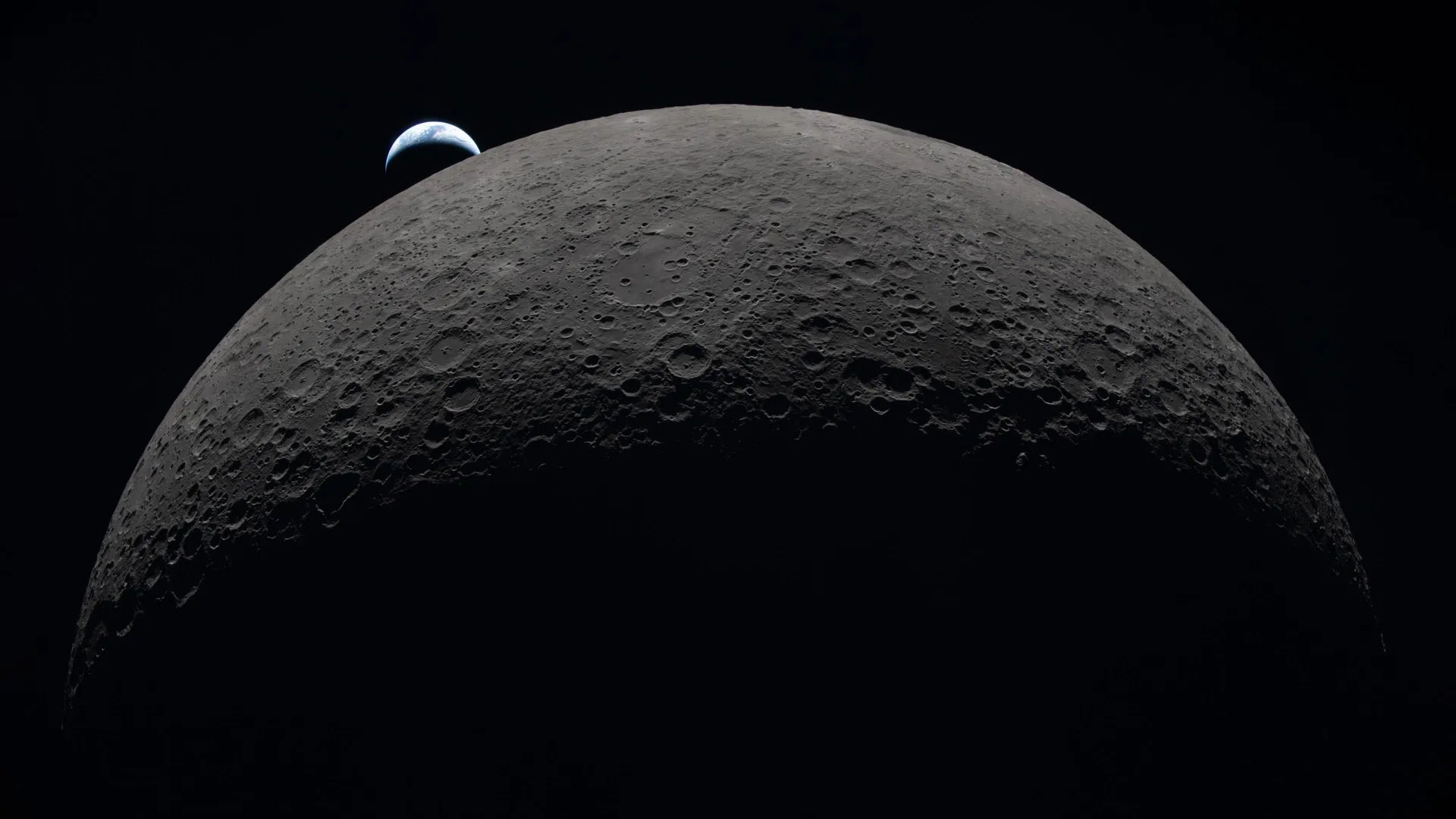
- The Modeling Phase: Following the confirmation of microbial toughness, the team utilized high-resolution elevation and temperature data from NASA’s Lunar Reconnaissance Orbiter (LRO). By mapping the topography of the lunar South Pole, the researchers simulated environmental conditions at sites such as the Nobile Rim, Connecting Ridge, and De Gerlache Rim.
- Future Milestones: As the Artemis program progresses, these models will serve as the baseline for contamination control protocols, ensuring that human activities do not permanently alter the pristine chemical record of the lunar surface.
Supporting Data: The Anatomy of a Survivor
The study’s core concern is the "hitchhiker" effect. On average, a human carries millions of bacteria on any given patch of skin. Despite rigorous cleaning protocols, it is biologically impossible to strip a human explorer of their microbiome. When these individuals traverse the lunar surface, some of these microbes will inevitably be shed into the surrounding vacuum.
The Five Selected Organisms
To test survival thresholds, researchers selected five specific microbes known for their interaction with spaceflight environments:
- Aspergillus niger: A common fungus found in household environments, which demonstrated the highest resistance to UV radiation.
- Bacillus subtilis: A soil bacterium often used as a model organism for survival in extreme environments.
- Staphylococcus aureus: A human-associated bacterium, commonly found on skin.
- Deinococcus radiodurans: Known for its legendary ability to withstand extreme ionizing radiation.
- Fusarium species: A group of fungi known for their adaptability and resilience.
Environmental Modeling
The researchers defined "survival" as the ability of an organism to remain viable—not necessarily reproducing—for at least one Earth day. The Moon’s unique geography at the poles makes this possible. Because the Moon has a slight axial tilt, the sun remains low on the horizon. This creates a "flashlight effect," where even small ridges, crater rims, or large boulders cast long, deep shadows.
These shadowed regions act as natural refrigerators, preventing the total desiccation and UV-induced degradation of organic matter. The simulations identified "survivable niches" that range from massive crater floors to areas as small as a single astronaut’s boot print. In these tiny pockets of darkness, protected from the sun’s lethal radiation, Earth microbes could persist for extended periods.
Official Responses: The Scientific Community Weighs In
The research team, led by Prabal Saxena at NASA’s Goddard Space Flight Center, frames these findings as a necessary reality check for space agencies.
"Humans are natural explorers, and with them come their voices, their memories—and their microbes," says Saxena. "For some scientists, myself included, that reality can be unsettling. But it also creates an opportunity to turn an imperfect situation into a useful experiment."
The implications are echoed by Andrew Needham, a co-author and Artemis contamination-control scientist. "We need to understand what was there before us, because when we go to Mars to search for signs of life beyond our planet, we will want to make sure it’s not stuff we brought," Needham explained.
Aaron Regberg, a geomicrobiologist at NASA’s Johnson Space Center, noted his own surprise regarding the hardiness of these organisms. "I would have expected these microbes to have dried out," Regberg remarked. The fact that they did not, he argues, forces a paradigm shift in how we define "extremophiles." These microbes are not "space-hardy" by nature, yet they are surviving conditions that should theoretically be lethal.
Implications: Protecting the Search for Life
The implications of this study reach far beyond the Moon. The Moon is being used as a staging ground—a proving ground—for the technology and protocols that will eventually be used on Mars.
The Problem of "Biological Noise"
If we cannot distinguish between indigenous lunar/Martian chemistry and the biological "noise" brought by humans, our ability to identify true extraterrestrial life is severely compromised. If an astronaut visits a site on the Moon and leaves behind Aspergillus niger, and a subsequent robotic mission samples that site, the data could be skewed, potentially leading to a false positive in the search for alien biology.
The Limitations of Sterilization
Robotic spacecraft are currently sterilized by heating them to temperatures exceeding 400 degrees Fahrenheit, a process that kills almost all microbial life. However, this is impossible for crewed missions. Humans are biological systems that cannot be sterilized without causing death or severe harm to the astronaut. Therefore, the goal shifts from total elimination to "characterization."
NASA’s strategy is evolving:
- Baseline Mapping: Scientists must establish exactly what the microbial background is at a landing site before humans arrive.
- Containment Zones: Designating "pristine" zones near the South Pole that are strictly off-limits to human activity to preserve them for sensitive scientific research.
- Technological Development: Developing better tools to detect and differentiate Earth life from potential alien life, as noted by Heather Graham at NASA Goddard.
The Reality of "Surviving vs. Thriving"
It is vital to clarify that the study does not suggest the Moon is becoming a breeding ground for Earth life. The Moon lacks the two most critical ingredients for life as we know it: liquid water and an atmosphere. While the shadowed regions are cold and protected, they are not environments where a fungus can grow or reproduce. They are, effectively, deep-freezers. The microbes that arrive there will remain in a dormant state, waiting for conditions that the Moon currently cannot provide.
Conclusion: A New Frontier of Responsibility
The findings published in Science Advances provide a sobering reminder of the impact humans have on the environments they visit. As we look toward the South Pole of the Moon, we are not just bringing our tools and our ambitions; we are bringing a biological legacy.
By identifying these "survivable niches," NASA has provided a roadmap for better planetary protection. We now know that our footprint is not just a physical impression in the lunar regolith; it is a microscopic one that could last far longer than we ever anticipated. As we push deeper into the solar system, the stewardship of these celestial bodies will be defined by our ability to keep our own biology in check, ensuring that when we finally find life elsewhere, we can be certain it didn’t come from home.