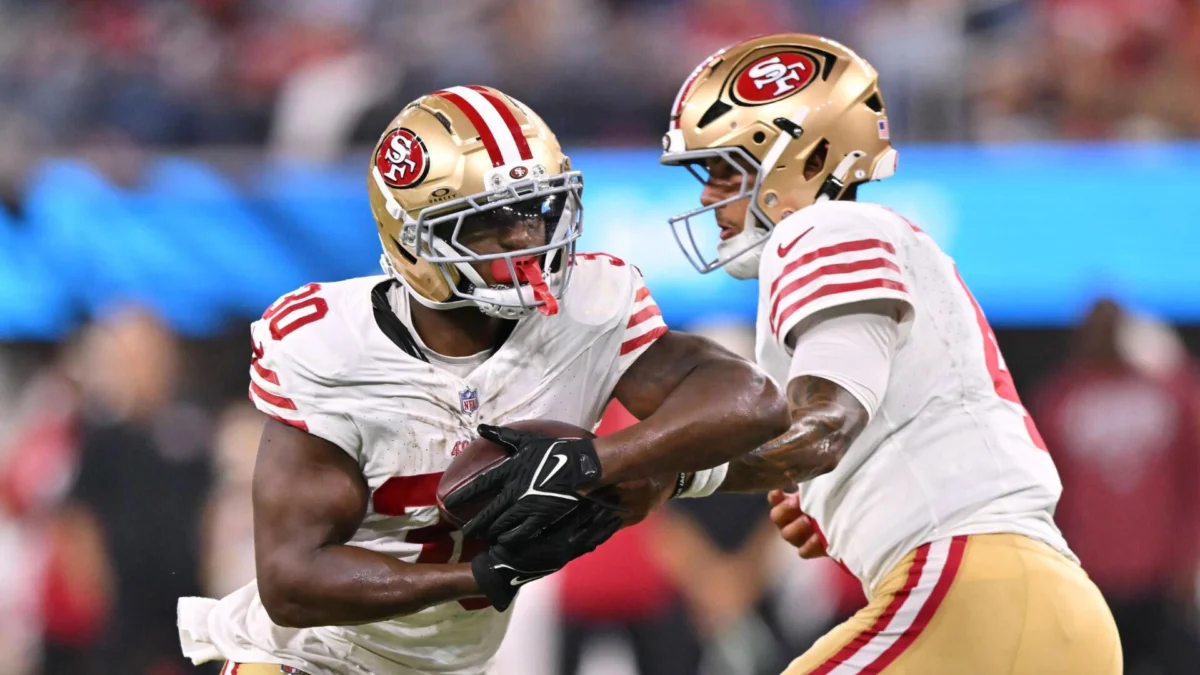
The 2026 NFL preseason has reached its fever pitch, and with the regular season looming on the horizon, roster construction has become the primary focus for front offices across the league. In a move designed to stabilize a rapidly thinning position group, the New Orleans Saints and the San Francisco 49ers finalized a player-for-player trade late Saturday night. The deal sends veteran linebacker Deion Jones to the Bay Area in exchange for running back Zamir White, a transaction that provides immediate depth for New Orleans while offering San Francisco a veteran insurance policy at the second level of their defense.
For the Saints, the acquisition of White is a reactive measure necessitated by a sudden injury crisis. With Alvin Kamara sidelined by an MCL sprain and several younger prospects battling ailments, the team’s backfield depth had reached a precarious state. By trading away Jones—a player who was effectively on the roster bubble—New Orleans secures a proven ball carrier without disrupting their salary cap structure.
Chronology of a Shifting Roster
The sequence of events leading to this trade unfolded rapidly over the past three weeks. For the Saints, the trouble began in the preseason opener, when rookie runner Audric Estime suffered an ankle injury that sidelined him indefinitely. The situation worsened significantly this past Saturday, when Devin Neal, another depth piece, aggravated a lingering hamstring injury during game action.
These losses left the Saints’ running back room dangerously thin behind starter Travis Etienne. Recognizing the need for immediate reinforcements, the front office engaged in trade discussions. Deion Jones, who had signed with New Orleans just over two weeks ago on August 7, became the primary asset in these negotiations. Despite his pedigree as a former Atlanta Falcons starter, Jones found himself buried on the Saints’ unofficial depth chart, leaving the team comfortable in parting ways with the veteran to address their more pressing offensive need.
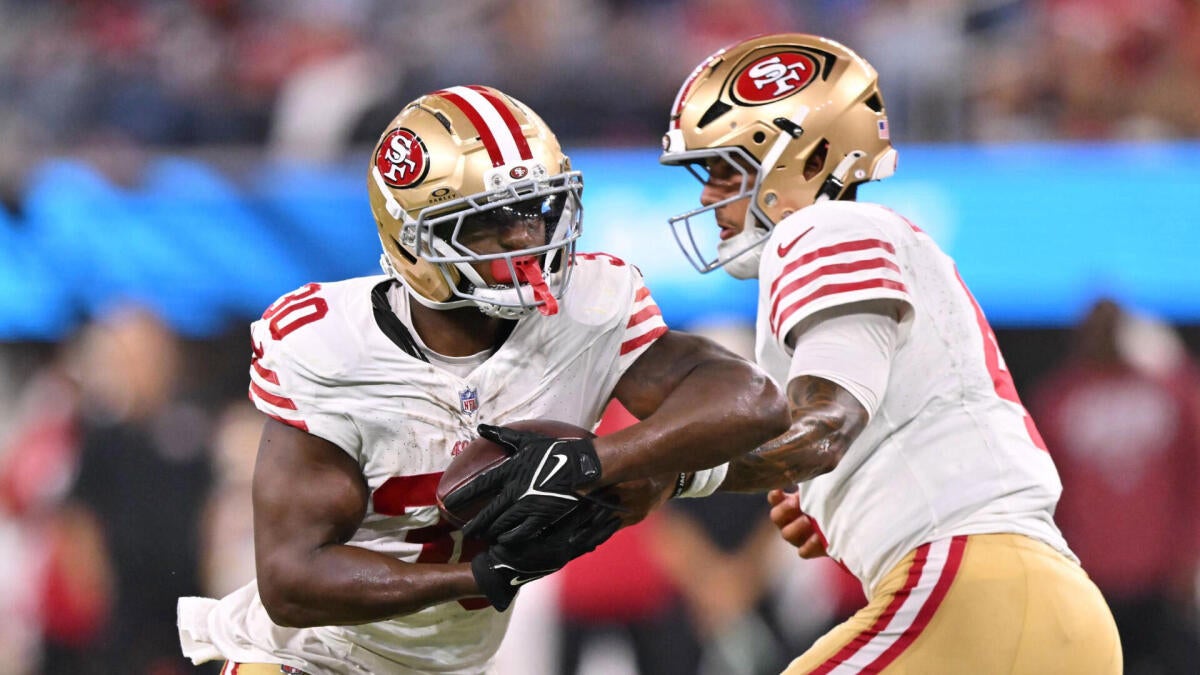
On the San Francisco side, the 49ers had only recently signed Zamir White—on August 12—to a one-year, $1.2 million deal. White, who spent his first four professional seasons with the Las Vegas Raiders, arrived in the Bay Area looking for a fresh start. However, the 49ers’ internal evaluations quickly shifted as they identified a need for linebacker depth behind stars Fred Warner and Tatum Bethune. When the opportunity arose to swap a sixth-string running back for a veteran linebacker with nearly a decade of experience, the 49ers acted swiftly to consolidate their roster.
Supporting Data and Personnel Profiles
The Zamir White Scouting Report
Zamir White brings a workmanlike approach to the New Orleans backfield. During his four-year tenure with the Las Vegas Raiders, White accumulated 736 rushing yards across 45 appearances. While he may not possess the explosive ceiling of a primary superstar, he is a reliable between-the-tackles runner who understands professional blocking schemes. His arrival in New Orleans is timely; with Kamara’s MCL recovery timeline uncertain, White provides a "plug-and-play" option that allows the coaching staff to manage the workload of Travis Etienne during the grueling first month of the season.
The Deion Jones Resurgence Attempt
Deion Jones remains a fascinating, albeit nomadic, figure in the NFL. During his prime years in Atlanta (2016–2021), he was widely considered one of the most athletic coverage linebackers in the league. However, the last four seasons have seen Jones bounce between three different franchises. His stint with the Tampa Bay Buccaneers in 2025 yielded 29 tackles in 17 games, a modest output that reflects his transition into a situational, rotational role. For San Francisco, the hope is that Jones can rediscover his defensive instincts under the tutelage of a coaching staff known for maximizing linebacker efficiency.
Strategic Implications for the New Orleans Saints
The "B-" grade assigned to this trade for the Saints reflects the dual nature of the move: it is a smart piece of maintenance, but it highlights the fragility of their current roster.
Addressing the Backfield Crisis
The injury to Alvin Kamara is the catalyst for everything happening in New Orleans right now. Kamara is the engine of the Saints’ offense, and an MCL sprain, regardless of severity, requires caution. With Devin Neal and Audric Estime both unavailable, the Saints were staring at a scenario where a single injury to Travis Etienne could have forced them to sign a street free agent with zero knowledge of their playbook. Zamir White provides a safety net that is arguably superior to any other option currently available on the open market.
Salary Cap and Roster Efficiency
One of the most impressive aspects of this trade is the fiscal responsibility involved. By trading Jones—who carried a $1.3 million price tag—for White, the Saints effectively swapped two players of similar value without adding a single cent to their cap ledger. Furthermore, by parting ways with Jones, who was viewed as a fourth-teamer and a potential cut candidate, the Saints saved themselves the difficult decision of choosing which veteran to waive during the final roster trim-down.
Strategic Implications for the San Francisco 49ers
The 49ers’ decision to pull the trigger on this trade earns a "C+" grade, primarily because it addresses a specific depth need while accepting the inherent risk of thinning out the running back room.
Defensive Depth Stability
San Francisco’s defense is built around the elite play of Fred Warner. However, the 2025 season served as a harsh reminder of what happens when that core is compromised; when Warner went down with an ankle injury, the defense suffered a noticeable dip in communication and coverage efficiency. Tatum Bethune proved to be a capable replacement, but the 49ers lacked a true veteran "third man" who could step in without a significant drop-off. Deion Jones provides that insurance. Even if he does not start, his ability to diagnose plays and rotate into sub-packages allows the 49ers to keep their starters fresh for a potential deep playoff run.
The RB Risk
The risk here is clear: the 49ers are essentially betting that Christian McCaffrey’s durability will hold. By trading away White, they have further thinned the herd behind a superstar who is no stranger to the injury report. However, the front office clearly feels comfortable with their internal depth chart, especially following the recent signing of Khalil Herbert. Herbert, brought in after Patrick Taylor Jr. landed on injured reserve, appears to be the preferred depth piece in the eyes of the San Francisco coaching staff.
The Broader Landscape of the 2026 Preseason
This trade is emblematic of the "churn" that defines the final two weeks of August in the NFL. As teams transition from training camp drills to final roster preparations, the value of a veteran backup—whether at running back or linebacker—fluctuates wildly based on injury reports and depth chart hierarchies.
For the Saints, the priority is survival. By securing White, they have ensured that they will have a full complement of running backs to rotate during the final week of the preseason. This allows them to avoid overworking their starters and gives the offensive line a chance to build chemistry with multiple backfield partners.
For the 49ers, the priority is championship-level depth. They are a team with Super Bowl aspirations, and in the NFL, those teams are often defined by the strength of their reserves. If Deion Jones can provide even 75% of his former production, this trade will be viewed as a masterstroke of roster management.
As we look toward the start of the regular season, both teams have utilized this trade to shore up weaknesses exposed by the unpredictability of preseason play. Whether these moves pay dividends on the scoreboard will be determined in the coming months, but for now, the front offices in New Orleans and San Francisco have successfully navigated a difficult period of roster volatility with calculated, low-risk maneuvers.