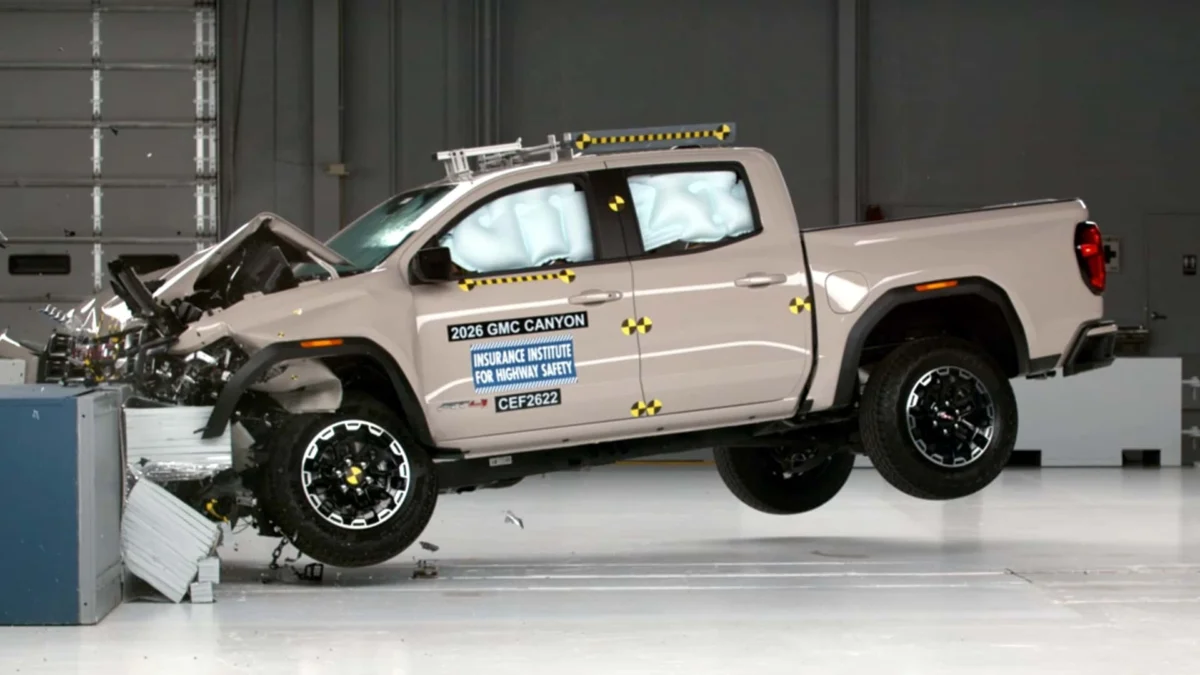
The automotive landscape is undergoing a seismic shift in how vehicle safety is evaluated. As consumer demand for midsize trucks reaches a fever pitch, the benchmarks for what constitutes a "safe" vehicle have moved beyond traditional crash tests. In its latest round of evaluations released on September 3, the Insurance Institute for Highway Safety (IIHS) delivered a sobering report for General Motors: the 2026 GMC Canyon crew cab failed to secure the coveted Top Safety Pick or Top Safety Pick+ designations.
Despite being equipped with six standard airbags and a robust suite of modern safety hardware, the Canyon struggled to meet the increasingly stringent criteria set by the Institute. The failure highlights a widening gap between older safety standards and the modern, more rigorous testing protocols designed to protect passengers in an era of heavier, more powerful vehicles.
The Evolution of Safety: A Chronology of the IIHS Assessment
The IIHS has spent the last two years systematically updating its testing methodologies to reflect real-world accident data. Historically, vehicles were judged on their ability to withstand impacts against static barriers. Today, however, the focus has shifted toward high-speed pedestrian detection, nighttime collision avoidance, and the protection of passengers in the rear seating row—an area that was previously overlooked by many manufacturers.
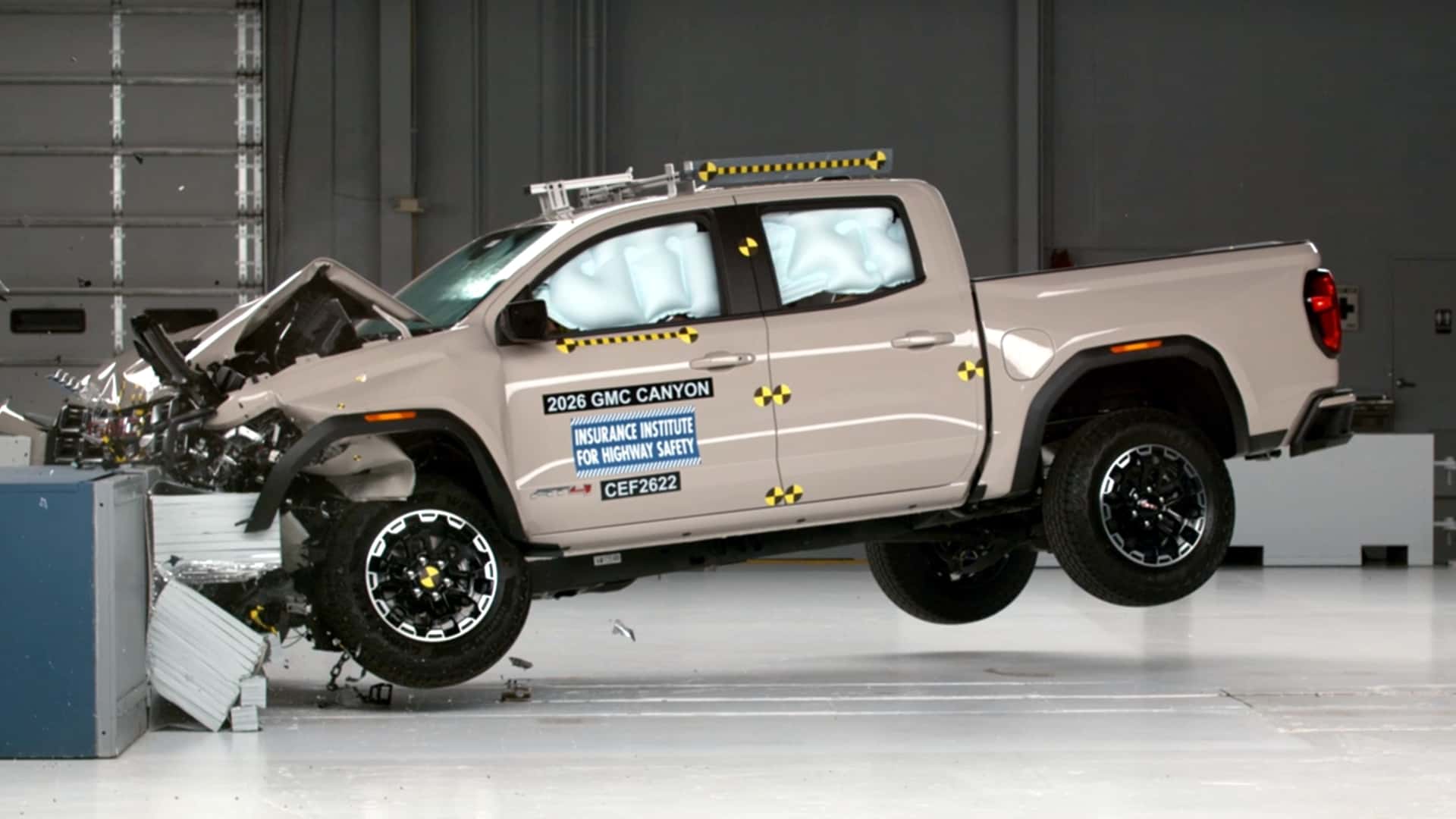
When the 2026 GMC Canyon arrived at the IIHS facility, it was expected to perform well given its modern architecture. However, the testing process revealed a disconnect between the truck’s design and the updated "moderate overlap front" crash test. This specific test is designed to simulate a crash where only a portion of the vehicle’s front end strikes another object.
In this scenario, the IIHS recorded significant movement of rear-seat occupants. The dummy sensors indicated that passengers in the back were sliding forward in a manner that significantly increased the risk of head and chest injuries. This, combined with a "poor" rating in the vehicle-to-vehicle front crash prevention category, effectively barred the Canyon from any award consideration for the 2026 model year.
Dissecting the Data: Where the Canyon Fell Short
To understand why the Canyon missed the mark, one must look at the specific metrics that now dictate IIHS scoring. The Institute’s criteria for a "Top Safety Pick" are no longer just about survival; they are about injury mitigation.
1. The Rear Seat Vulnerability
The updated moderate overlap front crash test has become the "great equalizer" for midsize trucks and SUVs. In the 2026 Canyon, the test results demonstrated that the rear-seat restraint systems—specifically the seatbelts and side-curtain airbags—did not adequately contain the occupants during the high-energy impact. The data showed that rear passengers experienced excessive forward travel, leading to potential contact with the front seatbacks or interior cabin structures. For a vehicle often marketed as a family-friendly lifestyle truck, this finding is particularly significant for parents and guardians who rely on the rear cabin for child safety seats.
2. Front Crash Prevention and Technology
The second major hurdle was the vehicle-to-vehicle front crash prevention evaluation. The IIHS has tightened its requirements for automatic emergency braking (AEB) systems. The current standard mandates that a vehicle must not only detect passenger cars but also effectively mitigate collisions with motorcycles and heavy trucks at higher speeds.
The Canyon’s system failed to meet these heightened thresholds. While the truck features active safety tech, the IIHS noted that the software and sensor calibration did not demonstrate the level of reliability required for the Institute’s highest marks. In the modern automotive market, where semi-autonomous driver-assistance systems are becoming standard, the performance of these "invisible" safety nets is just as critical as the steel frame surrounding the passengers.
Industry Context: The Difficulty of the New Testing Round
The 2026 Canyon is not alone in its struggle. The latest round of testing has proven to be a difficult barrier for many manufacturers. The transition to these stricter tests has seen a reduction in the number of vehicles receiving the "Top Safety Pick+" badge, which is currently the highest accolade an automaker can achieve.
Only the Tesla Model Y and the Kia Telluride managed to secure the "Top Safety Pick+" status in this specific testing cycle. Other notable contenders, including the BMW 3 Series, the BMW i4, the Lexus IS, and the Toyota Crown Signia, also failed to reach the top tier. This suggests that the IIHS has successfully raised the bar for the entire industry, pushing automakers to rethink how they engineer vehicle cabins for long-term occupant safety.
Official Responses and Engineering Challenges
In the wake of the report, General Motors provided a formal, albeit brief, response to the findings. A spokesperson for the company emphasized that all GMC vehicles are designed to meet or exceed all federal safety standards mandated by the National Highway Traffic Safety Administration (NHTSA).
"We are committed to the safety of our customers," the statement read. "Our engineering teams are currently reviewing the data provided by the IIHS to better understand the performance outcomes and to identify potential opportunities for future vehicle updates."
Industry analysts suggest that this response is typical for a major automaker. Because the Canyon is a relatively recent design, making structural changes to improve rear-seat protection or overhauling sensor software for AEB systems will likely require a mid-cycle refresh. While GM did not commit to an immediate recall or a specific engineering timeline, the pressure to maintain market competitiveness will likely drive a "silent" update to these systems in future production runs.
Implications for the Consumer
For the prospective buyer, these results serve as a critical reminder that "new" does not always mean "best in class" regarding safety. The 2026 GMC Canyon remains a capable, powerful, and technologically advanced truck, but its performance in these specific IIHS tests is a factor that cannot be ignored—especially for those who prioritize safety for rear-seat passengers.
What Should Buyers Look For?
- Family Usage: If your primary use for a crew cab involves transporting children or elderly passengers, the IIHS findings regarding rear-seat restraint performance should be a primary consideration.
- Technological Expectations: If you prioritize active safety features, such as advanced emergency braking and collision avoidance, it is worth monitoring if GMC releases a software patch or hardware update that triggers a re-test by the IIHS.
- The "Safety Gap": It is important to remember that the IIHS tests are voluntary and more rigorous than the baseline federal requirements. A vehicle that fails an IIHS test is still built to be safer than many older vehicles on the road today. However, for a brand like GMC, which positions itself as a premium manufacturer, the lack of an IIHS accolade is a notable blemish.
Looking Ahead: The Path to Improvement
The path forward for the GMC Canyon is clear. To regain its standing in the eyes of safety advocates, GM must address the kinetic energy management of the rear cabin and refine the sensitivity and scope of its front-facing radar and camera systems.
As we move further into the 2026 model year, the industry will be watching closely to see how quickly manufacturers can pivot to meet these new, higher expectations. For consumers, the best course of action is to remain informed. As the IIHS continues to evolve its testing, previously "safe" vehicles may be re-evaluated, and manufacturers will be forced to compete on a new frontier of safety.
Ultimately, the failure of the 2026 GMC Canyon to earn an award is a testament to the fact that the automotive industry is in a constant state of improvement. While the Canyon didn’t secure a win this time, the pressure exerted by the IIHS ensures that the next iteration of the truck—or the next firmware update—will likely be engineered with a much sharper focus on the very metrics that tripped it up this year. Safety is a moving target, and for GMC, the work to hit that target is already underway.