By Editorial Staff
September 4, 2026
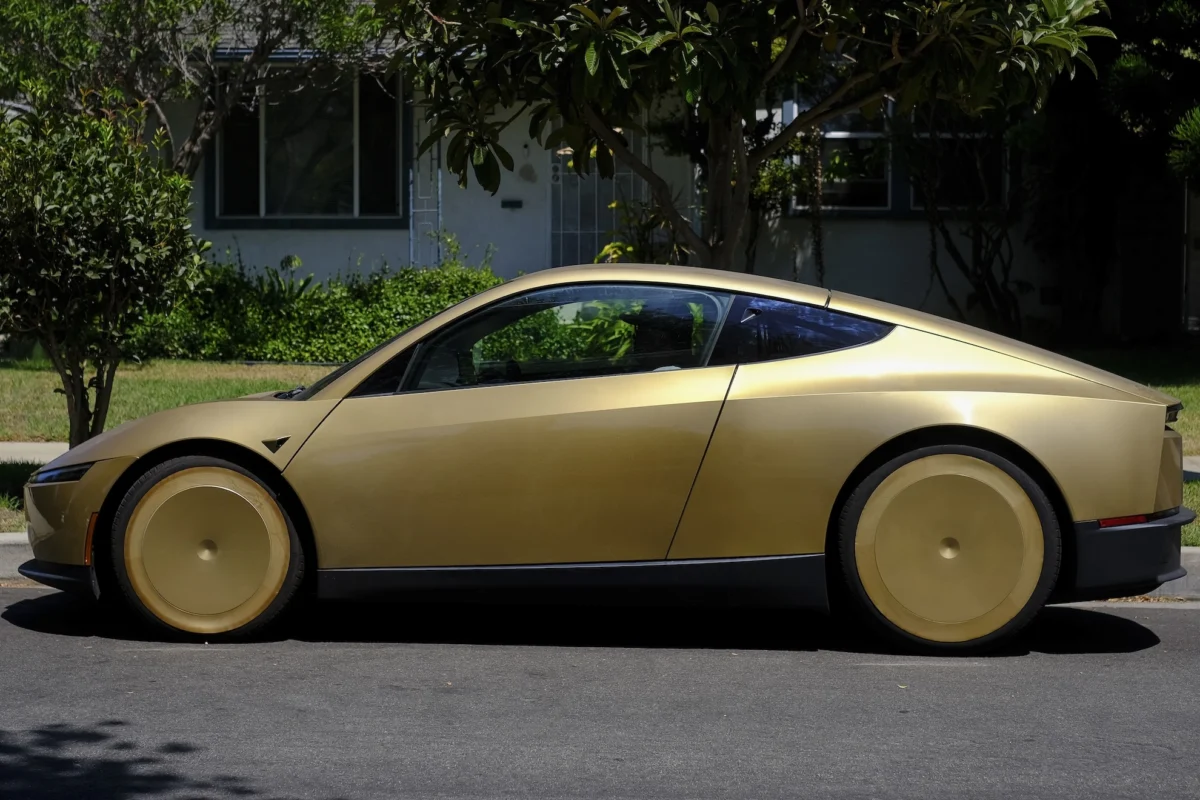
The dawn of the autonomous era has hit a significant, perhaps inevitable, bureaucratic roadblock. Early Friday morning, just hours after Tesla officially deployed its highly anticipated "Cybercab"—a vehicle designed entirely without steering wheels, brake pedals, or accelerator pedals—onto the public streets of Austin, Texas, the National Highway Traffic Safety Administration (NHTSA) announced an immediate investigation into the safety and compliance protocols surrounding the vehicle’s launch.
The move marks a high-stakes confrontation between the federal government’s primary automotive safety regulator and the world’s most prominent manufacturer of electric vehicles. As Tesla attempts to redefine personal transportation, the NHTSA’s intervention signals that the transition to a driverless future will be governed by rigorous, potentially contentious, federal oversight.
The Core Conflict: Self-Certification vs. Safety Standards
At the heart of the dispute is the mechanism of "self-certification." Under current U.S. automotive law, manufacturers are permitted to self-certify that their vehicles meet Federal Motor Vehicle Safety Standards (FMVSS). Tesla has maintained that the Cybercab, despite its radical departure from conventional vehicle design, satisfies these federal mandates.
However, the NHTSA’s sudden probe suggests that the agency is not merely taking Tesla at its word. The agency has formally initiated an investigation to "examine the process and technical data on which Tesla relied when certifying the Cybercab." Specifically, regulators are scrutinizing how Tesla determined that traditional safety requirements—which were written with human-operated vehicles in mind—are either applicable or inapplicable to a vehicle that lacks manual controls.
"We are opening this investigation to ensure that the public’s safety remains the paramount priority," a spokesperson for the agency stated. "The transition to autonomous transit requires a transparent, data-driven approach to certification, particularly when dealing with vehicles that lack any form of manual intervention capability."
A Chronology of the Cybercab Deployment
The events leading up to this regulatory investigation have been fast-moving and high-profile:
- June 25, 2026: The Department of Transportation, under the Trump administration, formally proposes the removal of long-standing requirements for brake pedals and steering wheels for vehicles explicitly designed for autonomous operation. This proposal is widely viewed as a regulatory green light for Tesla’s pending robotaxi fleet.
- August 2026: Tesla ramps up testing in Austin, Texas, filing documentation with state and federal authorities asserting that the Cybercab design complies with existing safety frameworks through new, proprietary safety systems.
- September 3, 2026 (Late Evening): Tesla quietly begins the public deployment of its first Cybercab fleet in downtown Austin, allowing initial riders to experience a steering-wheel-free commute.
- September 4, 2026 (5:01 AM PDT): The NHTSA issues a formal notice of investigation, effectively challenging the legality of the deployment and demanding full transparency regarding the company’s internal safety testing data.
The Regulatory Landscape: A Shifting Foundation
The tension between Tesla and the NHTSA is set against a backdrop of rapidly evolving policy. For decades, FMVSS regulations were written under the assumption that a human driver would be present to take control in the event of an emergency. The physical presence of a brake pedal is an anchor of this philosophy.
When the administration proposed axing these requirements in June, it was intended to foster innovation and solidify the United States’ lead in the autonomous vehicle (AV) race. However, critics, including various consumer safety advocacy groups, argued that such deregulation could expose the public to "beta-testing" on public roads.
The NHTSA’s investigation is now testing the limits of that deregulation. By focusing on whether Tesla’s certification "depended on determinations that certain federal motor standards are inapplicable," the agency is essentially asking: Who gets to decide when a safety standard is obsolete?
Implications for Tesla and the Autonomous Industry
The ramifications of this investigation extend far beyond Tesla’s balance sheet. If the NHTSA determines that Tesla’s self-certification process was insufficient, it could result in a fleet-wide recall or an immediate suspension of Cybercab operations. Such an outcome would be a devastating blow to the company’s vision of a "robotaxi future" and could trigger a massive decline in investor confidence.
Furthermore, this investigation sets a precedent for every other company working on autonomous technology, including Waymo, Zoox, and GM’s Cruise. If Tesla is forced to retrofit its vehicles or undergo a more arduous, government-led certification process, the timeline for the widespread adoption of driverless vehicles could be delayed by years.
Technical Data and Transparency
Tesla has long relied on its vast fleet of existing vehicles—which utilize the "Full Self-Driving" (FSD) software suite—to collect the data necessary to train its autonomous AI. However, the jump from "supervised autonomy" to "unsupervised, no-manual-control autonomy" is a massive technical leap. The NHTSA is specifically looking for proof that the Cybercab’s fail-safe systems are robust enough to handle "edge cases"—rare, unexpected road scenarios that have historically challenged AI drivers.
The Industry Response and Broader Context
The broader automotive industry is watching the Austin situation with intense interest. Traditional automakers have historically preferred a more cautious approach, integrating autonomous features into vehicles that still retain steering wheels and pedals. By choosing to eliminate these components entirely, Tesla has adopted a "first-principles" approach that prioritizes design efficiency and cost-cutting, but at a significant increase in regulatory risk.
Analysts suggest that the outcome of this probe will likely dictate the "regulatory blueprint" for all future AVs in the United States. If the NHTSA allows the Cybercab to continue operating while the probe is underway, it would signal a high degree of confidence in Tesla’s data. Conversely, a shutdown would indicate that the federal government is prioritizing a "safety-first" verification model that could stifle the speed of innovation in favor of public security.
Conclusion: A Turning Point for Transportation
As of midday Friday, the first Cybercabs in Austin were still reportedly navigating the city streets, even as the regulatory firestorm intensified. Tesla has yet to provide a detailed public rebuttal to the NHTSA’s inquiry, though sources close to the company indicate they are "cooperating fully" with the agency’s information requests.
The next few weeks will be critical. The NHTSA will likely require Tesla to submit thousands of pages of sensor data, simulation results, and internal safety assessment reports. For Elon Musk and Tesla, the goal is clear: prove that the Cybercab is safer than a human driver. For the NHTSA, the goal is equally clear: ensure that the removal of the steering wheel is not a removal of the safety standards that have protected the American public for nearly a century.
As this story develops, the central question remains: Is the industry ready to hand over the keys, or is the human hand still a necessary fail-safe on the road to the future? The answer currently resides in the hands of federal regulators in Washington, D.C.
This report is based on initial filings from the National Highway Traffic Safety Administration. TechCrunch will continue to monitor this investigation as more data becomes available.
Quick Reference: Key Regulatory Terms
- FMVSS (Federal Motor Vehicle Safety Standards): The foundational set of regulations that all vehicles sold in the U.S. must meet.
- Self-Certification: The legal process by which manufacturers certify their own vehicles meet safety standards, subject to subsequent government audit.
- AV (Autonomous Vehicle): A vehicle capable of sensing its environment and operating without human involvement.
- NHTSA: The U.S. federal agency tasked with reducing deaths, injuries, and economic losses resulting from motor vehicle crashes.