The United States has quietly passed a grim financial landmark: gross federal debt has breached $40 trillion for the first time in history. Driven by persistent primary deficits and dramatically higher interest rates, the milestone comes as Washington faces a looming confrontation over the statutory debt ceiling, which currently stands at $41.1 trillion.
Despite the escalating risk, Capitol Hill has demonstrated little appetite for substantive deficit reduction. Lawmakers will be forced to address the statutory limit within the next 12 to 18 months to prevent an unprecedented federal default. However, traditional fiscal negotiations are hampered by deep partisan division, shifts toward economic populism in both major parties, and a narrowing set of legislative options.
With net annual interest payments exceeding $1 trillion—consuming roughly 19 percent of all federal tax revenue—the cost of servicing the national debt now surpasses the nation’s entire national defense budget. Financial markets have begun pricing in these structural fiscal imbalances, pushing long-term Treasury yields to near two-decade highs and escalating fears of a self-reinforcing debt spiral.
       U.S. FEDERAL DEBT BREAKDOWN ($40.1 TRILLION TOTAL)
  ┌─────────────────────────────────────────────────────────┐
  │  Publicly Held Debt (Private & Foreign)                 │
  │  $27.8 Trillion (86% of GDP)                            │
  ├──────────────────────────────┬──────────────────────────┤
  │  Intragovernmental Trust     │  Federal Reserve         │
  │  Funds (Social Security/Med) │  Holdings                │
  │  $7.7 Trillion               │  $4.6 Trillion           │
  └──────────────────────────────┴──────────────────────────┘
Chronology: Path to the $41.1 Trillion Cap
The present fiscal gridlock is the result of years of expanding statutory obligations, macroeconomic shocks, and structural budget expansion:
2025 Fiscal Reconciliation Law: Congress last raised the statutory debt ceiling by $5 trillion, resetting the federal borrowing limit at $41.1 trillion. The measure was intended to fund government operations well into the subsequent fiscal cycle, but aggressive spending and rising debt-service burdens shortened the runway.
Early 2026 CBO Baseline: In February 2026, the Congressional Budget Office (CBO) published baseline projections assuming stable interest rates and predictable tariff revenues. These estimates quickly proved overly optimistic.
Mid-2026 Macroeconomic Shocks: A series of unforeseen events eroded federal receipts and inflated borrowing needs:
Judicial Intervention: A landmark Supreme Court ruling struck down broad executive branch uses of tariff enforcement powers, abruptly cutting off tens of billions of dollars in expected federal revenue.
Geopolitical Conflict: Escalating military actions involving Iran triggered a sharp spike in global crude oil prices, reigniting persistent inflationary pressures across the domestic economy.
Yield Surges: In response to inflation risk and relentless Treasury issuance, the 30-year Treasury bond yield climbed to 5.3 percent in mid-August—its highest level in nearly two decades.
Fall 2026 – Reaching the Debt Limit: With federal debt touching $40.1 trillion, Wall Street analysts project the statutory limit of $41.1 trillion will be reached between February and March.
Late 2027 / Early 2028 – The Expected "X-Date": After the debt ceiling is reached, the Treasury Department will be forced to employ "extraordinary measures"—such as suspending investments in federal employee retirement funds—to keep paying obligations. Analysts project the true drop-dead date (the "X-Date"), when extraordinary measures and daily cash flows are fully exhausted, will land between late 2027 and early 2028.
Supporting Data: The Mechanics of a $40 Trillion Balance Sheet
A granular analysis of the $40.1 trillion debt load reveals significant vulnerabilities in both the composition of the debt and the dynamic cost of debt service.
Debt Breakdown and Ownership Structure
The total debt stack is categorized across three primary holdings:
Debt Held by the Public (Private & Foreign Creditors):$27.8 trillion. This represents the portion directly exposed to capital markets and interest-rate volatility. Currently equal to approximately 86 percent of domestic gross domestic product (GDP), the CBO projects this measure will reach 100 percent of GDP within a decade, eclipsing the historic record set in the immediate aftermath of World War II.
Intragovernmental Holdings (Trust Funds):$7.7 trillion. These funds are held in dedicated government accounts, primarily earmarked to cover future obligations for Social Security, Medicare, and military/civilian retirement programs.
Federal Reserve Holdings:$4.6 trillion. Accumulated largely through historical quantitative easing operations, these holdings are gradually declining as the central bank manages its balance sheet.
       PROJECTED SHARE OF FEDERAL REVENUE DEVOTED TO NET INTEREST
  35% ───────────────────────────────────────────────────────────── (High-Rate Risk)
  30% ───────────────────────────────────────────────────────────┐
  25% ─────────────────────────────────────────── 2036 (CBO Est) │
  20% ───────────── 2026 Current (~19%)          │               │
  15% ──────────┐                                │               │
  10% ──────────┤                                │               │
   0% ──────────┴────────────────────────────────┴───────────────┴─
               2026                             2036           Stress Scenario
The Cost of Borrowing
The dynamic driving the fiscal deterioration is the shift in net interest costs:
Annual Net Interest Outlays: Net interest payments have surpassed $1 trillion annually, absorbing nearly 19 percent of total federal tax receipts.
Long-Term Trajectory: Baseline CBO estimates project net interest outlays will reach $2 trillion annually within ten years, consuming 25 percent of all revenue.
Sensitivity Analysis: Independent market strategists warn that if persistent inflation keeps long-term yields elevated, debt service could swallow 33 percent (one-third) of all federal revenues within a decade, forcing a severe squeeze on both defense and non-defense discretionary spending.
Official Responses: Lawmakers and Analysts Speak Out
The reaction on Capitol Hill and across Wall Street reflects deep partisan polarization alongside growing anxiety from budget analysts and institutional investors.
The Political Divide in Congress
           CAPITOL HILL APPROACHES TO THE DEBT CRISIS
┌──────────────────────────────────────┬──────────────────────────────────────┐
│         REPUBLICAN STRATEGY          │          DEMOCRATIC STRATEGY         │
├──────────────────────────────────────┼──────────────────────────────────────┤
│ • Cut discretionary spending         │ • Increase revenue via targeted taxes │
│ • Preserve core Social Security/Med  │ • Eliminate wage cap on payroll tax  │
│ • Unwind 2025 healthcare cuts        │ • Restructure/disarm debt ceiling    │
│ • Utilize Budget Reconciliation      │ • Reduce national defense spending   │
└──────────────────────────────────────┴──────────────────────────────────────┘
The Republican Position
GOP leadership continues to advocate for spending reductions as a condition for raising the debt cap, while maintaining that core entitlement benefits for current retirees should remain untouched.
"I think more and more people are realizing that it’s just simply unsustainable going forward. The challenge here is to find a way to make good on the promises to people who have been paying into the system, but also recognizing that we have a serious math problem."
— Rep. Lloyd K. Smucker (R-Pa.), senior member and leading candidate to chair the House Budget Committee
Former Republican Speaker Paul D. Ryan criticized both major parties for retreating into fiscal populism that avoids structural fixes:
"Both sides have become populist parties. And populists believe things like debt reduction, entitlement reform is unpopular. Therefore we don’t have anything close to the politics we need to get this stuff done."
— Paul D. Ryan, Former Speaker of the House
The Democratic Position
Democrats maintain that fiscal stabilization must come through increased tax collection on high earners and corporations, while defending human-services investments and targeting defense spending for cuts.
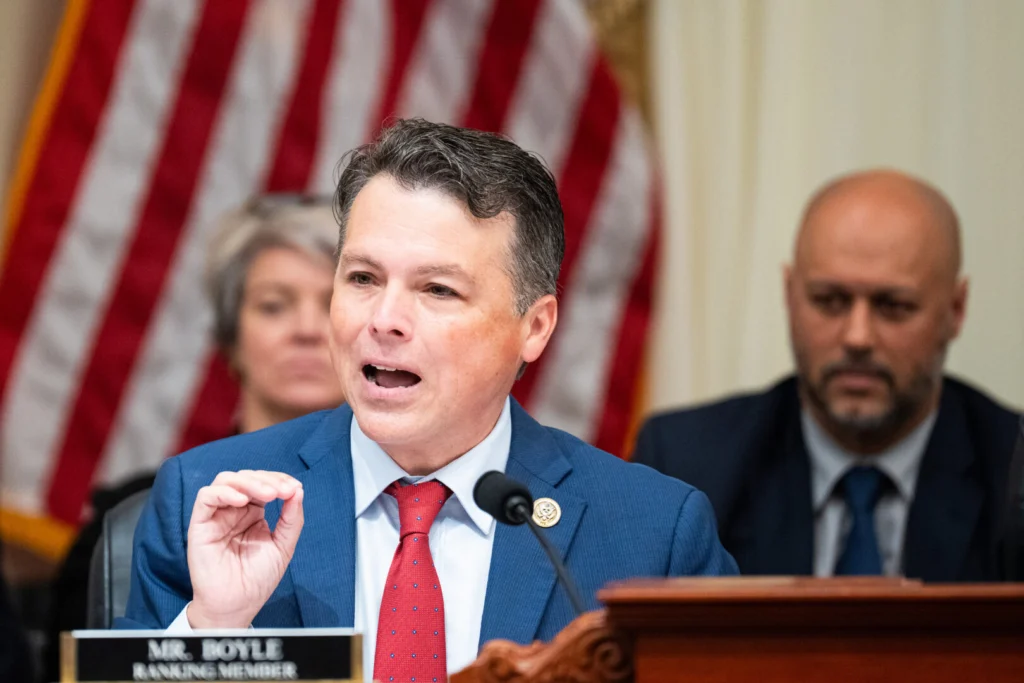
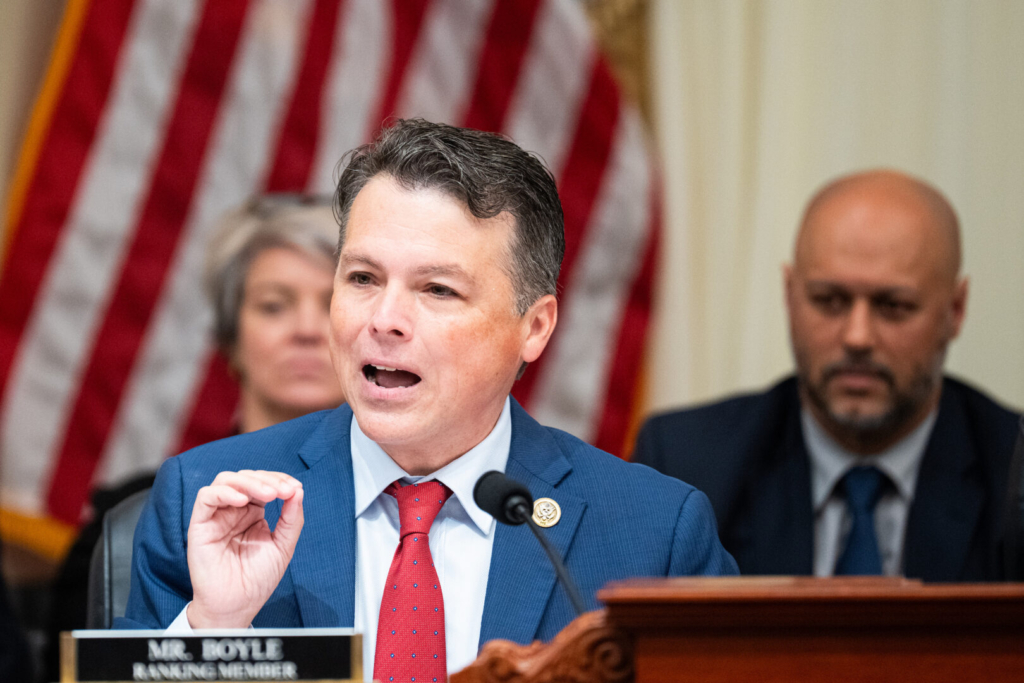
"At the very least we need to make sure that we take this powerful weapon permanently off the table. I’m not going to just vote for a temporary extension so that then the next time there’s a Democrat in the White House, Republicans can again cynically use the debt ceiling."
— Rep. Brendan F. Boyle (D-Pa.), Ranking Member of the House Budget Committee
Senate Democrats have advanced structural proposals to extend program solvency:
"Eliminate the cap on wages subject to the Social Security payroll tax, subject high earners’ investment income to Social Security tax, repeal the 2025 Republican tax cuts, and mandate direct price negotiations for Medicare while trimming defense outlays."
— Sen. Jeff Merkley (D-Ore.), Ranking Member of the Senate Budget Committee
Financial and Market Analysts
Market observers note that while bond markets have historically accommodated U.S. sovereign issuances, structural shifts are altering investor tolerance:
"If you change any of those assumptions like higher interest rates, you could get into scenarios where you’re seeing like a third of tax revenue going to debt service costs. And you can get yourself into this negative feedback loop where a smaller and smaller share of your tax revenues are going towards discretionary and other mandatory spending."
— Ryan Kimmel, Asset Allocation Strategist, DoubleLine Capital
"The accumulation of debt and higher interest rates are starting to scare people. I think it is making a difference in how people are thinking and talking about this."
— Marc Goldwein, Senior Vice President, Committee for a Responsible Federal Budget
On the mechanics of upcoming congressional action, policy analysts express skepticism regarding quick legislative solutions:
"It’s possible that losing the House or Senate will crystallize things and will get Republicans to move and put in a reconciliation bill… Trump wants it done, but he is going to have to take the lead in forging consensus and urgency around it."
— Don Schneider, Deputy Head of U.S. Policy at Piper Sandler
"With off-the-cuff projections, the debt could hit the limit around February or March, with the ultimate x-date falling in late 2027 or early 2028."
— Lou Crandall, Chief Economist, Wrightson ICAP
Implications: Market Risk, Feedback Loops, and Entitlement Cliffs
The interplay between reaching the $40.1 trillion national debt mark and approaching the $41.1 trillion debt ceiling creates significant structural challenges across three major areas:
1. The Fiscal Feedback Loop and Sovereign Market Risk
As interest costs expand to consume nearly 20 percent of government revenues, the Treasury must issue more bonds simply to service existing debt obligations.
This growing supply of government paper risks crowding out private investment and driving up capital costs for domestic businesses. If global bond investors demand higher inflation and term premiums, yield curves could remain elevated, compounding the dynamic:
This dynamic restricts Washington’s capacity to deploy counter-cyclical fiscal policy during economic downturns, leaving the federal budget vulnerable to exogenous shocks.
The deteriorating baseline accelerates the timeline for trust fund depletion:
Social Security & Medicare Trust Funds: CBO and program actuaries project that without intervention, major trust fund reserves will be exhausted by 2034.
Automatic Benefit Adjustments: Under current law, fund insolvency would mandate automatic, across-the-board benefit reductions of up to 20 to 25 percent as early as 2032.
Because statutory debt limits dominate short-term political battles, lawmakers risk delaying structural entitlement adjustments until the trust funds face imminent insolvency, increasing the potential shock for beneficiaries.
3. Legislative Strategies and Governance Risks
As Congress confronts the $41.1 trillion limit, three legislative paths remain available:
Lame-Duck Budget Reconciliation ("Reconciliation 4.0"): House and Senate Republicans could attempt to attach a debt limit increase to a post-election budget reconciliation package. However, this strategy requires uniform party discipline in a simple-majority vote and faces resistance from members reluctant to authorize higher debt caps without guaranteed spending offsets.
Bipartisan Negotiated Settlement: If congressional majorities shift following elections, a filibuster-proof 60-vote threshold in the Senate will mandate a bipartisan compromise. This scenario would likely combine short-term caps on discretionary spending with revenue adjustments or statutory debt-commissions.
Structural Disarmament of the Ceiling: Proponents of reform, including Rep. Boyle, argue for removing the debt limit as a political bargaining chip. Passing legislation allowing the Treasury Department to suspend the cap unilaterally—subject only to a congressional resolution of disapproval—would remove default risks from legislative negotiations, though it faces strong opposition from fiscal conservatives.
Without a broader political consensus on tax policy and entitlement programs, future debt-limit extensions are likely to remain temporary, leaving the nation’s fiscal outlook exposed to volatile capital markets and persistent political division.