Main Facts
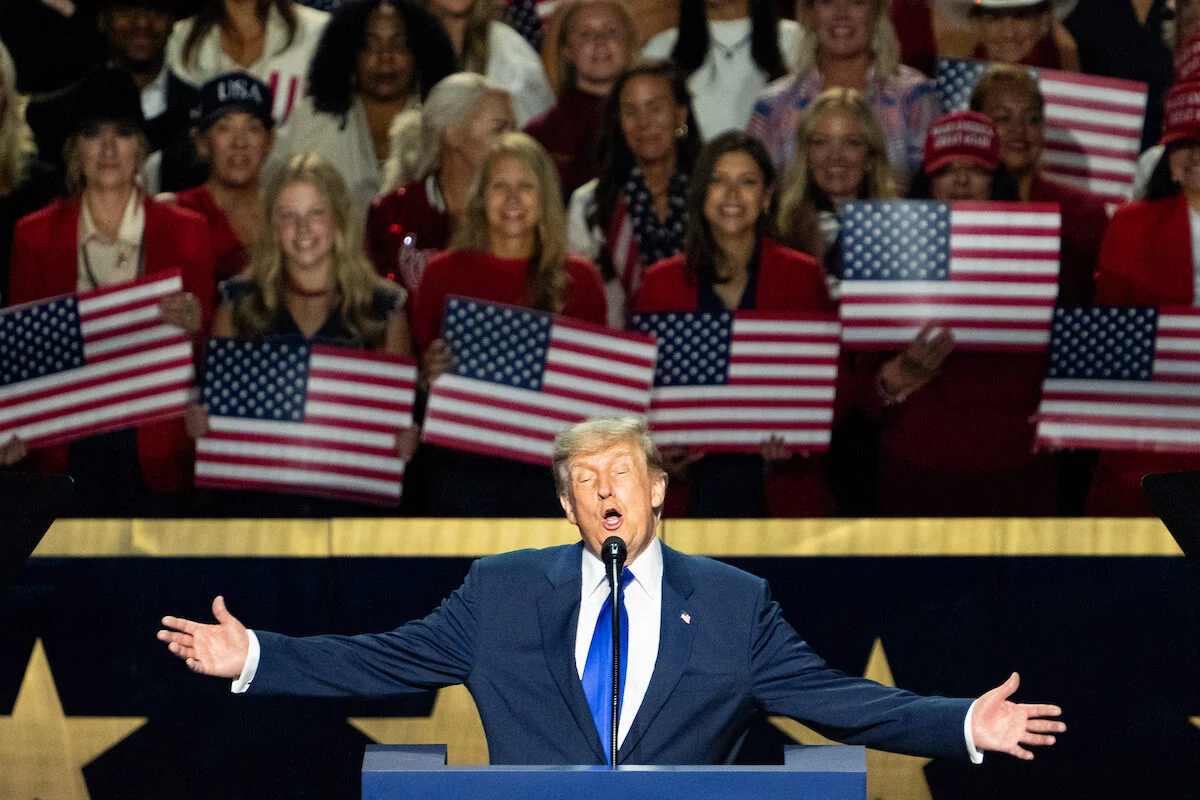
In an unprecedented attempt to reshape the dynamics of off-year elections, the Republican Party convened its first-ever official national "Midterm Convention" in Dallas, Texas, culminating in a prime-time address by President Donald Trump on September 9, 2026. Held at the American Airlines Center, the gathering represented a bold experiment in nationalizing midterm congressional races, traditionally driven by localized campaigning and quiet voter turnout operation.
The three-day event brought together thousands of delegates, grassroots organizers, congressional candidates, and party leaders under one roof—a spectacle typically reserved for quadrennial presidential election years. Speaking before a packed arena, President Trump delivered a high-energy rallying cry intended to galvanize the GOP base, defend razor-thin legislative majorities, and defy the historically persistent trend of midterm losses for the sitting president’s party.
According to Roll Call Campaigns Analyst Nathan L. Gonzales, the Dallas gathering could signal a structural evolution in American campaign strategy. "Depending on how the GOP performs in November, these midterm conventions could quickly transform from a novelty into an enduring tradition for both major parties," Gonzales noted following the event.
The primary objective of the gathering was twofold: to establish a unified national messaging platform centered on key legislative achievements and border security, and to deploy advanced digital turnout infrastructure ahead of the November 2026 elections. By consolidating party resources in mid-September, Republican strategists aimed to overcome the structural enthusiasm gap that frequently afflicts the party holding the White House during non-presidential election cycles.
Chronology of Events
+---------------------------------------------------------------------------------+
|                                 TIMELINE OF EVENTS                              |
+---------------------+-----------------------------------------------------------+
| Early 2026          | RNC leadership proposes formalizing a mid-cycle national  |
|                     | convention to bridge the traditional four-year gap.       |
+---------------------+-----------------------------------------------------------+
| Late August 2026    | Logistics and delegate slates finalized; Dallas selected  |
|                     | as host city for key Sun Belt positioning.               |
+---------------------+-----------------------------------------------------------+
| September 7, 2026   | Day 1: Economic Summit & Legislative Milestones focus.    |
+---------------------+-----------------------------------------------------------+
| September 8, 2026   | Day 2: Border Security, Judiciary & State Leadership.    |
+---------------------+-----------------------------------------------------------+
| September 9, 2026   | Day 3: Keynote address by President Donald Trump at the   |
|                     | American Airlines Center in Dallas.                       |
+---------------------+-----------------------------------------------------------+
| September 10–18,    | Post-convention digital fundraising campaign & national   |
| 2026                | campaign trail push lead into final 50-day window.        |
+---------------------+-----------------------------------------------------------+
Prelude to Dallas: Early to Mid-2026
The origins of the Republican Midterm Convention trace back to early 2026, when national party strategists began evaluating historical mid-cycle vulnerabilities. Recognizing that midterm turnouts routinely drop by 15 to 20 percentage points compared to presidential election years, the Republican National Committee (RNC) authorized a specialized committee to explore new base-mobilization mechanics. By late spring, the decision was finalized to hold a mid-cycle gathering in Dallas, Texas—a crucial political anchor within the shifting demographics of the Sun Belt.
Convention Highlights: September 7–9, 2026
-
Day 1 (September 7): Economic Summit and Legislative Agenda
The convention opened with panels featuring House committee chairs and economic advisors. Discussions focused heavily on tax policy, deregulation, and legislative initiatives designed to lower energy costs. Senate leaders addressed party delegates, stressing the imperative of retaining control of the upper chamber to ensure judicial appointments. -
Day 2 (September 8): Border Security and State Governance
The second day turned its spotlight toward immigration enforcement and law enforcement initiatives. Republican governors took the main stage, asserting that state-level policy victories provided a clear roadmap for national leadership. Evening programming emphasized voter registration drives in swing districts across Arizona, Georgia, and Pennsylvania. -
Day 3 (September 9): The Keynote Address
The climax of the convention occurred on the evening of September 9, when President Donald Trump addressed a crowd of over 18,000 attendees at the American Airlines Center. In a speech lasting over an hour, Trump framed the upcoming midterms as a vital national mandate, warning against legislative gridlock and urging low-propensity voters to turn out in record numbers.
Post-Convention Campaign Blitz: September 10–18, 2026
Following the Dallas event, the RNC launched a coordinated $50 million advertising and field-organizing offensive. Between September 10 and September 18, party surrogates and candidate slates fanned out across crucial House swing districts and vulnerable Senate battlegrounds, seeking to convert the convention’s media visibility into tangible voting momentum.
Supporting Data and Electoral Landscape
The Historical Midterm Trend
The GOP’s strategic gamble must be viewed against a century of political history. Historically, the party controlling the Executive Branch faces substantial headwinds during midterm contests.
| Year / Context | President’s Party | House Seat Net Change | Senate Seat Net Change |
|---|---|---|---|
| 1994 Midterms | Democratic (Clinton) | -54 | -8 |
| 2006 Midterms | Republican (W. Bush) | -30 | -6 |
| 2010 Midterms | Democratic (Obama) | -63 | -6 |
| 2018 Midterms | Republican (Trump) | -40 | +2 |
| 2022 Midterms | Democratic (Biden) | -9 | +1 |
| Historical Average (Since WWII) | Incumbent Party | -26 Seats | -3 Seats |
Data source: Historical Congressional Research Service (CRS) records.
By establishing a centralized, high-visibility convention, the GOP hopes to deviate from this historical average and maintain control of both houses of Congress.
Polling and Key Battlegrounds
Heading into the mid-September stretch, aggregated polling data showed narrow margins across pivotal battleground states:
- Senate Map: Key races in Arizona, Georgia, Nevada, and Pennsylvania remained within the statistical margin of error ($pm 3.2%$).
- House Control: Out of 435 House districts, analysts identified approximately 35 true "toss-up" seats, primarily concentrated in suburban belts across California, New York, Texas, and the upper Midwest.
- Voter Enthusiasm Gap: Internal party polling published in early September indicated an enthusiasm gap of less than 3 percentage points between registered Republicans and Democrats—a significantly narrower gap than observed at similar points in previous midterm cycles.
Financial and Operational Metrics
The three-day Dallas convention generated measurable logistical and financial returns for the party apparatus:
Midterm Convention Metrics (Dallas, TX)
├── Total Registered Delegates: 4,200
├── Arena Attendance (Keynote): 18,500+
├── Small-Dollar Raised (Sept 9–12): $22.4 Million
└── Digital Ad Impressions Generated: 145 Million
Official Responses and Political Reaction
GOP Leadership
Republican leaders characterized the event as a necessary modern adaptation to nationalized politics. RNC leadership emphasized that the convention provided a rare opportunity to bypass regional media fragmentation and deliver a cohesive, unified message to voters nationwide.
"This convention has proven that our party is not waiting on the defensive," said one senior RNC official in Dallas. "We are bringing the national platform directly to the voters, laying out precisely what we have accomplished and what is at stake if turnout falters."
Democratic National Committee and Opposition
Democratic officials dismissed the Dallas event as an expensive political spectacle designed to distract from policy debate. The Democratic National Committee (DNC) issued counter-statements questioning the utility of a mid-cycle convention.
"Holding a national convention in the middle of a midterm cycle is a sign of deep concern over base turnout," a DNC spokesperson stated during a press briefing on September 10. "No amount of arena staging in Dallas can mask the reality of the economic and legislative challenges facing working families across this country."
Congressional Democrats also argued that nationalizing local races could backfire in moderate suburban districts, where swing voters historically prefer localized, candidate-centric campaigns over sweeping national political rallies.
Independent Political Analysis
Political observers and nonpartisan campaign analysts expressed cautious interest in the strategic precedent set by the event. Roll Call analyst Nathan L. Gonzales stressed that the true metric of success will not be measured in TV ratings or arena crowds, but in November turnout metrics.
"If the GOP manages to hold the House or limit losses below historical averages, every campaign manager in Washington will be booking arena space for 2030," Gonzales noted. "However, if swing voters reject the high-octane, nationalized tone of the convention, it may serve as a caution against over-nationalizing midterm races in the future."
Strategic Implications for American Politics
A Potential Shift in the Midterm Playbook
Should the GOP’s Dallas convention yield positive electoral returns, it could permanently reshape how American political parties approach mid-cycle campaigning.
Traditional Midterm Strategy vs. The Midterm Convention Model

[Traditional Model]
Decentralized Races ──> Localized Messaging ──> Lower National Media Visibility

[New Convention Model]
Centralized Event ──> Unified National Platform ──> High Base Mobilization- Institutionalization of Midterm Conventions: Future political cycles may see both major parties adopting formal mid-cycle conventions, altering the traditional four-year political calendar.
- Nationalization of Campaign Finance: Concentrating small-dollar fundraising around a major televised midterm event allows parties to quickly channel funds directly into key legislative media markets during the crucial 50-day run-up to Election Day.
- Data and Digital Harvesting: Mass-attendance midterm events provide national parties with massive opportunities to harvest digital contact information, refine voter targeting models, and recruit grassroots volunteers on a scale previously confined to presidential election cycles.
Impact on Congressional Governance
The broader political consequences extend beyond campaign mechanics. A nationalized midterm campaign strategy links the political fate of individual congressional candidates directly to the executive branch’s national agenda.
If victorious, lawmakers elected under a unified national convention banner may face stronger party discipline within Congress, further accelerating the nationalization of legislative politics. Conversely, if high-visibility nationalization alienates moderate voters in competitive districts, political parties may be forced to re-evaluate the balance between base-mobilization rallies and localized swing-voter outreach in future midterm elections.