WASHINGTON D.C. – This week on Capitol Hill presented a stark dichotomy, with senators making tangible strides on a critical bipartisan housing bill, poised for a final vote post-Juneteenth recess, even as the legislative agenda was simultaneously derailed by executive branch interventions. President Donald Trump’s eleventh-hour disruption of efforts to renew a vital national security surveillance authority, coupled with a controversial "memorandum of understanding" with Iran, plunged the Senate into a state of frustration and uncertainty, underscoring persistent tensions between the White House and Congress.
While the House of Representatives enjoyed a week-long recess, the Senate navigated a complex landscape of legislative advancements and abrupt executive reversals. The promising bipartisan collaboration on housing stood in stark contrast to the dramatic turn of events surrounding Section 702 of the Foreign Intelligence Surveillance Act (FISA), a key intelligence-gathering tool that officially lapsed on Friday, leaving a significant gap in the nation’s counter-terrorism and foreign intelligence capabilities. The week culminated in a mood of disquiet, with congressional leaders grappling with unexpected presidential directives that threatened to undermine established legislative processes and national security priorities.
The Unraveling of Surveillance Authority: A Chronology of Disruption
The renewal of Section 702 of FISA, a crucial authority enabling the U.S. government to collect foreign intelligence from non-U.S. persons located outside the United States, had been a long-standing point of contention and a top priority for national security officials. Since its enactment in 2008, the provision has been repeatedly reauthorized, albeit often after intense debate concerning its balance between national security and privacy. Intelligence agencies consistently highlight its indispensability for disrupting terrorist plots, countering cyberattacks, and gathering vital intelligence on adversaries.
A Precedent of Delay and Debate
The path to reauthorization has rarely been smooth. Critics, including some civil liberties advocates and members of both parties, have raised concerns about potential "incidental collection" of American citizens’ data and the processes for querying such data, arguing for reforms to enhance oversight and protect constitutional rights. These debates have frequently led to short-term extensions and last-minute legislative scrambles. Just last week, the House of Representatives had voted down a short-term extension of the authority, signaling deeper divisions and pushing the reauthorization mantle squarely onto the Senate’s shoulders.
The Clayton Nomination: A Pawn in the Political Game
Senate Majority Leader John Thune (R-S.D.) had been working diligently to shepherd Jay Clayton, President Trump’s nominee to lead the nation’s intelligence community, towards a swift confirmation. Clayton, currently serving as the U.S. Attorney for the Southern District of New York, was seen as a potential bridge to defuse Democratic anger over Trump’s temporary pick, Bill Pulte, whose interim appointment had drawn criticism. A quick confirmation for Clayton was envisioned as a means to stabilize the intelligence leadership and provide a clearer path for FISA reauthorization, potentially satisfying some reform advocates who sought stronger leadership at the helm of the intelligence apparatus.
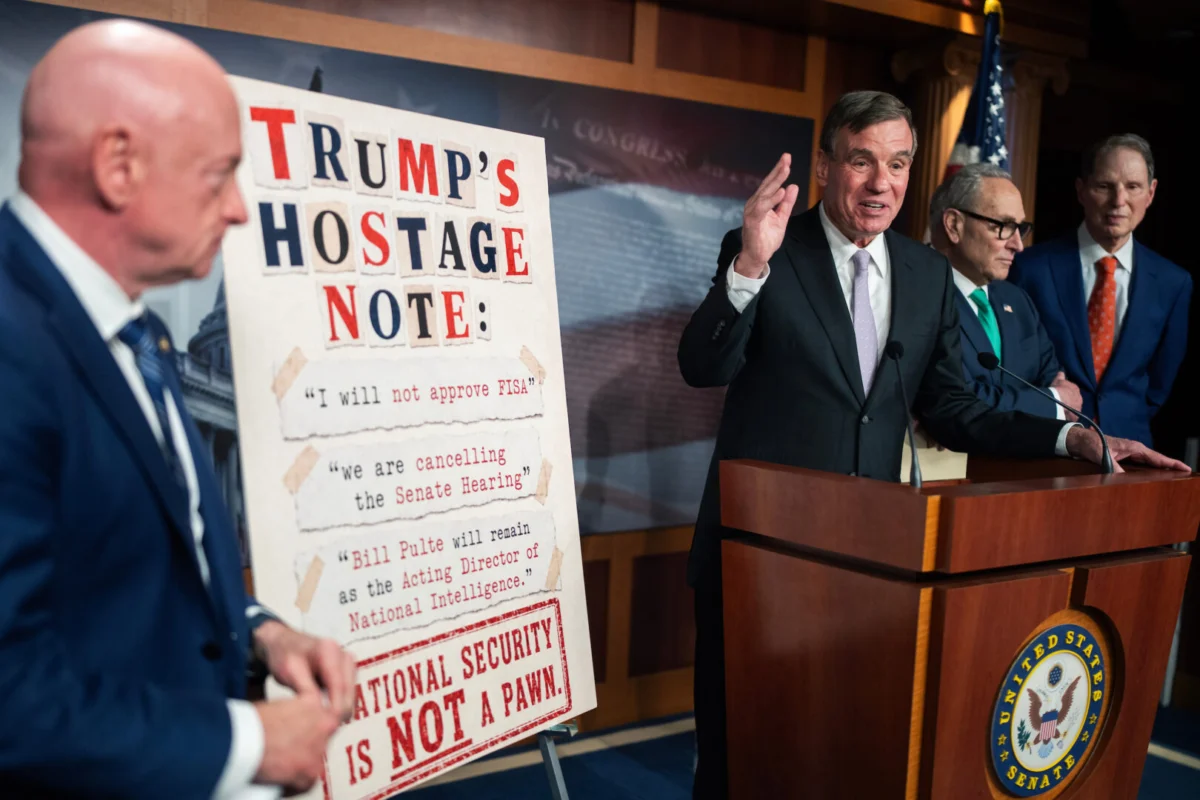
However, in the early hours of Wednesday morning, President Trump dramatically upended this carefully laid plan. Through a series of social media posts, the President ordered Clayton not to appear at his scheduled Senate confirmation hearing later that day. The reason provided was twofold: Trump did not want Clayton to leave his high-profile position at the Southern District of New York until James McDonald, his preferred replacement, was confirmed. More controversially, the President demanded that lawmakers "fold into FISA" a voter ID bill—a piece of legislation with virtually no realistic path to passage in the Senate, particularly as an attachment to a national security bill.
An Empty Room, A Floundering Agenda
The immediate consequence was a scene of palpable disarray. Wednesday afternoon saw an empty committee room for what was meant to be a crucial Senate Intelligence Committee hearing. Neither Clayton nor the committee members appeared, a stark visual representation of the White House’s sudden intervention. The reversal left senators bewildered and frustrated. Majority Leader Thune, a veteran legislator, expressed his astonishment, stating on Thursday, "I’ve never been asked to slow a nomination down before. We’re just executing, or trying to execute, on what they had asked us to do." He further admitted that he had not received any communication from the President regarding the Clayton nomination or an alternative strategy for FISA reauthorization. The authority officially lapsed on Friday, leaving intelligence agencies without a critical tool and Congress without a clear path forward.
The Contentious Iran Memorandum: Calls for Transparency and Oversight
Adding another layer of executive-legislative friction, senators expressed widespread unhappiness and confusion over President Trump’s rollout of a "memorandum of understanding" (MOU) with Iran. This agreement, purportedly aimed at ending the ongoing conflict, triggered immediate calls for a congressional briefing from the White House. The lack of transparency surrounding the MOU, especially its financial implications, became a significant point of concern for many lawmakers, particularly within the President’s own Republican party.
The Enigma of the $300 Billion Fund
At the heart of the controversy was a reported $300 billion "reconstruction" plan for Iran. Details surrounding this fund were vague, leading to alarm and skepticism among senators who questioned the rationale and oversight mechanisms for such a substantial financial commitment to a long-standing adversary. Many Republican senators were particularly concerned that any financial relief or incentives to Iran should be contingent upon verifiable commitments to end their nuclear program and cease destabilizing activities in the region.
White House Response and Congressional Skepticism
Vice President JD Vance attempted to quell the anxieties, stating on Thursday that the White House intended to brief Congress "very soon" once both chambers reconvened. He also noted that the administration had been "informally" communicating with congressional members "just over the last week." Crucially, Vance asserted that he did not believe congressional approval was necessary to lift certain sanctions on Iran as part of the deal, a position likely to further inflame tensions with lawmakers who believe strongly in their oversight role over foreign policy and international agreements.
Majority Leader Thune, while acknowledging potential economic benefits from the deal, such as opening up the Strait of Hormuz, expressed deep reservations about the long-term implications and particularly the reconstruction fund. "I don’t think there ought to be any financial incentives or any financial relief given to Iran absent their commitment to end their nuclear program," Thune declared. He emphasized that current understandings seemed to be "contingencies right now, and they’re conditioned upon certain behavior on their part," admitting, "We’re still, as you know, getting the particulars and the details, and trying to sort out what comes next."
Senator John Cornyn (R-Texas), who recently lost his primary to a Trump-backed challenger, offered an even more pointed critique, stating that such a fund was "not gonna be [used] for constructive and useful purposes." Cornyn added a note of profound skepticism regarding the entire agreement, remarking, "I think this is just an intermission. I don’t think this is a conclusion." These sentiments underscore a broader congressional desire for transparency, accountability, and a clear strategic vision when engaging with complex geopolitical actors like Iran. The historical context of past nuclear deals and the enduring distrust of the Iranian regime further fueled these demands for robust congressional oversight.
A Rare Bipartisan Win: The Sweeping Housing Package
Amidst the turbulence, one area of significant legislative progress emerged. The Senate Banking Committee and House Financial Services Committee leaders announced a breakthrough agreement on a sweeping bipartisan housing package. This long-awaited deal aims to address pressing affordability concerns for voters across the nation, a challenge that has become increasingly acute in recent years. The measure is now cruising toward passage, with hopes to clear the Senate early next week, representing a notable achievement in a deeply divided Congress.
Addressing Affordability through Comprehensive Reform
The comprehensive housing bill includes nearly four dozen provisions, each designed to tackle various facets of the housing crisis. Key elements of the package include language aimed at streamlining housing regulations, a move intended to bolster the construction of affordable housing units by reducing bureaucratic hurdles and development costs. The bill also seeks to change existing rules to increase the availability and accessibility of manufactured housing, a more cost-effective option for many families. Furthermore, it incorporates provisions to encourage local jurisdictions to ease restrictive zoning rules, which are often cited as major impediments to new housing development and a driver of escalating housing prices.
This bipartisan effort demonstrates that despite significant political headwinds and executive branch distractions, common ground can still be found on issues directly impacting the daily lives of American citizens. The focus on supply-side solutions, regulatory reform, and diverse housing options reflects a shared understanding among lawmakers of the urgency of the housing affordability crisis. Its expected passage offers a glimmer of hope for collaborative legislative action.
Other Senate Business: Confirmations Proceed
Despite the broader legislative turbulence, the Senate did manage to clear two former Republican House members for positions within the Trump administration. Michelle Steel of California was confirmed in a 55-39 vote to serve as Ambassador to South Korea. Steel’s extensive background in public service and her connections within the Republican party are expected to facilitate her role in strengthening U.S.-South Korean relations, a critical alliance in a volatile geopolitical region.
In another confirmation vote, George Holding of North Carolina was approved in a 48-39 vote to become the U.S. Director of the European Bank for Reconstruction and Development. Holding’s experience in Congress and his understanding of international finance will be valuable in this role, which focuses on fostering market economies and promoting private and entrepreneurial initiative in countries committed to democratic principles. These confirmations, while less dramatic than the FISA and Iran developments, represent the routine, yet essential, functioning of the Senate in staffing the executive branch.
Implications and Outlook: A Fractured Washington
The events of the past week paint a picture of a fractured Washington, where legislative progress is often overshadowed by executive unilateralism and internal party dissent.
Executive-Legislative Strain: President Trump’s direct intervention in the Clayton nomination and his linkage of FISA reauthorization to unrelated legislation demonstrate a continued willingness to exert executive power in ways that challenge traditional congressional prerogatives. This approach strains the delicate balance of power, creating an unpredictable environment for legislative leaders attempting to govern. The "never been asked to slow a nomination down before" quote from Leader Thune is indicative of the unprecedented nature of some of these executive actions, which bypass established norms and negotiation processes.
National Security Concerns: The lapsation of FISA Section 702 is a significant blow to the U.S. intelligence community. While efforts to reauthorize it will undoubtedly resume, the interim period without this critical tool could create vulnerabilities in intelligence gathering, potentially impacting the ability to detect and prevent threats from foreign adversaries and terrorist organizations. The delay further complicates an already challenging national security landscape.
Foreign Policy and Oversight: The Iran MOU saga highlights enduring congressional demands for greater transparency and oversight in foreign policy. The lack of detailed information, particularly concerning the financial aspects of the deal, has fueled skepticism and distrust. The administration’s assertion that congressional approval may not be needed for sanctions relief could set a dangerous precedent, potentially bypassing the legislative branch’s constitutional role in foreign affairs and treaty obligations.
The Road Ahead: As senators return from the Juneteenth long weekend, they face an immediate and daunting agenda. The bipartisan housing bill offers a moment of legislative success, but it will quickly be eclipsed by the urgent need to address the lapsed FISA authority. The complexities of the Iran MOU will also demand immediate attention, with senators expected to press hard for the promised White House briefing and greater clarity on the agreement’s terms and implications. The coming weeks will test the resilience of the legislative process and the ability of Congress to assert its role in the face of an assertive executive branch.
Mark Schoeff Jr., Nina Heller and Savannah Behrmann contributed to this report.