As the global cinematic community descends upon the historic canals of Venice for the 81st Venice International Film Festival, the focus will shift from the red carpet to the critical intersection of human artistry and technological disruption. On September 4, the festival will serve as the backdrop for an exclusive, invitation-only event: “The Future of… Creativity.”
Presented by Finch & Partners in collaboration with the powerful talent agency CAA, this inaugural forum seeks to address one of the most pressing existential questions of the 21st century: How will artificial intelligence and rapid technological advancement reshape the landscape of human storytelling, and what will that mean for the future of global culture?
A Gathering of Visionaries: The Main Facts
The forum, hosted at the historic Scuola Vecchia della Misericordia, represents a departure from traditional festival programming, which is typically siloed into screenings and industry markets. Instead, this summit is designed as a high-level think tank, gathering leading voices from cinema, literature, the visual arts, technology, and academia.
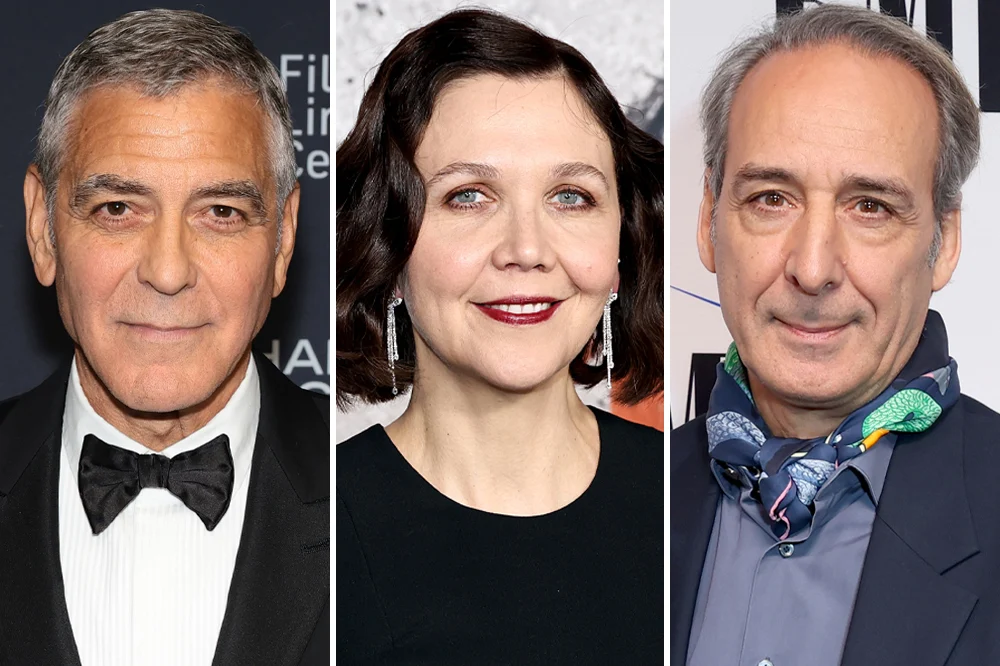
The roster of participants is as diverse as the disciplines they represent. Among the notable names confirmed to speak are George Clooney, who is attending the festival to receive the prestigious Golden Lion for Lifetime Achievement, and Maggie Gyllenhaal, who currently serves as the president of the Venice Jury.
They will be joined by a formidable cohort of creative leaders, including:
- Alexandre Desplat: The Oscar-winning composer known for his evocative scores for Wes Anderson and Guillermo del Toro.
- Giuseppe Tornatore: The legendary Italian filmmaker behind Cinema Paradiso.
- Cardinal José Tolentino de Mendonça: The Vatican’s prefect for the Dicastery for Culture and Education.
- Kennedy Yanko: The celebrated sculptor and painter known for her innovative use of material.
- Marc Quinn: A pioneer of the contemporary visual arts scene.
- Meredith Whittaker: President of Signal and a key voice in the global conversation regarding tech ethics.
- Shannon Murphy: The Emmy-winning director of Killing Eve.
The event will be moderated by Venice Film Festival artistic director Alberto Barbera, who has been instrumental in bridging the gap between traditional film preservation and the modern digital evolution.
The Evolution of Discourse: A Chronology of the Forum
The Venice edition is not a standalone event but rather the second chapter in a growing initiative. The inaugural “Future of… Film” forum was held in May during the Cannes Film Festival. That event served as a pilot program, gathering luminaries such as Darren Aronofsky, James Gray, Nadine Labaki, and J.A. Bayona, alongside high-ranking executives from Mubi, A24, Sony Pictures Classics, Neon, and Focus Features.
The success of the Cannes event proved that there was a hunger for candid, cross-industry dialogue that moved beyond the standard panel format. While Cannes focused specifically on the cinematic ecosystem, the Venice iteration is intentionally broader. By expanding the scope to include literature, technology, and the fine arts, the organizers hope to foster a more holistic understanding of how creative expression is changing globally.
The timeline of these forums suggests a growing realization among industry stakeholders: that the pace of technological change is outstripping the current regulatory and creative frameworks. By hosting these summits at the world’s most prestigious film festivals, Finch & Partners and CAA are positioning these forums at the epicenter of cultural influence.
The Technological Catalyst: Supporting Data and Context
The urgency of this forum is underscored by the current state of the industry. Since the dual strikes of the WGA and SAG-AFTRA in 2023, the role of AI in creative workflows has been the single most contentious issue in Hollywood.
Recent industry reports indicate that while AI tools—ranging from generative scriptwriting assistants to deep-learning visual effects—offer unprecedented efficiency, they also pose significant risks to labor stability, intellectual property, and artistic authenticity. The forum aims to move the conversation past the reactionary headlines of "AI versus Human" to a more nuanced exploration of "AI as a collaborative tool."
The inclusion of voices like Meredith Whittaker (Signal) highlights a desire to integrate technical expertise with artistic vision. It is no longer enough for filmmakers to discuss the aesthetics of cinema; they must now understand the infrastructure of the digital tools they use. The forum’s structure—pairing filmmakers with tech leaders and Vatican officials—reflects an attempt to bridge the divide between ethical philosophy and practical application.
Official Perspectives: The Philosophy of the Forum
The organizers have been explicit about their intentions, emphasizing that this is not a platform for Luddite skepticism, but a space for intellectual curiosity.
Alberto Barbera on the Industrial Revolution of the Mind
Artistic Director Alberto Barbera framed the necessity of the forum with a profound historical comparison. "Storytelling has accompanied every stage of human civilization," Barbera noted in a press statement. "Artificial intelligence may prove the greatest change yet, with an impact on human activity perhaps greater even than that of the 19th-century Industrial Revolution."
Barbera challenged the current, often binary nature of the debate. "There is much discussion, quite rightly, about its worrying aspects: the repercussions for employment, for artists’ copyright, and image rights. I believe it is important, however, to begin with a different question: what does this mean for creativity itself, and what new tools might it offer to support the work of artists?"
Claire Ingle-Finch on the Continuity of Craft
Claire Ingle-Finch, managing partner at Finch & Partners, emphasized the enduring nature of human expression. "Human beings have always told stories," she stated. "It is how we make sense of ourselves, and how one generation speaks to the next. The stories are handed down through centuries; only the form changes. In 2024 [sic], the form is changing again, and artificial intelligence is that change."
She described the forum as a "conversation, honestly had," among people who know the craft from the inside, suggesting that the event is intended to be a safe space for creators to voice their fears and hopes without the pressure of a public red-carpet environment.
Roeg Sutherland on Cultural Stewardship
Roeg Sutherland, co-head of CAA Media Finance, highlighted the agency’s role as a steward of creative culture. "These forums convene those who shape culture and are dedicated to sustaining and protecting art in all its forms," Sutherland said. "As we saw in Cannes, world-class business leaders, creators, and visionaries share a collective interest in harnessing technology to deepen creativity."
Implications: The Future of Culture
The implications of the “Future of… Creativity” forum are significant for several reasons.
First, the legitimization of the debate: By hosting this at the Venice Film Festival, the industry is signaling that these questions are as important as the films being premiered. It elevates the discussion from a "tech trend" to a foundational component of modern art history.
Second, the cross-pollination of industries: The inclusion of Cardinal José Tolentino de Mendonça is particularly notable. It suggests that the forum is interested in the ethical and spiritual dimensions of technology—a rare perspective in Hollywood-centric discussions. This interdisciplinary approach is likely to yield more sophisticated solutions than a singular focus on labor laws or software development.
Third, the long-term impact on storytelling: If the participants can successfully define a framework for the "ethical use" of AI, it could influence future industry standards. As the "form" of storytelling continues to evolve, the consensus reached by these visionaries may serve as a roadmap for the next decade of creative output.
As September 4 approaches, the global arts community is waiting to see if this gathering will result in tangible policy changes or simply remain a high-level academic exercise. Regardless of the immediate outcome, the very fact that such a diverse group of stakeholders is sitting at the table in Venice is a testament to the fact that the "Future of Creativity" is no longer a distant concern—it is the reality of the present.
The forum serves as a reminder that while the tools of the trade are shifting, the impulse to tell stories remains as human, and as necessary, as it has been for millennia. As Barbera poignantly concluded, the hope is to "open a new chapter in the debate," ensuring that as technology advances, the heart of the artist remains the primary driver of culture.