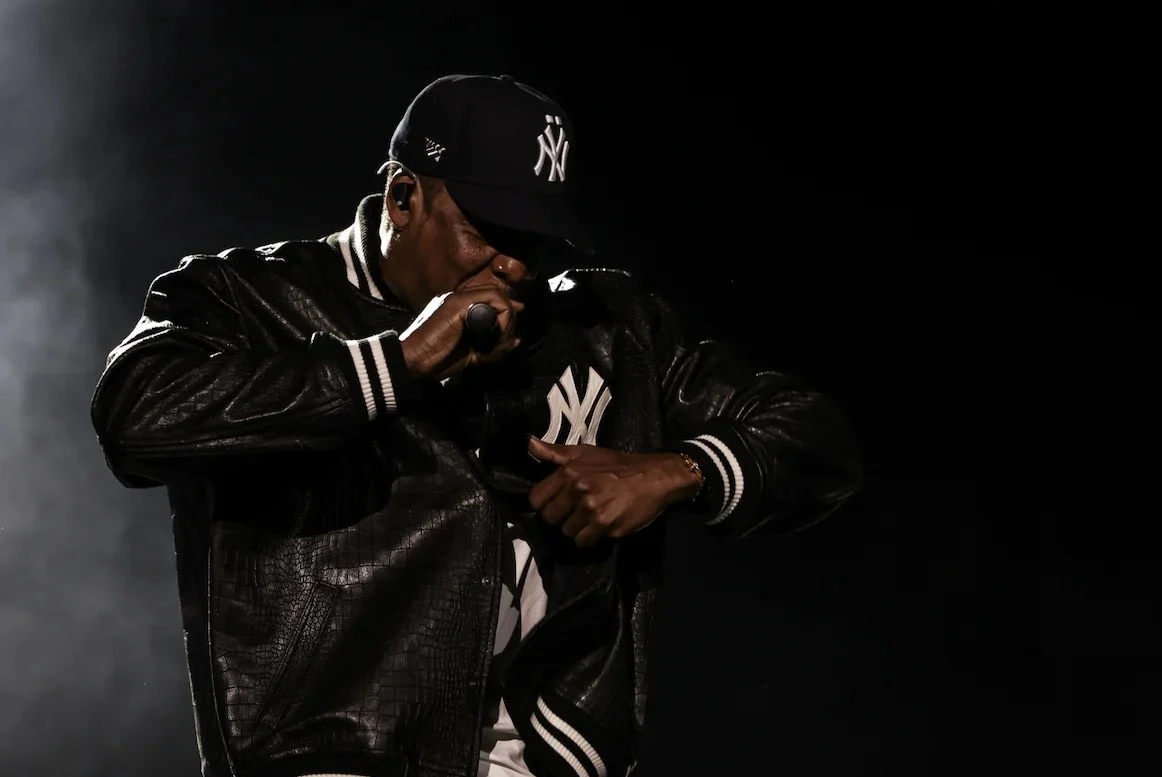
In a city defined by its skyscrapers and relentless ambition, Jay-Z—born Shawn Carter—returned to his home turf this past weekend to claim the stage at Yankee Stadium. The occasion was two-fold, serving as a monumental celebration of the silver anniversary of his 2001 magnum opus, The Blueprint, while following a high-octane tribute to his 1996 debut, Reasonable Doubt, just 24 hours prior. Over three nights of musical theater, the Brooklyn-bred titan reminded the world that his catalog is not merely a collection of songs, but a cultural institution.
A Weekend of Seismic Proportions
The weekend began on Friday with a celebration of Reasonable Doubt, a project that transitioned Jay-Z from the streets of Brooklyn to the global stage. That performance was an exercise in excess, featuring a star-studded roster including Nas, Jaz-O, and Alicia Keys. The highlight, however, was the appearance of Beyoncé, who joined her husband for a stirring rendition of "Can’t Knock the Hustle," setting a bar for spectacle that the subsequent nights would struggle—or perhaps consciously refuse—to meet.
By Saturday night, the tone shifted. While the Friday show was an exercise in "bells and whistles," the Saturday performance dedicated to The Blueprint felt more like a curated museum exhibit. Jay-Z, arguably the greatest architect of rap narratives, chose to present his 2001 classic with a degree of structural fidelity that surprised many in the audience.
The Chronology of a Classic: Saturday’s Performance
The 90-minute Saturday set was defined by a deliberate pacing, moving through the tracklist of The Blueprint with the precision of a master conductor. Eschewing the wild, sprawling collaborations of the previous night, Jay-Z opted for a focused, high-wattage, yet measured approach.
The show opened with a jolt of nostalgia as the legendary Slick Rick joined Jay-Z for "The Ruler’s Back." It was an immediate statement of intent: Jay-Z was here to honor the lineage of the genre. As the set progressed, the crowd was taken on an emotional journey, swinging from the stadium-shaking intensity of "U Don’t Know" to the poignant, somber reflection of "Song Cry."
The most significant deviation, however, was the conspicuous absence of "Takeover." As an essential piece of hip-hop history—a track that redefined the diss record—its omission sparked intense speculation. Was it a gesture of peace toward Nas? A refusal to dwell on past grievances in a post-conflict era? Or was it simply a stylistic choice to keep the show’s momentum focused on the soul-sampling warmth that defines the rest of the album? Regardless of the intent, the song remained unacknowledged, leaving a vacuum in the tracklist that felt deliberate.
The evening peaked with the arrival of Eminem. The Detroit icon joined Jay-Z for a blistering run-through of "Renegade," a track that has long been the subject of debate regarding the "better verse." The chemistry between the two was palpable, proving that despite their differing trajectories, their status as rap’s elite remains undisputed. Eminem followed this by bringing the house down with his own anthem, "Lose Yourself," bridging the gap between two of the most significant careers in modern music.
Supporting Data: The Resonance of a Historic Release
To understand the gravity of Saturday’s show, one must look at the context of The Blueprint’s original release. Dropped on September 11, 2001, the album arrived at a moment of profound national trauma.
During the show, Jay-Z paused to reflect on that historical intersection. "This album dropped on a real tragic time for New York City and I was prepared to walk away from this album obviously given everything that was going on," he confessed to the crowd. "The way it resonated with the world, it was like part of healing for New York City. When the numbers came back for the first week, I was blown away by the support and the love."
This sentiment underscores why the album remains a cornerstone of the rap canon. It wasn’t just a collection of hits produced by Kanye West, Bink!, and Just Blaze; it was a soundtrack for a city looking for a reason to find its rhythm again. The commercial success—moving over 400,000 units in its first week—was secondary to its role as a cultural balm.
Official Context and Guest Performances
While the Saturday show was grounded, it was not without its moments of grandeur. Pharrell Williams, a longtime collaborator and creative foil to Jay-Z, emerged later in the set to deliver a string of hits, including "I Just Wanna Love U (Give It 2 Me)" and "Frontin’." The energy in the stadium shifted from the grit of 2001 to the polished, Neptunes-produced funk that would dominate the mid-2000s.
The night concluded with an rapid-fire sequence of hits that spanned the breadth of his career, including "N*ggas in Paris," "Public Service Announcement," and "Encore." These tracks served as a reminder that Jay-Z’s discography is vast enough to sustain multiple nights of distinct, non-overlapping sets.
Implications: The Future of the Hov Empire
As the curtain fell on Saturday, all eyes turned toward Sunday’s "Extra Innings" finale. The promotional billing of this final night suggests an "everything-but-the-kitchen-sink" approach, likely designed to capture the deep cuts that fans have been clamoring for across the weekend.
However, the implications of these shows go beyond the setlists. Since the weekend began, rumors have been swirling about a potential new project. A video played at the start of the Friday performance showed Beyoncé shaving Jay-Z’s head—a visceral, symbolic image that many fans have interpreted as a sign of a "reset" or the birth of a new artistic era.
If this weekend was indeed a "closing of the books" on the first 30 years of his career, the ambiguity surrounding his next move is calculated. Jay-Z has never been one to follow a predictable marketing cycle; he prefers the silence that follows a loud statement. Whether these shows serve as a farewell to a specific era or a precursor to a new beginning remains to be seen.
Setlist Analysis
The curated setlist from Saturday provides a map of the artist’s evolution:
- The Ruler’s Back (w/ Slick Rick)
- Takeover (Omitted)
- Izzo (H.O.V.A.)
- Girls, Girls, Girls b/w ’03 Bonnie and Clyde
- **Jigga That N*a
- U Don’t Know
- Hola’ Hovito
- Heart of the City (Ain’t No Love)
- Never Change
- Song Cry
- All I Need
- Renegade (w/ Eminem)
- Lose Yourself (w/ Eminem)
- Blueprint (Momma Loves Me)
- Empire State of Mind
- Excuse Me Miss (w/ Pharrell Williams)
- La-La-La (Excuse Me Again) (w/ Pharrell Williams)
- I Just Wanna Love U (Give It 2 Me) (w/ Pharrell Williams)
- Frontin’ (w/ Pharrell Williams)
- Allure (w/ Pharrell Williams)
- *Nggas in Paris b/w Big Pimpin’**
- Public Service Announcement
- Encore
By refusing to lean entirely on the "greatest hits" model and instead prioritizing thematic coherence, Jay-Z proved that he is still very much in control of his legacy. As he prepares to step off the stage at Yankee Stadium for the final time this weekend, the question is no longer whether he can fill a stadium, but what he plans to build next on the foundation he has laid. The city, and the culture, are waiting.