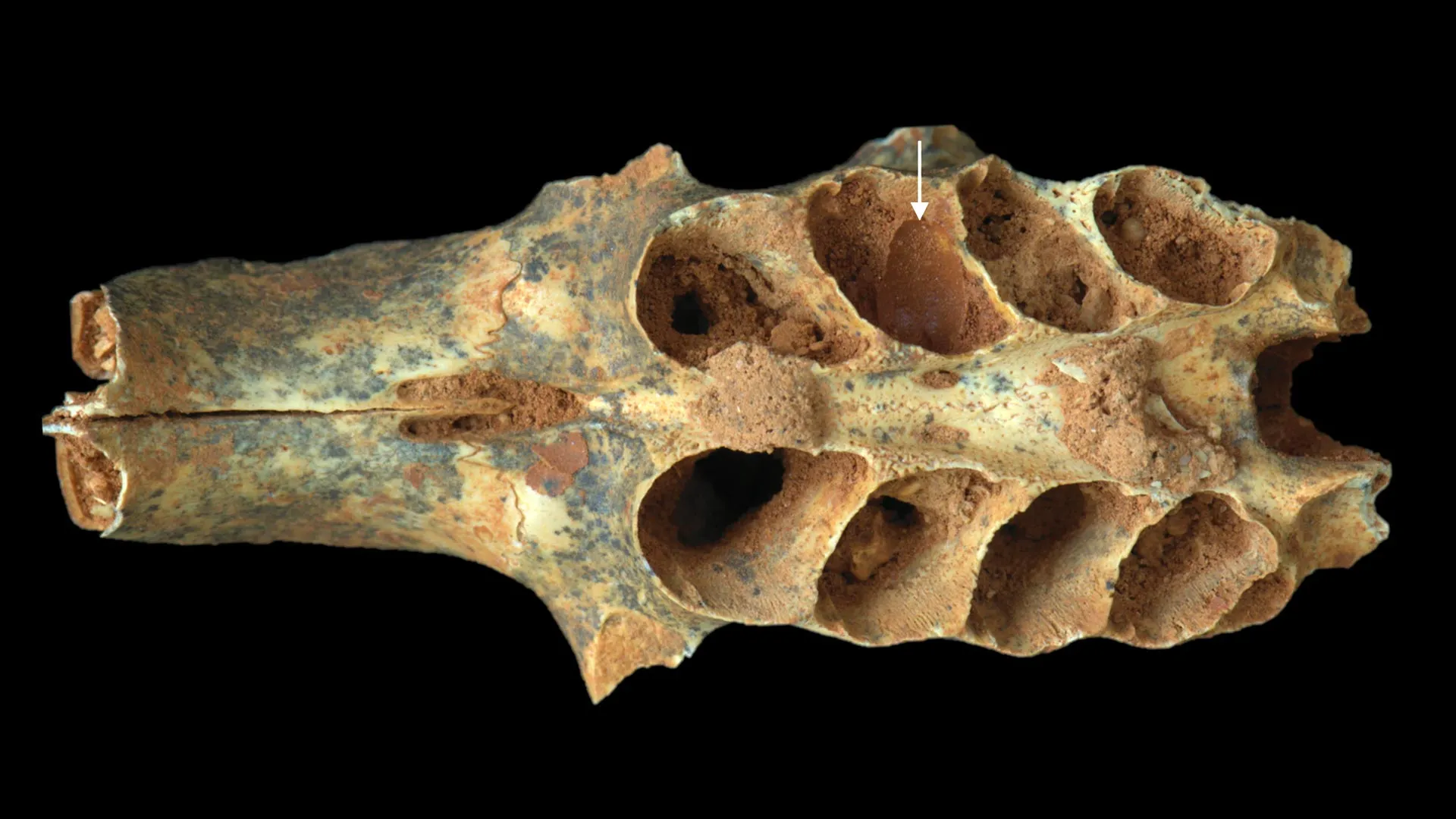
In the deep, dark limestone recesses of a Caribbean cave on the island of Hispaniola, a strange and intimate ecological intersection occurred roughly 20,000 years ago. For generations, owls utilized these subterranean chambers as a protected roost, systematically dropping pellets containing the skeletal remains of their prey. While these bones served as a morbid record of the island’s ancient vertebrate diversity, they eventually provided a second, entirely different utility: a nursery for industrious, solitary bees.
A groundbreaking study published in the journal Royal Society Open Science has unveiled the first known evidence of bees utilizing animal bones as nesting chambers. This discovery not only sheds light on an unusual evolutionary strategy but also highlights how even the smallest biological traces can provide a panoramic view of an extinct ecosystem.
The Chronology of a Subterranean Nursery
The story of this discovery begins in the limestone karst landscapes of Hispaniola—a geological region shared by Haiti and the Dominican Republic, characterized by a high density of sinkholes and caves.
The Owl Era
Approximately 20,000 years ago, during the late Pleistocene, the cave acted as a primary habitat for generations of owls. These predators would forage across the landscape, returning to the safety of the dark cavern to digest their meals. As they coughed up pellets, a repository of rodent, bird, reptile, and sloth remains accumulated on the cave floor. Over millennia, these layers were periodically sealed by carbonate deposits formed during periods of heavy rainfall, effectively "canning" the cave’s history in mineralized strata.
The Bee Colonization
At some point during this period, solitary bees—likely seeking protection from the elements and predators—discovered the abundance of discarded, hollowed-out jawbones within the cave. Identifying the empty tooth sockets as ideal, pre-built nesting cavities, these bees began the laborious process of modifying the bones. By mixing dirt with their own saliva, they constructed tiny, mud-lined chambers within the jaws, each no larger than a pencil eraser. Inside these fortified cradles, they deposited their eggs alongside stores of pollen, providing the next generation with the nourishment required to mature.
The Modern Discovery
The site remained undisturbed until its modern identification by Juan Almonte Milan, a prominent curator of paleobiology at the Dominican Republic’s Museo Nacional de Historia Natural. Following his lead, a team of researchers, including lead author Lázaro Viñola López—then a doctoral student at the University of Florida and currently a postdoctoral researcher at the Field Museum in Chicago—ventured into the cave. Navigating through tarantula-filled tunnels, the team spent years excavating and cataloging the vertebrate fossils, unaware that the most significant discovery was hiding inside the jaws of the animals they were studying.
Supporting Data: Unlocking the Secret with Technology
The identification of these nests was not an immediate breakthrough; it was a process of careful observation and advanced diagnostic imaging.
Recognizing the Trace Fossils
While cleaning the mammalian fossils, Lázaro Viñola López noticed a recurring anomaly. Within the empty tooth sockets of various jawbones, there were smooth, concave surfaces that did not align with natural sedimentary accumulation.
"It was a smooth surface, and almost concave," Viñola López noted. "That’s not how sediment normally fills in, and I kept seeing it in multiple specimens. I was like, ‘Okay, there’s something weird here.’ It reminded me of a wasp nest."
His intuition was grounded in a previous field experience in Montana, where he had been introduced to fossilized wasp cocoons. To confirm his hypothesis without compromising the structural integrity of the rare fossilized bones, the team employed high-resolution CT scanning. The resulting 3D images confirmed that the internal structures were indeed artificial, mud-based nests. Furthermore, microscopic analysis revealed traces of ancient pollen within the chambers, providing definitive evidence that these structures were purpose-built nurseries.
Taxonomic Classification
Because the humid conditions of the Caribbean cave prevented the preservation of the delicate insect bodies themselves, the species of the bee remains a mystery. However, the scientific team determined that the nests were distinct enough to warrant a formal taxonomic classification. They named the trace fossil Osnidum almontei, a tribute to Juan Almonte Milan, honoring his decades of service to paleontology in the Dominican Republic.
The lack of biological remains leaves open two possibilities: either the bees belonged to a species that still exists today, or they were a specialized group that went extinct alongside the megafauna whose bones they inhabited.
Official Perspectives and Ecological Implications
The research team emphasizes that this discovery is not merely a curiosity; it is a significant contribution to our understanding of ancient insect ecology.
The Scarcity of Soil
One of the central questions the study addresses is why a bee would choose to nest inside a decaying jawbone. The researchers point to the unique geology of Hispaniola. The island’s limestone-heavy landscape offers very little deep, soft soil suitable for traditional ground-nesting bees. In an environment where standard nesting sites were rare, the evolutionary pressure to adapt—or "think outside the box"—was immense.
"This discovery shows how weird bees can be," says Viñola López. "They can surprise you."
A New Lens for Paleontology
The implications for the field of paleontology are profound. Historically, vertebrate paleontologists have focused heavily on the bones of large animals, often ignoring the "background noise" of trace fossils left by insects or small invertebrates. This discovery serves as a cautionary tale: what might be dismissed as mere dirt or mineralized debris could actually be a vital piece of an ancient biological puzzle.
"Even if you’re looking primarily for fossils of larger, vertebrate animals, you should keep an eye out for trace fossils that can tell you about invertebrates like insects," Viñola López explains. "Knowing about insects can tell you a lot about a whole ecosystem, so you have to pay attention to that part of the story."
Why This Discovery Changes Our Understanding of Bees
While honey bees and bumblebees dominate the popular imagination, the vast majority of the world’s 20,000-plus bee species are solitary. These bees do not build hives; they do not have queens; and they do not store honey in the way we traditionally understand it. Instead, they are master architects of the individual, utilizing existing cavities—or creating their own—to secure their offspring.
Behavioral Flexibility
The use of snail shells by certain European and African bee species has been documented previously, but the use of bone is a structural leap. It suggests that solitary bees are opportunistic generalists capable of assessing the structural integrity and protection offered by various materials. The tooth sockets of the fossilized jaws provided a "pre-fabricated" housing complex that shielded the larvae from both moisture and predators, such as hunting wasps.
Ecosystem Interconnectivity
This research highlights a fascinating "cascading" relationship in nature:
- The Owl: Acts as a collector, aggregating high-quality, mineral-rich material (bones) into a centralized, protected location (the cave).
- The Bee: Acts as an opportunistic tenant, repurposing the waste of the predator to create a nursery for the next generation of pollinators.
- The Environment: The limestone geology creates a specific set of constraints that drives the bees toward these unconventional nesting behaviors.
By studying these tiny mud-lined chambers, scientists are gaining a clearer picture of how the Caribbean ecosystem functioned 20,000 years ago. It suggests a world where insects were just as dynamic and adaptable as the larger mammals that shared the landscape.
Conclusion: The Persistence of Life
The Osnidum almontei nests are more than just fossilized mud; they are a testament to the resilience and adaptability of life. In a harsh landscape with limited resources, these bees found a way to survive by leaning into the history of the predators that preceded them.
As the study concludes, the discovery stands as a reminder that the fossil record is not just a collection of bones, but a complex web of interactions. Every tooth socket, every pellet, and every grain of pollen tells a story of survival. For Lázaro Viñola López and his colleagues, the cave on Hispaniola has provided a new chapter in the history of insects, proving that sometimes, the smallest creatures leave the most lasting impressions.
As paleontological techniques improve—particularly with the use of CT scanning and non-invasive imaging—it is likely that more of these "hidden" trace fossils will be uncovered. The challenge for future researchers will be to maintain the same level of observational rigor, ensuring that the "weird" sediment in a jawbone is never again dismissed as merely part of the dirt.