While the public imagination is frequently captivated by the prospect of finding microbes in the subsurface oceans of Europa or the rust-colored dunes of Mars, astrobiologists are engaged in an equally profound quest much closer to home. The greatest mystery in the history of our planet is not what lies in the stars, but how life transitioned from a simple, single-celled regime to the complex, multicellular grandeur we see today.
At the heart of this inquiry is the eukaryotic cell—the biological blueprint for every plant, animal, and fungus currently inhabiting Earth. Understanding exactly when these organisms appeared and how they engineered the jump to complexity is not merely an exercise in historical biology; it is a prerequisite for understanding the potential for complex life elsewhere in the universe.
The Chronology of Life: A Billion-Year Progression
To grasp the magnitude of this evolution, one must first appreciate the sheer dominance of the microbial world. For approximately 90 percent of Earth’s 4.5-billion-year history, life was strictly simple. Ross Anderson, a prominent paleontologist at the University of Oxford, notes that while life itself likely originated over 3.5 billion years ago, the path to complexity was painstakingly slow.
The timeline is a testament to the slow grind of evolutionary pressure:
- 3.5 Billion Years Ago: The earliest evidence of life emerges, consisting of primitive, single-celled organisms.
- 2.3 Billion Years Ago: The emergence of cyanobacteria triggers the "Great Oxidation Event," introducing oxygen-producing photosynthesis to the atmosphere.
- 1.7 Billion Years Ago: The first definitive appearance of eukaryotes.
- 1.6 Billion Years Ago: The approximate point in time where researchers place the "Last Common Ancestor" shared by the plant and animal kingdoms.
- 1 Billion Years Ago (or earlier): Algae begins to populate the seas.
- 570 Million Years Ago: The first definitive evidence of animals emerges, leading into the Cambrian Explosion.
The "Crown Eukaryotes"—the ancestors of modern groups—represent the pivot point where life moved beyond simple cellular division. Anderson argues that these organisms represent the first true "complex life" on Earth, setting the stage for the biodiversity that defines the modern era.
The Eukaryotic Distinction: Why Structure Matters
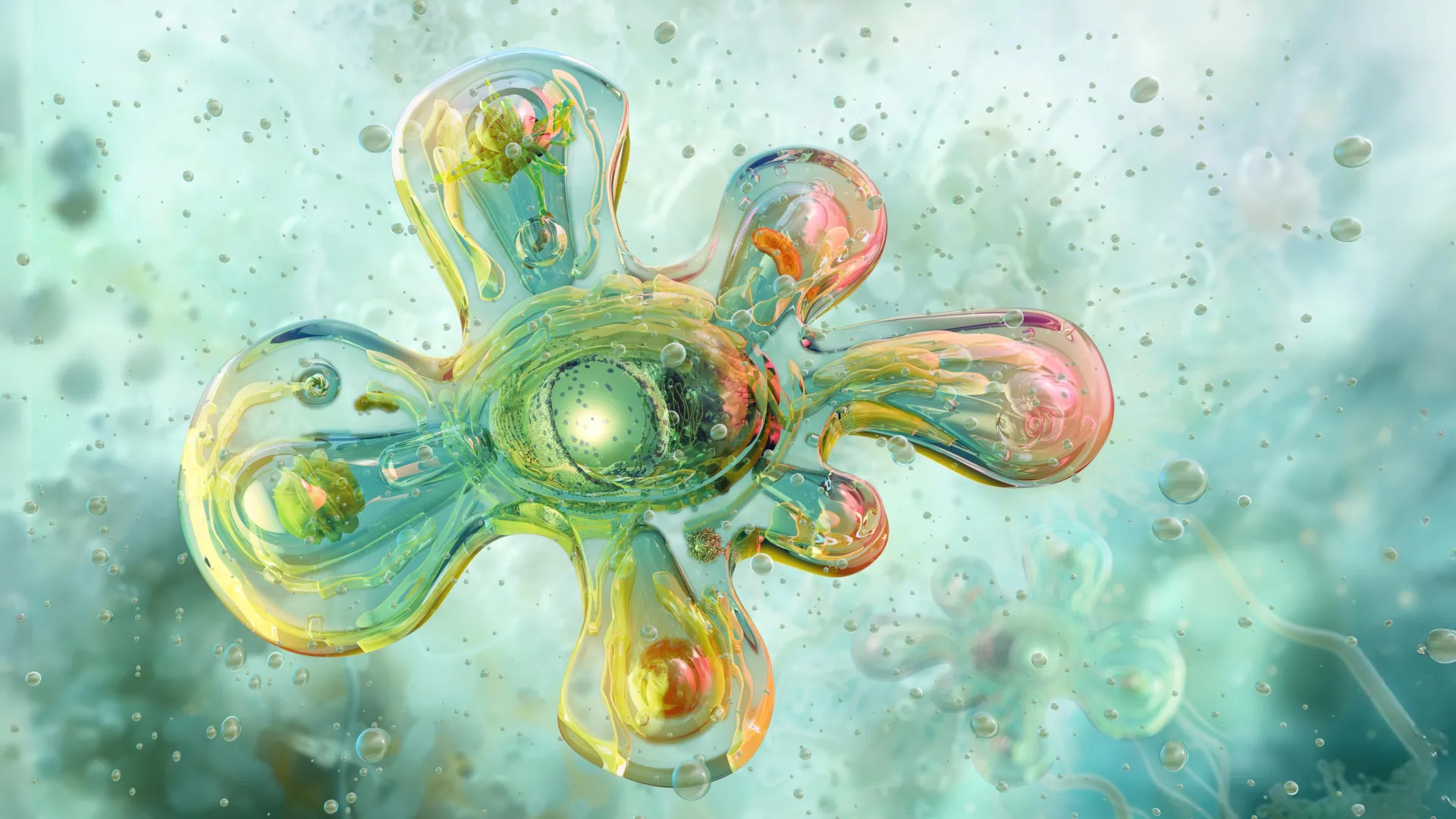
What makes the eukaryote the architect of complexity? Unlike their prokaryotic predecessors (bacteria and archaea), eukaryotic cells are defined by a sophisticated interior architecture.
The most defining feature is the nucleus, a membrane-bound vault that encloses the cell’s DNA, providing a level of protection and regulatory control not seen in simpler cells. Furthermore, eukaryotes possess specialized organelles—most notably mitochondria. Often described as the "powerhouses" of the cell, mitochondria provide the massive energetic surplus required to support the metabolic demands of large, multicellular bodies.
Without this cellular internal combustion engine, the leap to multicellularity would have been physically impossible. Every multi-celled organism on Earth today, from the blue whale to the giant sequoia, is built upon this eukaryotic foundation.
The Paleontological Barrier: Searching for the Invisible
The quest to identify the earliest ancestors of eukaryotes faces a formidable obstacle: the lack of hard parts. Because these ancient organisms lacked shells, bones, or exoskeletons, they did not leave behind robust fossil records. For the first 4 billion years of Earth’s history, life was essentially "soft."
"Finding their earliest ancestors is like looking for a needle in a haystack where the needle is made of jelly," explains one researcher familiar with the field. Paleontologists must rely on exceptionally rare environments—geological "time capsules"—that managed to preserve fragile soft tissues against the relentless pressure of time.
This lack of fossil data creates a massive "blind spot" in our understanding of life’s history. When organisms do not fossilize well, the evolutionary narrative becomes a series of disconnected dots. To bridge these gaps, scientists like Anderson are moving away from traditional morphology and toward chemical stratigraphy. By analyzing the chemistry of ancient rocks, they can identify the environments most likely to have trapped and preserved these microscopic remnants.
Strategic Landscapes: Where to Find the Past
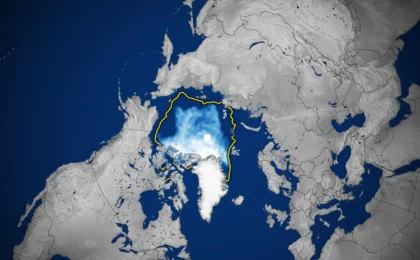
The hunt for microfossils is a global endeavor that takes researchers to some of the most desolate and remote corners of the planet. Svalbard, Norway, located roughly 80 degrees North, has become a primary laboratory for this work. Once a shallow, nutrient-rich sea, the region’s Arctic environment has left behind rocks that served as an ideal preservative for early biological material.
Similarly, Australia has provided significant breakthroughs. In recent years, researchers working in ancient coastal environments identified microfossils dating back 1.75 billion years. These coastal zones are considered "hotspots" for evolution; the abundance of nutrients and oxygen in these shallow waters provided the necessary fuel for early eukaryotes to thrive, experiment with multicellularity, and diverge into different lineages.
The ideal search site is often a combination of pristine isolation and geological stability. Scientists prioritize regions with massive clay deposits, as clay minerals can coat and stabilize delicate biological cells, shielding them from the degradation that usually occurs over geological timescales. The irony is that the most fertile ground for these discoveries is often the most barren to the human eye—deserts and Arctic tundra—where a lack of vegetation leaves the ancient rock record exposed and accessible.
The Astrobiological Connection: A Mirror to the Universe
The search for early Earth life is inherently linked to the search for extraterrestrial life. This is not merely because the methods overlap, but because the fundamental questions are identical.
Ross Anderson and his peers often emphasize that their work on Earth’s clay deposits is directly informed by the requirements of planetary science. If we want to find life on a moon like Enceladus, we first need to know what a "fossilized" microbial cell looks like after a billion years of exposure to radiation and shifting geology.
"We are calibrating our instruments—both our scientific equipment and our mental frameworks—to recognize life in the deep past," says Anderson. By reconstructing how life became complex here, scientists are developing a "search manual" for astrobiologists. If we find that the transition from simple to complex life is rare and requires a specific, "lucky" set of environmental conditions, we might conclude that complex life in the universe is similarly rare. If we find that it happened repeatedly and easily on Earth, it suggests that the universe may be teeming with complex biological entities.
Future Outlook: Bridging the Gap
Despite the inherent difficulties, the field is moving forward with unprecedented speed. Advances in synchrotron X-ray microscopy and chemical mass spectrometry are allowing researchers to peer inside ancient rock samples with a resolution that was unimaginable only a decade ago.
As we refine our understanding of the Ediacaran/Cambrian transition—the period 540 million years ago when the diversity of life exploded into the forms we recognize today—we gain a clearer picture of the catalysts for evolution. Scientists are increasingly confident that by identifying the specific types of rock that foster preservation, they can fill in the missing chapters of the 90 percent of Earth’s history that has remained largely silent.
The journey from a single-celled world to a planet of staggering biodiversity was not a straight line; it was a series of innovations, accidents, and environmental shifts. By uncovering these stories, we do more than just rewrite history books; we prepare ourselves for the day we might finally look into the cosmos and recognize the signature of life that, like our own, fought for a billion years to become complex.