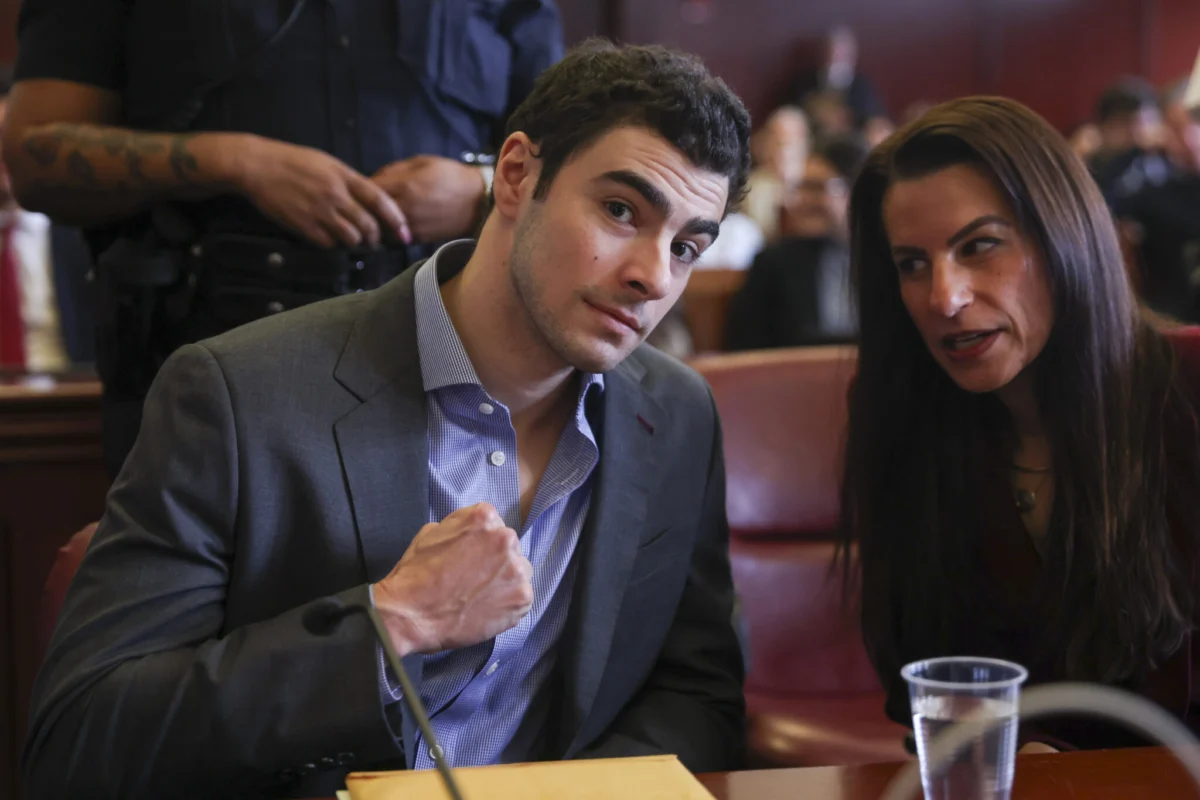
NEW YORK, NY — The high-profile murder case against Luigi Mangione, the man accused of the brazen 2024 assassination of UnitedHealthcare CEO Brian Thompson, has hit a significant procedural impasse. On Monday, New York Supreme Court Justice Gregory Carro issued an order indefinitely postponing Mangione’s state murder trial. The stay comes as defense attorneys aggressively push to dismiss the state indictment, arguing that Mangione’s recent guilty plea in federal court triggers New York’s robust double jeopardy protections.
The legal maneuver has transformed a straightforward murder prosecution into a complex constitutional showdown, raising fundamental questions about the intersection of federal and state jurisdiction, the scope of New York’s criminal procedure laws, and the limits of successive prosecutions for a single act of violence.
The Core Conflict: A Case of Two Sovereigns
The primary point of contention is whether the state of New York is constitutionally barred from prosecuting Mangione for murder after he admitted to federal crimes arising from the same incident.
Last Friday, Mangione pleaded guilty to two federal stalking charges in connection with the killing of Brian Thompson. By entering this plea, Mangione formally admitted to the shooting, providing the Department of Justice (DOJ) with a clear path toward sentencing. Federal prosecutors have signaled their intention to seek the maximum possible penalty—life in prison—during the sentencing hearing scheduled for December 18.
Mangione’s defense team, led by his appointed counsel, wasted no time in seizing upon this development. In their filing to Justice Carro, they argued that because Mangione has already pleaded guilty to conduct that effectively encompasses the murder, proceeding with a state trial would constitute an unconstitutional second punishment for the same act. "Mangione should not be treated as a human ping-pong ball between two sovereigns," defense counsel stated during court proceedings. "He has accepted responsibility for his actions in federal court, and under New York’s statutory protections, that should be the end of the state’s pursuit."
Chronology of a High-Stakes Legal Drama
The path to this stalemate has been marked by rapid developments and intense public scrutiny:
- December 2024: The shooting of UnitedHealthcare CEO Brian Thompson outside a Manhattan hotel sends shockwaves through the corporate and legal worlds.
- December 2024 – Early 2025: Mangione is apprehended following an intensive multi-state manhunt. He is subsequently indicted by both federal authorities on stalking charges and New York state prosecutors on murder and weapons charges.
- August 2026: In a major pivot, Mangione pleads guilty to federal stalking counts and formally admits to the killing of Brian Thompson.
- September 2026: Defense attorneys file a motion to dismiss the state murder trial, citing New York Criminal Procedure Law § 40.20.
- December 8, 2026: Justice Gregory Carro orders the indefinite postponement of the state trial, citing the need to resolve the double jeopardy claims.
- October 9, 2026 (Deadline): The Manhattan District Attorney’s Office is ordered to file a formal response to the defense’s dismissal motion.
- December 10, 2026: A scheduled hearing to debate the merits of the double jeopardy argument.
Statutory Protections and the "Same Transaction" Test
The defense’s argument hinges on New York’s unique and expansive approach to double jeopardy. While the U.S. Constitution generally allows "dual sovereignty"—permitting both federal and state governments to prosecute the same conduct—New York State provides broader protections through its Criminal Procedure Law (CPL) § 40.20.
The Letter of the Law
Under New York statute, a person may not be separately prosecuted for two offenses based upon the "same act or criminal transaction." This is a higher threshold than the federal standard. The intent of this law is to prevent the state from "re-litigating" a crime that has already been adjudicated elsewhere, provided the underlying conduct is sufficiently similar.
The Prosecution’s Counter-Argument
The Manhattan District Attorney’s Office remains steadfast in its intent to proceed. Their legal team argues that the federal stalking charges and the state murder charges involve "substantially different elements." They contend that the state murder case involves specific elements of intent and malice required under New York homicide law that are not mirrored in the federal stalking statutes. Furthermore, prosecutors argue that the acts are "clearly distinguishable" in a legal sense, even if they share a common factual origin in the shooting of Brian Thompson.
Implications for Future Jurisprudence
The outcome of the December 10 hearing will likely set a significant precedent for how New York courts handle cases involving concurrent federal and state investigations. If the defense succeeds, it could set a high bar for state prosecutors to "piggyback" on federal charges, potentially forcing the state to choose between allowing the federal government to lead or risking the total dismissal of their own case.
Conversely, if Justice Carro denies the motion to dismiss, it will reaffirm the state’s authority to seek justice for victims of violent crimes under local homicide laws, regardless of whether a federal agency has already secured a conviction on peripheral or related charges.
A "Human Ping-Pong Ball"
The defense’s colorful characterization of Mangione as a "human ping-pong ball" highlights a growing frustration among defense practitioners regarding the coordination—or lack thereof—between federal and state authorities. In high-profile cases, the overlapping interests of the DOJ and local District Attorneys can lead to situations where a defendant is subjected to multiple, exhausting legal processes for what is effectively a single course of conduct.
Legal scholars note that this case is a microcosm of a larger tension in the American justice system. When a crime captures national attention, both federal and state officials often rush to assert jurisdiction. While this can serve as a "fail-safe" to ensure a conviction, it also creates the very constitutional frictions that Justice Carro must now resolve.
Official Responses and Next Steps
The Manhattan District Attorney’s office has declined to comment beyond their filings, emphasizing that the matter is currently sub judice. However, the stakes are undeniably high. A conviction in state court carries a potential life sentence, a outcome that state prosecutors view as essential for accountability, particularly regarding the specific laws of the State of New York.
For now, the courtroom in Manhattan sits quiet. The postponement is not merely a delay of the trial; it is a critical pause intended to allow the court to untangle a web of federal and state mandates.
As the October 9 filing deadline approaches, the legal community is watching closely. The Manhattan District Attorney must articulate a compelling argument that the state’s murder indictment remains distinct from the federal plea. Should they fail to convince the court, the state’s case may be terminated before it ever reaches a jury.
The hearing on December 10 will be a pivotal moment. It will determine whether the trial of Luigi Mangione proceeds as a standard murder case or concludes prematurely under the weight of New York’s restrictive, defendant-friendly double jeopardy statutes. Regardless of the outcome, the case has already secured its place in the annals of New York legal history as a defining test of the boundaries of state power.
Disclaimer: This article is based on reporting regarding the current status of the legal proceedings against Luigi Mangione as of December 2026. Legal motions and court orders are subject to change as the litigation progresses.