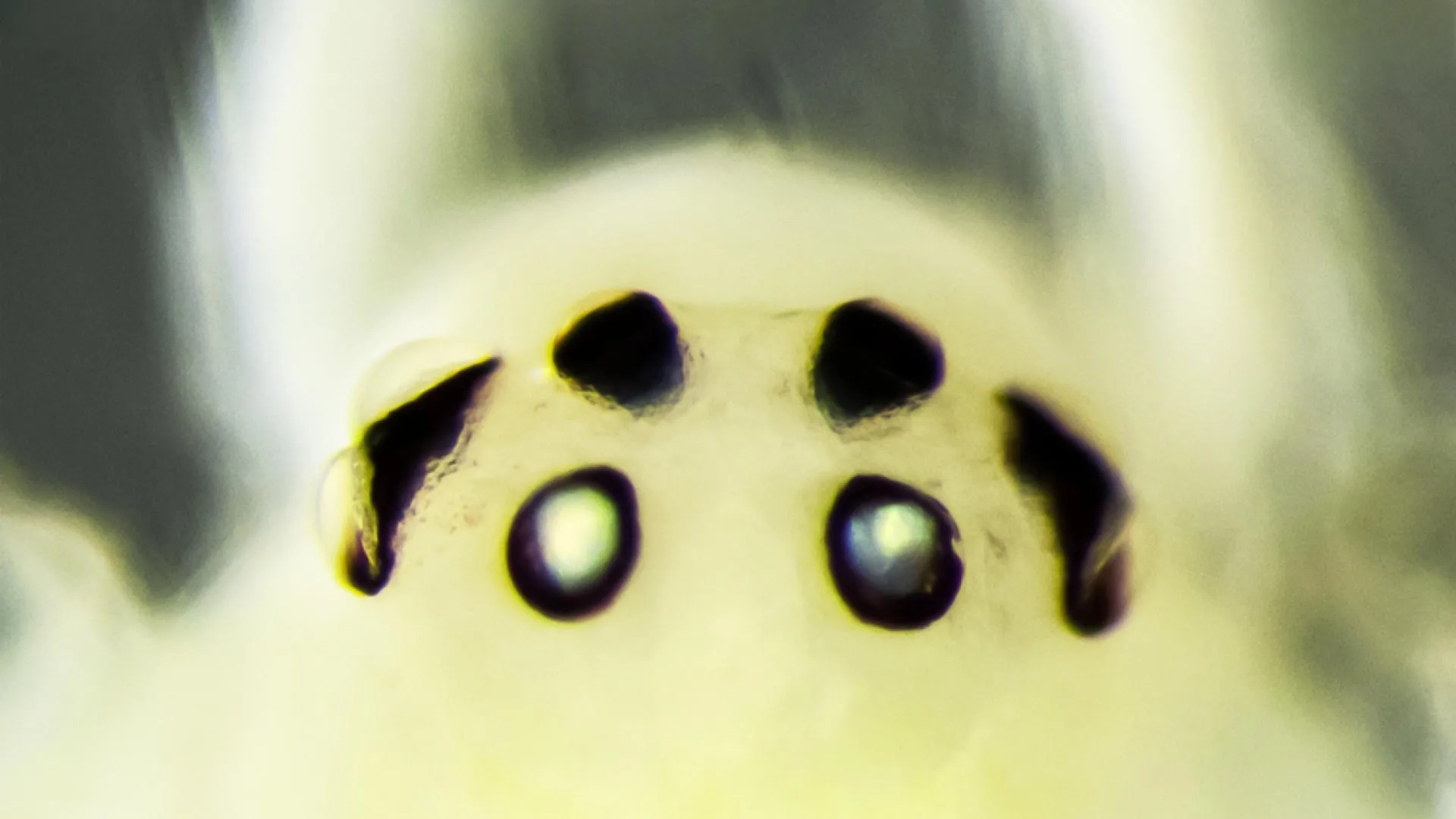
For over a century, the "Happy Face" spider—a tiny, charismatic arachnid bearing a vivid, smiling visage upon its abdomen—was considered an exclusive icon of the Hawaiian archipelago. Long held up by biologists as a prime example of island-based evolution, the species (Theridion grallator) was thought to be a geographic anomaly, sequestered in the Pacific.
However, in a startling biological revelation that has sent shockwaves through the entomological community, researchers have discovered a "long-lost cousin" thousands of miles away in the rugged, high-altitude terrain of the Indian Himalayas. The new species, formally christened Theridion himalayana, not only shares the iconic grin but has also ignited a profound scientific debate regarding evolutionary convergence, genetic mystery, and the hidden biodiversity of the world’s most formidable mountain range.
The Serendipitous Discovery: A Survey Gone "Off-Script"
The identification of Theridion himalayana was, by all accounts, a masterclass in the value of scientific curiosity. The discovery was not the result of a targeted search for rare spiders, but rather a fortuitous byproduct of an ant-focused field study.
Devi Priyadarshini, a scientist at the Regional Museum of Natural History, and her co-author, Ashirwad Tripathy, were conducting biodiversity surveys in the mountainous regions of Uttarakhand, India. The primary objective of the expedition was to catalog ant populations; however, Tripathy’s keen eye for the unconventional led him to collect and document various arachnids found at high altitudes.
The breakthrough occurred in late 2023 when Tripathy sent a photograph of an underside of a Daphniphyllum leaf to Priyadarshini. "I froze in shock," Priyadarshini recalled. "I had seen the Hawaiian spider during my master’s program. When I saw that image, I knew instantly we had a jackpot. The resemblance was far too striking to be a coincidence."
What followed was an intensive, months-long effort to gather samples. From October 2023 onwards, the team scoured the forests of Makku, Tala, and Mandal. As the morphs were collected and analyzed, it became clear that this was not merely a variant of a known species, but a distinct biological entity that had been hiding in plain sight—or, more accurately, in the high-altitude foliage—for generations.
Chronology of a Scientific Breakthrough
The timeline of the discovery underscores the rapid shift from initial skepticism to formal biological validation:
- Pre-2023: Theridion grallator remains globally recognized as an endemic species restricted to the Hawaiian Islands.
- October 2023: Field researchers in Uttarakhand, India, stumble upon spiders exhibiting polymorphic, "smiley" markings while conducting surveys on ants.
- November – December 2023: Morphological data collection commences across the Makku, Tala, and Mandal regions.
- Early 2024: Genetic samples are processed to compare the Himalayan specimens with the known Hawaiian lineage.
- Mid-2024: The 8.5% genetic divergence is confirmed, definitively separating the two lineages.
- Late 2024: The findings are officially published in the peer-reviewed journal Evolutionary Systematics, formalizing the name Theridion himalayana.
Genetic Evidence: A Tale of Two Smileys
To move beyond visual speculation, the research team employed rigorous DNA barcoding. In biology, superficial resemblance—known as convergent evolution—can often trick the eye, as two unrelated species evolve similar traits to solve similar environmental problems.
Genetic analysis confirmed that Theridion himalayana differs from the Hawaiian T. grallator by approximately 8.5%. In the world of arachnid genetics, this is a significant margin, confirming that the two are not the same species, nor are they recent migrants. Rather, they represent separate evolutionary lineages that developed independently, perhaps from a common ancestor millions of years ago, or via parallel evolutionary pathways that selected for the same enigmatic abdominal markings.
The publication in Evolutionary Systematics documented 32 distinct color "morphs." This level of polymorphism is rare and suggests that these spiders possess a complex genetic toolkit, allowing them to adapt their appearance to shifting environments—a phenomenon that remains one of the primary targets for future genetic sequencing studies.
Why the Smile? The Ongoing Evolutionary Mystery
The "Happy Face" pattern is more than just a biological curiosity; it is a profound scientific riddle. Why would a spider evolve a pattern that so clearly resembles a human expression?
"The reason behind the expression of polymorphism is very complex and unique," explains Priyadarshini. While the pattern likely serves a functional purpose—perhaps as a warning signal to predators (aposematism) or as a method of camouflage in the dappled light of the Himalayan understory—the exact mechanism remains elusive.
Ashirwad Tripathy notes that the spiders are often found in the company of other small creatures possessing similar color patterns. This suggests an "ecological mimicry" or a broader evolutionary strategy at play in the Himalayan canopy. "These patterns definitely help them survive better in the wild," says Priyadarshini, "but why they resort to such specific patterns on their back, and what functional role they serve in their life cycle, is a deeper genetic mystery yet to be deciphered."
The Ginger Connection: A Botanical Enigma
Perhaps the most puzzling aspect of the discovery is the spider’s habitat preference. Both the Hawaiian Happy Face spider and the newly discovered Himalayan species exhibit an uncanny affinity for ginger plants (Hedychium species).
This is particularly baffling because the Hedychium genus is not native to Hawaii. The fact that two geographically isolated species, separated by thousands of miles and an entire ocean, both seek out the same non-native flora is a "smoking gun" for evolutionary biologists.
"How did the spiders choose an invasive species, and ginger, exactly?" asks Priyadarshini. The team posits that the chemical profile or the structural architecture of the ginger plant provides a specific, necessary micro-habitat for these spiders. Investigating this "ginger link" is the next major phase of their research. They aim to determine if this preference is a lingering ancestral trait or an incredible case of independent adaptation to the same plant genus across two different continents.
Implications: A New Gateway to Biodiversity
The discovery of Theridion himalayana has profound implications for how we view the biodiversity of the Himalayas. For decades, the focus in this region has often been on charismatic megafauna—snow leopards, red pandas, and Himalayan bears. This discovery serves as a stark reminder that the "small stuff" holds just as many secrets.
"The name Himalayana was decided as the species name because we both wanted to pay our respects to the mighty Himalaya mountain ranges," says Ashirwad. "They have been standing tall, not just guarding our country, but also holding a plethora of biodiversity within them."
For the scientific community, this spider represents a "gateway." It encourages researchers to look at polymorphic species in high-altitude environments with fresh eyes. If such a distinct, visually iconic species could remain hidden for over a century, what other evolutionary treasures might be waiting in the crags and forests of the Himalayas?
As the research team prepares for their next phase of fieldwork, the global scientific community watches with bated breath. The Himalayan Happy Face spider is more than just a cute namesake; it is a piece of a global puzzle, linking the tropical islands of the Pacific to the frozen peaks of Asia, and proving that, in the world of biology, the most remarkable stories are often found where we least expect them.