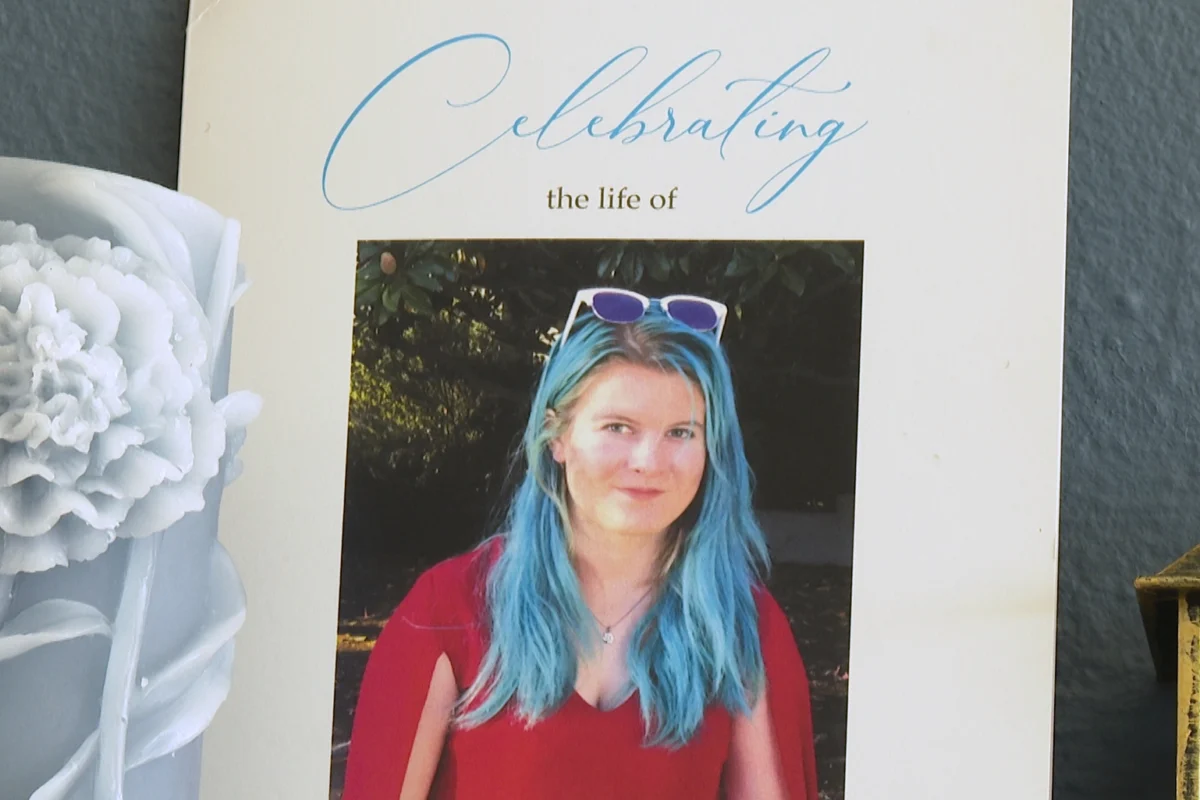
In a decision that has sent ripples through the ride-hailing industry and the legal community alike, a retired judge acting as an independent arbitrator has awarded $40 million to the parents of Emily Normandin-Parker. The 23-year-old woman was killed in 2023 after being struck by traffic on a Southern California highway following a ride-share trip that went tragically wrong.
The ruling, which found both Uber Technologies Inc. and the driver, Vu Tran, vicariously liable for the young woman’s death, challenges the long-standing legal shield Uber has utilized to distance itself from the actions of its drivers. While the award provides a measure of financial accountability, the parents of the victim, Carol Normandin and Ken Parker, maintain that their primary objective is to force a systemic overhaul of safety standards within the gig economy.
Main Facts: The $40 Million Verdict and the Rejection of the "Platform" Defense
The arbitration award, finalized in July 2024 and released publicly this week, is split evenly, with $20 million awarded to each of Emily’s parents. The decision was rendered by Richard Stone, a retired judge who served as the arbitrator for the case.
The central legal friction in this case involved Uber’s frequent defense that it is merely a "technology platform" connecting independent third-party contractors with riders, rather than a transportation company responsible for the conduct of its drivers. Judge Stone explicitly rejected this argument, finding that Uber held "vicarious liability" for the driver’s negligence.
The arbitrator’s findings painted a harrowing picture of the night of the incident. He concluded that the driver, Vu Tran, acted in a "fit of anger" when he stopped his vehicle in a hazardous "gore point"—the triangular area between a highway off-ramp and the main lanes—on Route 73 in Orange County. After an altercation regarding a passenger’s illness, Tran abandoned Normandin-Parker and her friend on the side of the high-speed freeway at night. Minutes later, Normandin-Parker was struck and killed by oncoming traffic.
Chronology of the Tragedy: From a Responsible Choice to a Fatal Abandonment
The events leading to the death of Emily Normandin-Parker began with what should have been a responsible decision. On a night out in 2023, Emily and a friend had been consuming alcohol and chose to use Uber to ensure they arrived home safely.
The Ride and the Escalation
During the transit through Orange County, Emily’s friend became physically ill and vomited inside the vehicle. This incident triggered a confrontation between the driver, Vu Tran, and the passengers. According to testimony and evidence presented during arbitration, Tran did not seek a safe exit or a well-lit parking lot to address the situation. Instead, he pulled over on the shoulder of Route 73, specifically in the "gore point" near an exit.
The Abandonment
The arbitrator found that all three individuals exited the vehicle. A heated argument ensued between Tran and the passengers. In what Judge Stone described as a reckless disregard for human life, Tran then re-entered his vehicle and drove away, leaving two intoxicated young women stranded on the edge of an active, high-speed freeway in the dark.
The Fatal Impact and Aftermath
Shortly after Tran departed, Normandin-Parker was struck by a vehicle traveling on the highway. She died from her injuries at the scene. In a detail that underscored the arbitrator’s finding of negligence, GPS data revealed that after leaving the women on the freeway, Tran’s first action was to pull over at the next available exit to contact Uber support—not to report a safety emergency, but to secure a cleaning fee for the mess in his car.
Supporting Data: Evidence of Negligence and Corporate Responsibility
The arbitrator’s decision was bolstered by several key pieces of evidence that highlighted both the driver’s personal negligence and the systemic failures of Uber’s safety protocols.
The "Gore Point" Analysis
The technical location of the stop played a significant role in the liability finding. A "gore point" is considered one of the most dangerous areas on a highway because it is a convergence zone for vehicles changing speeds and lanes. By stopping there and forcing passengers out, the driver created a "perilous condition" that he was legally and ethically bound to avoid. The arbitrator noted that Tran had ample opportunity to pull off at a proper exit but chose the most dangerous immediate option due to his anger.
GPS and Communication Logs
The timeline established by GPS data was damning. It proved that Tran was aware of the location’s danger but prioritized his financial recovery (the cleaning fee) over the safety of the passengers he had just abandoned. This data helped the arbitrator conclude that the driver had "abandoned" the women in a state of vulnerability, knowing they were intoxicated and unable to safely navigate the freeway environment.
The Arbitration Mandate
The case was heard in arbitration rather than a public courtroom due to Uber’s "Terms of Service." Like many digital platforms, Uber requires users to waive their right to a jury trial, forcing disputes into private arbitration. While this often works in favor of large corporations by keeping proceedings out of the public eye and avoiding legal precedents, in this instance, the evidence was so overwhelming that the arbitrator issued a maximum-impact award.
Official Responses: Uber’s Defense vs. the Parents’ Mission
The responses to the $40 million award highlight the deep divide between corporate legal strategy and the human cost of ride-share incidents.
Uber’s Statement
Uber has maintained a stance of disagreement with the arbitrator’s legal interpretation. In a statement, the company said:
"While we respect the arbitration process, we believe the arbitrator was wrong in holding Uber legally responsible for the tragic events of that night. We have continued to strengthen our approach to safety over the years, including new technology, policies, and safeguards."
Uber emphasized that its work on safety "is never finished" and pointed to its guidance for drivers regarding safe drop-off locations. However, the company continues to maintain that its drivers are independent contractors, a distinction that usually shields the parent company from the costs of driver negligence.
The Parents’ Perspective
Carol Normandin and Ken Parker have been vocal about their disdain for Uber’s corporate culture. "They’re focused on their bottom line, to the detriment of safety," Ken Parker stated. "They don’t care about safety. They care about money."
The parents have channeled their grief into the Emily Normandin-Parker Foundation. They intend to use the $40 million award to advocate for stricter transparency in the ride-hailing industry, fund scholarships, and support LGBTQ+ organizations—causes that were close to their daughter’s heart. They view the money not as a "win," but as a tool to prevent other families from enduring similar tragedies.
Implications: A Shift in the Gig Economy Legal Landscape?
While arbitration decisions do not technically establish legal precedent in the same way a Supreme Court ruling does, the $40 million award serves as a significant warning to the gig economy.
Challenging Independent Contractor Status
For years, the "independent contractor" model has been the bedrock of Uber and Lyft’s business strategy. By classifying drivers as contractors, companies avoid paying benefits and, crucially, often escape "vicarious liability" for the drivers’ torts. Judge Stone’s decision to hold Uber vicariously liable suggests that the "platform" defense is thinning. If a driver is performing the core service of the company (transportation) using the company’s software and following its fee structures, the company may be held responsible for that driver’s conduct during the "scope of employment."
Safety vs. Profitability
The arbitrator’s critique of Uber’s response—and the driver’s immediate focus on a cleaning fee—highlights a conflict of interest inherent in the ride-share model. Drivers are incentivized to complete rides quickly and maintain vehicle cleanliness to avoid negative ratings or financial loss. In this case, those incentives directly contributed to a fatal decision. The ruling suggests that companies must do more than provide "guidance"; they must implement hard safety stops in their technology to prevent drivers from ending trips in unsafe locations.
The Future of Ride-Share Regulation
This case may provide fuel for legislators in California and beyond who are seeking to tighten regulations on ride-share companies. Despite the passage of Proposition 22 in California, which solidified the contractor status of gig workers, this arbitration shows that the courts (and arbitrators) are still willing to look at the "duty of care" owed to the consumer.
Conclusion: The Legacy of Emily Normandin-Parker
Emily Normandin-Parker was described by her parents as a creative soul, a budding playwright, and a staunch advocate for others. Her death was a preventable tragedy that occurred because a system designed for convenience failed to account for human volatility and basic safety.
The $40 million award is one of the largest of its kind in the history of ride-share litigation. It stands as a stark reminder that the "technology platform" shield is not impenetrable. As Carol Normandin and Ken Parker move forward with their foundation, their goal is to ensure that "Emily’s Law" or similar safety standards become the industry norm, ensuring that when a passenger taps a button for a safe ride home, the company on the other side of the screen is held to the highest standard of accountability.