Main Facts: A Formidable Docket for a 6-3 Conservative Bench
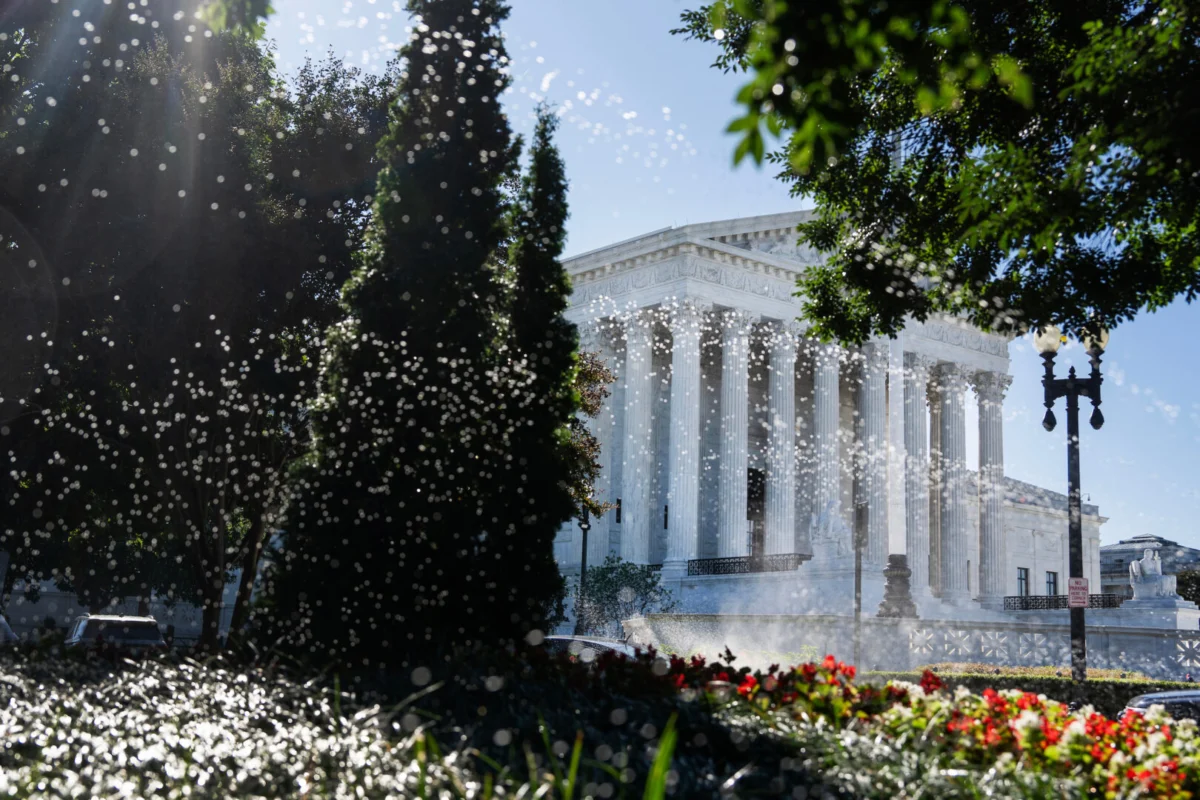
The Supreme Court of the United States opened its new term on the traditional first Monday of October, confronting a docket loaded with structural constitutional disputes, civil rights challenges, and federalism battles between state capitals and Washington. Operating under a 6-3 conservative supermajority, the High Court is set to rule on high-profile issues surrounding firearm regulations, noncitizen voting controls, federal immigration detention policies, and environmental regulation.
While the preliminary calendar features fewer immediately explosive culture-war titles than recent terms, legal scholars emphasize that the quiet opening is deceiving. Beneath the surface, the justices are tackling foundational legal questions regarding the limits of executive power, statutory interpretation, and the boundary lines of state sovereignty. Furthermore, the court faces the constant pressure of emergency "shadow docket" applications stemming from election-related litigation surrounding the upcoming midterm elections.
+-----------------------------------------------------------------------------------+
|                           KEY DOCKET HIGHLIGHTS AT A GLANCE                        |
+------------------------------------+----------------------------------------------+
| ISSUE CATEGORY                     | REPRESENTATIVE CASE(S)                       |
+------------------------------------+----------------------------------------------+
| Firearms & Second Amendment        | Viramontes v. Cook County                    |
| Election Law & Proof of Citizenship| Republican National Committee v. Mi Familia  |
|                                    | Vota                                         |
| Immigration & Executive Enforcement| DHS v. D.V.D., et al.                        |
|                                    | Barbosa da Cunha v. Freden                   |
| Emergency / Shadow Docket Issues   | Congressional Redistricting, Tariff Authority|
+------------------------------------+----------------------------------------------+
"Just because there’s an absence of cases involving controversial administration policies on day one, that doesn’t mean they are not coming," noted Brianne Gorod, chief counsel at the Constitutional Accountability Center. Gorod pointed out that a series of lower-court disputes—including challenges to executive efforts to unilaterally withhold congressionally mandated spending and sweeping trade tariff measures—are actively working their way up the judicial pipeline.
Historical Context and Chronology: Transitioning from Culture Wars to Structural Constitutionalism
The current term follows a sequence of transformative decisions that restructured American constitutional jurisprudence. In recent years, the conservative majority dismantled long-standing precedents on abortion rights, expanded Second Amendment protections, reshaped affirmative action in higher education, and narrowed the administrative state’s regulatory discretion by overturning judicial deference doctrines.
CHRONOLOGY OF MAJOR RECENT SCOTUS JURISPRUDENTIAL SHIFTS
│
├── 2022: New Second Amendment Framework Established
│   └── N.Y. State Rifle & Pistol Ass'n v. Bruen
│       └── Requires firearm restrictions to align with historical tradition.
│
├── 2023–2024: Major Realignments in Executive & Administrative Law
│   └── Curtailment of agency deference and expansion of executive scrutiny.
│
└── Current Term: Application of New Frameworks to Core Local & Federal Powers
    ├── Viramontes v. Cook County (Second Amendment ban on specific firearms)
    ├── RNC v. Mi Familia Vota (State citizenship proof vs. National Voter Registration Act)
    └── DHS v. D.V.D. / Barbosa da Cunha v. Freden (Executive deportation & detention power)
The court’s new term reflects a critical transition phase: taking the broad doctrines established in landmark rulings and applying them to nuanced state and federal statutory schemes. Rather than dealing strictly with abstract legal theory, the court must now navigate the practical mechanics of how local gun bans, voter registration laws, and federal border enforcement policies function in practice.
Firearm Regulation Post-Bruen: The Battle Over High-Capacity Rifles
Viramontes v. Cook County and the Scope of the Second Amendment
Among the most anticipated disputes on the merits docket is Viramontes v. Cook County, a direct challenge to the constitutionality of local government ordinances banning certain semi-automatic rifles, commonly classified by municipalities as "assault weapons," including popular models like the AR-15.
This case marks the first time the justices will directly address whether a state or local government can completely prohibit an entire class of popular firearms since the court’s landmark 2022 decision in New York State Rifle & Pistol Association v. Bruen. Under Bruen, courts must evaluate firearm restrictions not through standard policy balancing tests, but by determining whether the regulation is consistent with the nation’s historical tradition of firearm regulation dating back to the Founding era.
THE 'BRUEN' ANALYTICAL TEST IN GUN CASES
[Challenged Firearm Regulation]
               │
               ▼
   Does the text of the Second Amendment cover the conduct/weapon?
               │
      ┌────────┴────────┐
     YES                NO ───► Regulation Constitutional
      │
      ▼
   Is the regulation consistent with the U.S. "historical tradition" of firearm regulation (1791/1868)?
      │
      ├────────► YES ───► Regulation Constitutional
      │
      └────────► NO  ───► Regulation Unconstitutional
Joseph Blocher, a law professor at Duke University specializing in firearms law, emphasized the novelty and scope of the case:
"All these other kinds of either weapons or weapons accessories that have big functional differences and potential serious implications for how those guns work for purposes of self-defense or for purposes of mass murder—that’s a hard thing for constitutional law to navigate. But that’s really what this case is about."
Blocher added that Viramontes will serve as a bellwether for state and federal regulatory authority over high-caliber rifles, high-capacity magazines, machine gun conversion kits (such as bump stocks or auto-sears), and other specialized accessories.
Potential Ripple Effects on Federal Law
Legal scholars warn that a broad ruling striking down Cook County’s ordinance could jeopardize federal laws that have governed specialized firearms for nearly a century.
Robert Cottrol, a law professor at George Washington University, noted during a legal panel that the decision could cast a shadow over federal statutory frameworks like the National Firearms Act (NFA) of 1934, which heavily taxes and regulates fully automatic machine guns and short-barreled rifles.
"If these cases come out the way I think they’re going to take, how do they do that and not touch the 1934 National Firearms Act?" Cottrol questioned, emphasizing that reconciling modern restrictions with 18th-century historical precedents remains one of the judiciary’s most challenging tasks.
Voting Rights, Federalism, and Citizenship Verification
RNC v. Mi Familia Vota and the National Voter Registration Act
The court’s election law docket features a major federalism dispute in Republican National Committee v. Mi Familia Vota. The case focuses on an Arizona statute requiring individuals registering to vote to provide explicit proof of legal citizenship—beyond the standard federal attestation requirement—and directing state officials to conduct periodic checks of voter rolls to purge purported noncitizens.
STATE VS. FEDERAL ELECTION MANDATES
┌─────────────────────────────────────────────────────────────────────────┐
│                      FEDERAL REQUIREMENT (NVRA)                         │
│  - Standard Federal Form requiring attestation of citizenship under     │
│    penalty of perjury.                                                  │
│  - Limits voter roll purges close to federal elections.                │
└────────────────────────────────────┬────────────────────────────────────┘
                                     │
                                     ▼
┌─────────────────────────────────────────────────────────────────────────┐
│                      ARIZONA STATUTE (CHALLENGED)                       │
│  - Demands documentary proof of citizenship (e.g., birth certificate).  │
│  - Directs mandatory, periodic voter roll checks and purges.            │
└─────────────────────────────────────────────────────────────────────────┘
Civil rights organizations and voter registration groups sued the state, arguing that Arizona’s dual-track voter registration scheme violates the National Voter Registration Act (NVRA) of 1993, which was enacted to streamline registration processes and prevent last-minute roll purges that disenfranchise eligible voters.
The legal battle hinges on statutory construction. Alan Morrison, a professor at George Washington University Law School, noted that the justices must resolve a statutory ambiguity concerning what authority federal law leaves to individual states:
"They took this case to decide whether states can do this or not. Congress could change that, either to expressly authorize states to do it, or expressly prohibit states from doing it. And the question in this case is, what do you do when Congress has been less than clear?"
Because oral arguments are scheduled for December, any ruling will take effect after the upcoming midterm elections. However, the precedent will establish clear rules for how states administer federal-state voting systems in future national elections.
Immigration Policy, Executive Authority, and Due Process
The court has also granted certiorari to resolve deep constitutional disputes over the scope of executive power in enforcing immigration law. Two cases highlight the ongoing clash between federal enforcement mandates and individual due process guarantees:
- Third-Country Removals (Department of Homeland Security v. D.V.D., et al.): The justices will evaluate the legality of federal policies that permit border authorities to deport asylum seekers and migrants to third countries with which they have no prior ties or nationality, rather than returning them to their origin countries.
- Mandatory Indefinite Detention (Barbosa da Cunha v. Freden): This challenge directly targets policies mandating the non-discretionary detention of immigrants lacking permanent legal status throughout the entirety of their removal proceedings—without individual bond hearings.
                          IMMIGRATION DOCKET IMPACT
                                      │
         ┌────────────────────────────┴────────────────────────────┐
         ▼                                                         ▼
Third-Country Removals                                Indefinite Detention
(DHS v. D.V.D.)                                       (Barbosa da Cunha v. Freden)
    │                                                     │
    ├─ Allows deportation to safe third nations.           ├─ Restricts individualized bond hearings.
    └─ Re-evaluates administrative asylum discretion.      └─ Impacts tens of thousands of detainees.
The policy governing immigration detention has drawn hundreds of adverse rulings in lower federal courts and directly affects tens of thousands of individuals currently held in federal custody. The Supreme Court’s decisions will define the limits of executive power when enforcing border control measures without explicit statutory authorization from Congress.
The Shadow Docket: Fast-Track Decision-Making in Election Years
Beyond the merits docket—where cases receive extensive briefing and oral argument—a significant volume of high-stakes jurisprudence continues to pass through the court’s emergency, or "shadow," docket.
COMPARISON: MERITS DOCKET VS. SHADOW DOCKET

┌───────────────────────────────┬───────────────────────────────┐
│ MERITS DOCKET                 │ SHADOW DOCKET                 │
├───────────────────────────────┼───────────────────────────────┤
│ • Full written briefing       │ • Expedited emergency filings │
│ • Public oral arguments       │ • No oral arguments           │
│ • Decisions take 3–9 months   │ • Rulings issued in days/weeks│
│ • Detailed signed opinions    │ • Often unsigned / summary    │
└───────────────────────────────┴───────────────────────────────┘
Through emergency applications, the justices routinely decide whether to stay lower court injunctions, halt state execution dates, or alter state voting procedures just weeks or days before elections occur.
Renée Lettow Lerner, a law professor at George Washington University Law School and a former Supreme Court clerk, highlighted the massive expansion of this emergency practice:
"It hasn’t always been like this. There were always emergency motions, but nothing like the scale that there is today."
Recent shadow docket applications have produced significant legal outcomes, including rulings addressing congressional redistricting maps in states like Missouri, administrative changes to mail-in voting rules, and emergency stays on federal trade and immigration enforcement.
William Baude, a law professor at the University of Chicago who served on the Presidential Commission on the Supreme Court of the United States, noted that the justices rarely choose to enter political controversies voluntarily; rather, emergency litigation forces their hand:
"The ideal time for the Supreme Court to be pulled into an election would be never. But obviously, they can’t always avoid that, and so I think they’re going to somewhat be hostage to events."
EMERGENCY DOCKET ESCALATION IN ELECTION YEARS
[Lower Court Ruling Issued]
               │
               ▼
[Emergency Stay Application Filed to SCOTUS]
               │
               ▼
[SCOTUS Order Issued (Days/Weeks)] ──► Immediate Nationwide / Statewide Effect
Broader Legal and Societal Implications
The rulings issued during this term will have far-reaching structural consequences across three primary domains:
- Separation of Powers and Executive Discretion: Rulings on spending impoundments, tariffs, and immigration detention will define how far a presidential administration can go without explicit statutory authority from Congress.
- Federalism and Election Security: Resolving the friction between the National Voter Registration Act and state-level citizenship verification requirements will establish the legal boundary between federal oversight and state authority over election mechanics.
- The Future of the Second Amendment: By applying the Bruen historical standard to modern bans on specific classes of semi-automatic firearms, the court will clarify whether state and local governments retain any practical authority to regulate high-capacity weapons.
As the court deliberates over these cases, its decisions will shape the scope of constitutional rights and the constitutional balance of power between state legislatures, Congress, and the White House for decades to come.