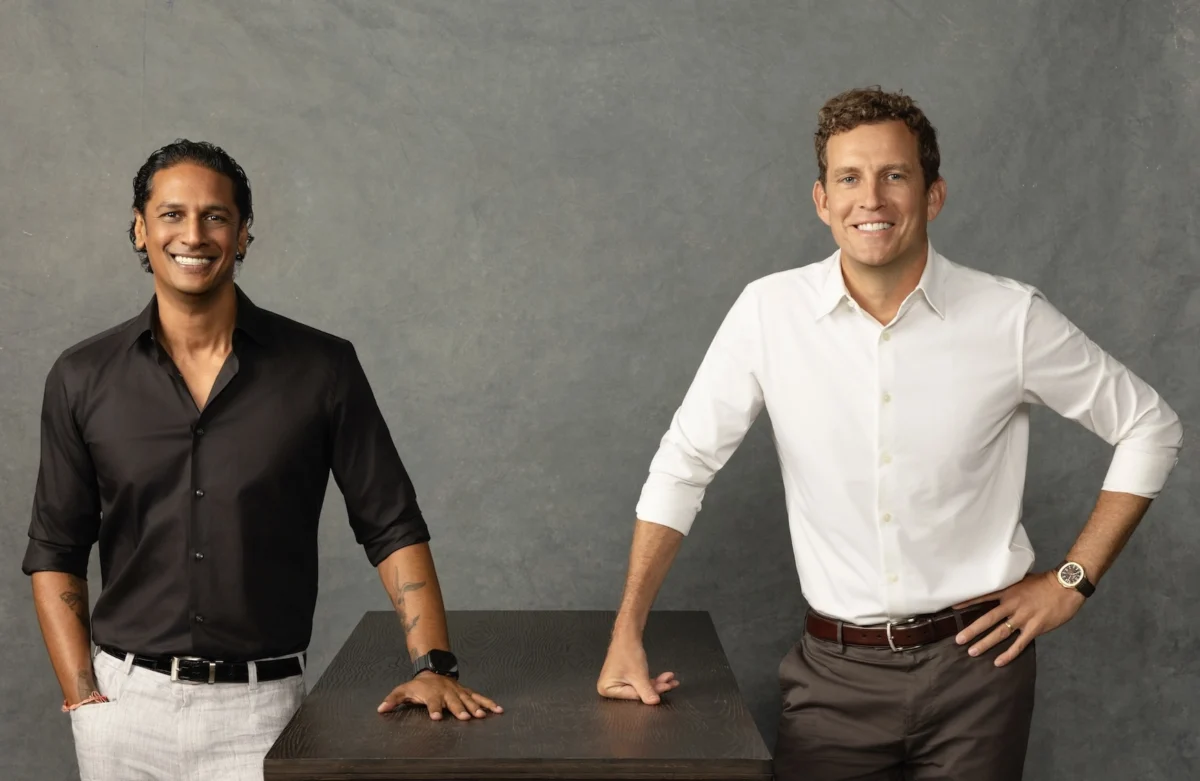
Four years after its inception, the startup laboratory formerly known as UP.Labs is undergoing a profound structural metamorphosis. Now rebranded as Vantora and bolstered by a fresh $100 million capital infusion from Silversmith Capital Partners, the firm is discarding the “generalist” accelerator model in favor of a highly specialized, proprietary pipeline designed to integrate innovation directly into the bedrock of corporate giants.
This shift marks a departure from the traditional startup-studio ethos—which often aims for broad market adoption—toward a model of "sovereign innovation." By pivoting to build startups that are intended to be absorbed exclusively by their corporate partners, Vantora is positioning itself as the secret R&D engine for the Fortune 100, focusing heavily on the high-stakes world of physical AI.
The Core Transformation: Moving Beyond the Incubator Model
When the firm first launched in 2022, its mission was to operate at the intersection of venture creation and corporate strategy. It successfully partnered with industry titans like Porsche, Alaska Airlines, and logistics leader J.B. Hunt to spin out independent startups. However, the leadership team, headed by founder and CEO John Kuolt, realized that the traditional "outside-in" model had a ceiling.
The firm frequently identified transformative technological opportunities, particularly in the realm of physical AI and industrial autonomy, but was forced to abandon them. Why? Because the problems were too strategic, too sensitive, and too competitive to be shared with the broader market.
“We were missing the biggest value problems,” Kuolt explained in a recent interview. “Imagine you’re a Fortune 100 industrial company and you need to retrofit all of your hardware and machines for autonomy. You need to own that; it needs to be sovereign. You can’t rely on a third party to go do that for you. They’re never going to let us go sell that to their competitors.”
By shifting to a "proprietary M&A pipeline," Vantora has effectively removed the friction of competitive disclosure. Startups are now built with the express intent of being integrated into the parent company’s core business, allowing corporate partners to retain exclusive control over their intelligence layers.
Chronology of a Startup Laboratory
The evolution of Vantora is a testament to the fast-moving, iterative nature of the modern venture-building landscape.
- 2021–2022: The Genesis: Emerging from the orbit of the venture firm Up.Partners, the lab began as a boutique operation focused on bridging the gap between Silicon Valley-style innovation and legacy industrial sectors.
- June 2022: The Porsche Milestone: Vantora (then UP.Labs) secured Porsche as its inaugural corporate partner. This validated the model of embedding startup builders directly into the ecosystem of a luxury automotive manufacturer.
- 2023–2024: Scaling Verticals: The firm expanded its portfolio significantly, signing agreements with aviation giant Alaska Airlines, logistics firm J.B. Hunt, industrial manufacturer Wabash, and TDG (the parent company of Ashley Furniture).
- Early 2025: The Rebrand and The Pivot: The firm officially rebranded as Vantora, signaling its departure from its early association with Up.Partners and establishing its identity as an independent entity.
- Mid-2025: The Silversmith Investment: The announcement of a $100 million investment from Silversmith Capital Partners serves as a liquidity bridge that allows Vantora to fund its operations and lean into more capital-intensive, hardware-heavy AI projects without relying on outside venture capital rounds.
Supporting Data: Why Physical AI Demands a New Approach
The necessity for this change is rooted in the current state of industrial automation. As Fortune 100 companies struggle to compete with leaner, tech-native competitors, they are under immense pressure to retrofit aging physical infrastructure with modern AI capabilities.
According to industry metrics, the "Industrial AI" market is projected to reach unprecedented growth by 2030, yet many corporations have struggled to implement these technologies. The primary roadblock has been a lack of "sovereign" tech—software that is specifically tailored to a company’s unique supply chain, hardware, or operational footprint.
Vantora’s internal data, while not publicly quantified in dollar amounts, suggests a high failure rate for "generalist" startups attempting to solve niche industrial problems. By contrast, the "proprietary build" model ensures:
- Guaranteed Customer Base: Every startup created has at least one locked-in customer (the partner).
- Strategic Alignment: The startups are built to solve internal pain points rather than speculative market needs.
- Intellectual Property Security: The IP remains within the partner’s ecosystem, mitigating the risk of competitive leakage.
The "Proprietary M&A" Model: Implications for Industry
The implications of Vantora’s new direction are significant for both the venture capital ecosystem and corporate innovation departments.
1. The Death of the "One-Size-Fits-All" Accelerator
For years, the startup studio model followed the Y-Combinator playbook: build a product, launch it to the world, and seek mass-market adoption. Vantora is signaling that for deep-tech and industrial AI, this approach is flawed. The new model assumes that the most valuable AI applications are the ones that are proprietary and closed-loop.
2. A New Asset Class for Private Equity
With Silversmith Capital Partners’ $100 million injection, Vantora is essentially creating a bridge between private equity and venture building. By providing the capital to build the technology that will eventually be absorbed by large-cap corporations, they are lowering the risk for the corporate partner while creating a predictable exit pathway.
3. The Talent Shift
This shift also changes the type of talent Vantora recruits. Previously, they needed entrepreneurs who could pitch to VCs and navigate public markets. Now, they require "industrial-tech architects"—individuals who understand complex, legacy-hardened physical systems as well as they understand modern software architecture.
Official Responses and Strategic Vision
John Kuolt’s vision for Vantora is rooted in the belief that the "next big thing" in AI isn’t a new chatbot or social media app—it’s the digitization of the physical world.
“We’ve seen use cases with partners like J.B. Hunt that were so impactful that we had to step back and realize we couldn’t take them to the broader market,” Kuolt noted. “Previously, we would have killed the project. Now, we build it, we optimize it for the partner, and we fold it into their business. It’s a complete reversal of the startup ethos, but it’s the only way to solve the most difficult problems in global supply chain and manufacturing.”
The move has been met with quiet optimism from industry observers. While some argue that keeping innovation "closed" could stifle the broader development of the AI ecosystem, others suggest that for industries like oil, gas, and aerospace, "sovereign AI" is a national and corporate security necessity.
Conclusion: The Future of Vantora
As Vantora moves into this next phase, it leaves behind the crowded, competitive world of traditional startup incubators. By aligning its incentives perfectly with its corporate partners, it has transformed itself from a venture firm into an institutionalized innovation department.
Whether this model can scale beyond a few select partners remains to be seen. However, the $100 million backing from Silversmith suggests that the market believes in the pivot. In an era where AI is rapidly changing the mechanics of global industry, Vantora’s decision to prioritize "sovereign, proprietary intelligence" over "market-ready products" may well prove to be the most viable path to survival for the world’s largest, most complex organizations.
The transition from UP.Labs to Vantora is more than just a name change; it is an admission that the most powerful tools of the future will not be sold on an open market, but will be owned, operated, and guarded by the corporations that depend on them most.