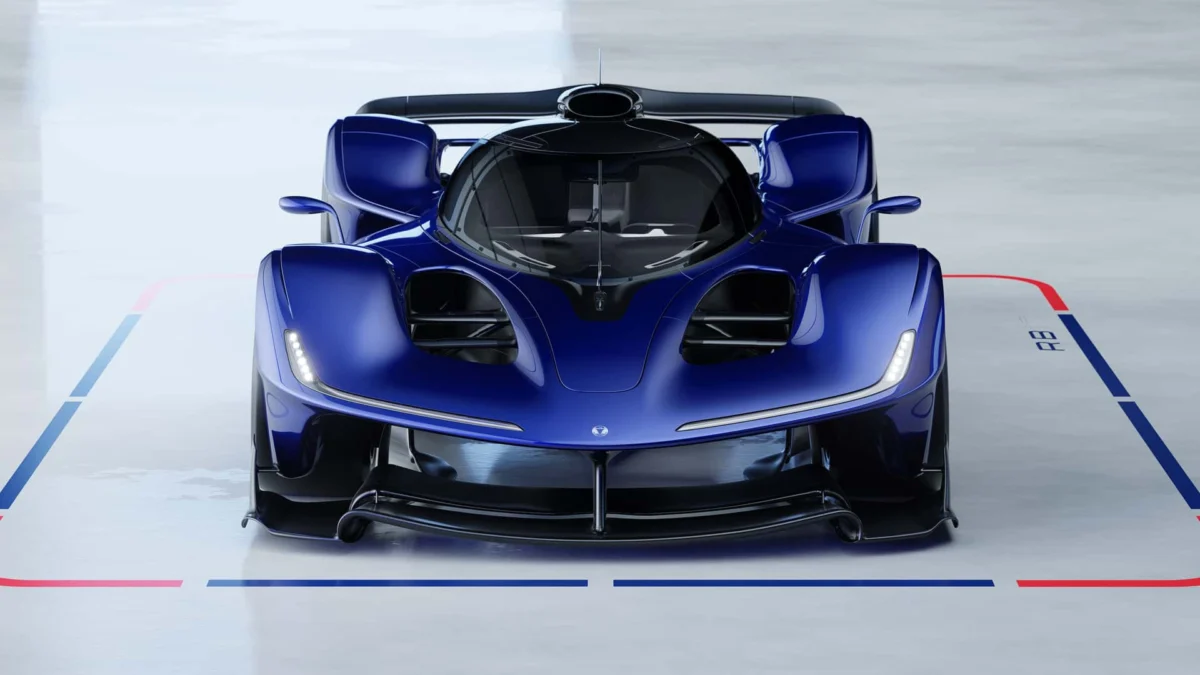
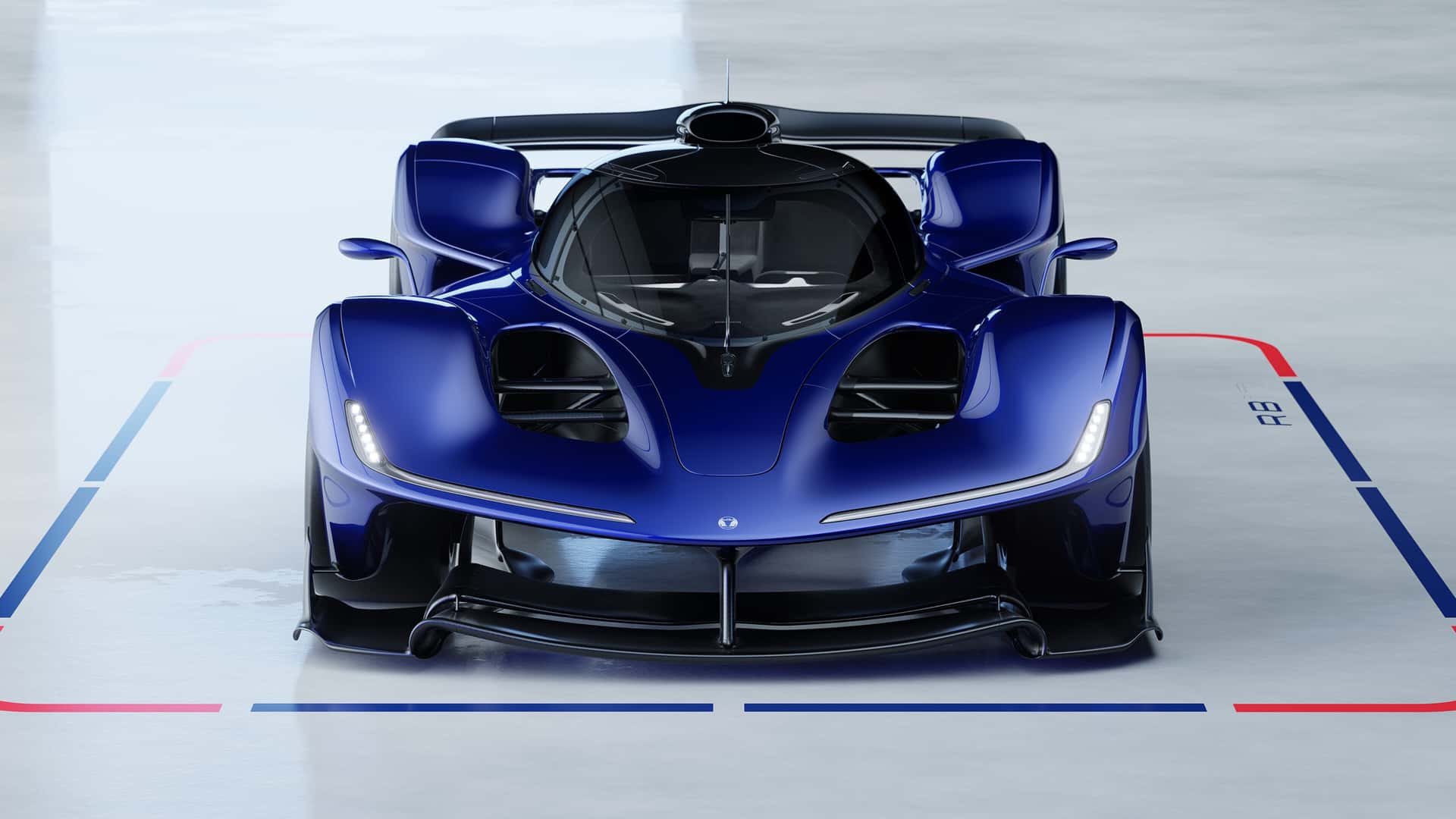
The hypercar landscape has long been defined by compromise. Manufacturers, bound by the rigid constraints of global road-legal homologation—emissions mandates, pedestrian safety requirements, and the necessity of creature comforts—have historically struggled to bridge the gap between track-day performance and grand touring usability. But the Red Bull RB17 is not a road car. It is not even a production car in the traditional sense. It is the purest expression of Red Bull Advanced Technologies’ (RBAT) aerodynamic and mechanical ambition, a machine forged in the crucible of Formula 1 dominance, free from the "pesky" shackles of regulatory interference.
Nearly three years after its initial concept debut, the RB17 has transitioned from a digital rendering to a snarling, track-ready reality. Its dynamic debut at the Goodwood Festival of Speed served as more than a public unveiling; it was a technical manifesto. By stripping away the need for side mirrors, catalytic converters, and turn signals, Red Bull has created something rare: an uncompromised velocity machine.
The Chronology of an Icon
The journey of the RB17 began in the corridors of the Red Bull Technology Campus in Milton Keynes. The project was spearheaded by the legendary Adrian Newey, the man whose aerodynamic genius has powered Red Bull Racing to multiple F1 World Championships. The goal was simple yet audacious: to create a car that provided a Formula 1-like driving experience for the wealthy enthusiast, without the requirement of a massive pit crew to manage the complexity of a modern Grand Prix vehicle.
- 2021-2022 (Conceptualization): The project moved from initial sketches to feasibility studies. The primary challenge wasn’t just raw speed; it was defining the "soul" of the car. The team evaluated various powertrain architectures, ranging from hybrid V6 turbos to naturally aspirated V12s.
- 2023 (Technical Refinement): The partnership with Cosworth was finalized, and the bespoke 4.5-liter V10 engine began its development cycle. This period focused on the integration of the engine as a stressed member of the chassis, balancing cooling requirements against aerodynamic efficiency.
- 2024 (Dynamic Debut): The prototype made its public-facing dynamic debut at the Goodwood Festival of Speed, silencing critics who questioned whether such an extreme machine could actually be "driven" by mere mortals.
To V10, Or Not To V10? The Engineering Logic
The decision to opt for a naturally aspirated 4.5-liter V10 was not a nostalgic whim, but a calculated technical decision. Bruce Wood, Managing Director of Cosworth, notes that the lack of regulation—specifically the absence of emissions standards—created a "problem of freedom."
"When we normally do an engine, there’s something that grounds it in a certain direction," Wood explains. "There’s either technical regulations for a race championship, or emissions regulations for a road car. The unique thing about this is you’ve got none of those constraints."
With a clean sheet, the team stress-tested every potential configuration. Turbocharged engines offered high power, but fell short in the critical areas of throttle response and weight. A V12 was considered but ultimately rejected in favor of the V10, which provided the ideal balance of engine speed, displacement, and weight. The resulting power plant revs to a blistering 15,000 rpm, producing 1,200 horsepower and 811 lb-ft of torque.
The choice of a naturally aspirated architecture was driven by the quest for "instant" throttle response—a characteristic essential for a car designed to be a "driver’s car." Wood emphasizes that the V10 provides a soundtrack that defies numerical assessment, acting as the emotional heartbeat of the machine.
Technical Specifications: Pushing the Limits of Physics
The RB17 is a masterclass in materials science and mechanical ingenuity. The engine is a bespoke unit, designed from the ground up to withstand the stresses of a 15,000-rpm limit. To achieve this, Cosworth turned to technology directly descended from the golden era of Formula 1.
Pneumatic Valve Springs
To maintain valvetrain stability at 15,000 rpm, traditional steel springs were insufficient. The team implemented pneumatic valve springs, a technology that uses compressed air to close the valves. This ensures precise timing and prevents valve float at extreme engine speeds, a necessity for an engine that lives in the upper echelon of the tachometer.
Durability for the Enthusiast
Perhaps the most impressive technical achievement is the engine’s longevity. While F1 engines of the high-revving V10 era were designed for a few hundred miles of racing, the RB17’s motor is built to last "many thousands of kilometers." This required a radical rethink of piston clearances, cold-start procedures, and oil cooling systems. The objective was to create a car that the owner could take to the circuit and use spontaneously, without needing an "army of people" to calibrate the engine before ignition.
Packaging and Collaboration
The engine serves as a structural component, with the rear suspension and gearbox bolted directly to the crankcase. This creates an incredibly rigid chassis, allowing the aerodynamic surfaces to work with surgical precision. The collaboration between Red Bull’s aerodynamicists and Cosworth’s engine builders was constant; if Newey’s team required a specific intake placement for airflow, the engine team had to adapt the internal components to fit that constraint. It was a game of constant, high-stakes trade-offs.
Official Perspectives: The Philosophy of the RB17
The ethos behind the RB17 is best summarized by the team’s commitment to accessibility through technology. During interviews at the launch, it became clear that the goal was not just performance, but "drivability."
"I’d be surprised if we left much in the tank on this one," Bruce Wood remarked. "You choose the best materials. Weight is an enormously important target as well. It’s got everything in it."
The team’s primary concern during development was how the car would feel to the driver. In a world of over-assisted, heavy electric hypercars, the RB17 seeks to return to the visceral, tactile connection between man and machine. It is designed to reward skill, yet it is engineered to be approachable enough that a track-day enthusiast—rather than a professional racing driver—can exploit its performance.
Implications for the Future of Hypercars
The arrival of the Red Bull RB17 marks a shift in the hypercar market. For years, the industry has chased horsepower figures via electrification and turbocharging. By producing a car that focuses on high-revving, naturally aspirated performance and extreme weight reduction, Red Bull is challenging the status quo.
- The End of the "Road-Car" Myth: The RB17 proves that the most exciting cars of the future may not be road-legal at all. By shedding road regulations, manufacturers can deliver experiences that are simply impossible to achieve in a car destined for the public highway.
- The Legacy of the V10: By choosing a V10, Red Bull has signaled that there is still a massive appetite for internal combustion engines that prioritize character, sound, and response over pure efficiency.
- Cross-Pollination of F1 Tech: The RB17 is the clearest example of Formula 1 technology leaking into the private sector. The expertise gained in aerodynamics, materials, and engine management is now available to a select few, setting a new benchmark for what a track-only hypercar can achieve.
As the RB17 moves into production, it remains a testament to the idea that when engineering is liberated from the bureaucracy of the road, the results are nothing short of breathtaking. It is not merely a car; it is the ultimate expression of Red Bull’s racing DNA, condensed into a single, screaming, 15,000-rpm masterpiece. The track will never be the same again.