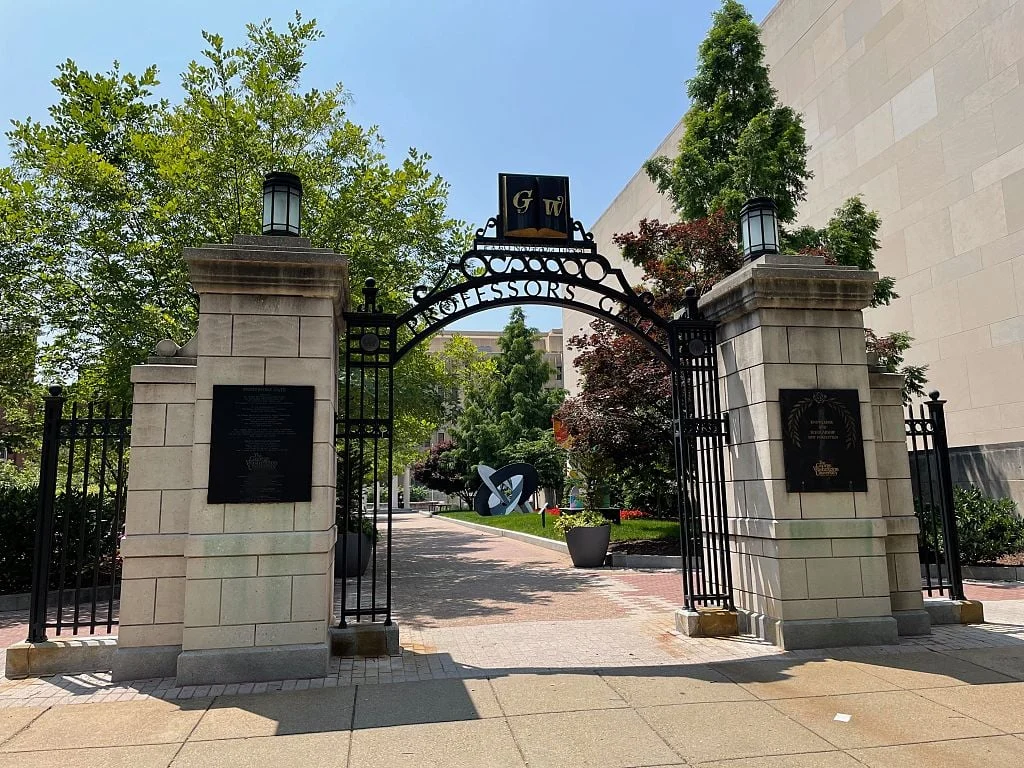
The U.S. Department of Justice (DOJ) has issued a formal finding that the George Washington University (GWU) School of Medicine and Health Sciences engaged in discriminatory admissions practices, explicitly violating federal civil rights statutes and the landmark 2023 Supreme Court ruling that effectively ended race-conscious admissions in higher education.
This finding represents a significant escalation in the federal government’s campaign to reshape the landscape of medical education. Federal investigators concluded that the university systematically favored Black and Hispanic applicants over white and Asian candidates, utilizing metrics and subjective evaluation processes that circumvented the high court’s mandate for colorblind admissions.
The Core Allegations: Systemic Bias and Procedural Evasion
According to the official DOJ report, the investigation into GWU’s 2024 and 2025 admissions cycles revealed a "pattern of intentional discrimination." Investigators allege that the university’s School of Medicine maintained a dual-track evaluation system that prioritized racial demographic goals at the expense of standardized academic achievement.
The DOJ noted that Black and Hispanic applicants were routinely admitted with standardized test scores significantly lower than those of white and Asian counterparts. More importantly, the investigation highlighted the use of "proxy" mechanisms designed to bypass the 2023 Supreme Court decision in Students for Fair Admissions v. Harvard.
Specifically, the DOJ report points to the university’s application essay prompts. Investigators found that these prompts were carefully crafted to elicit information regarding an applicant’s race or ethnicity. Once this data was harvested, it was allegedly integrated into the screening process to determine which candidates were invited for interviews. The DOJ emphasized that this was not a passive collection of data but a deliberate tool used to influence the composition of the incoming class.
"As a result of GW Med’s admissions practices, Black applicants had a significantly higher probability of being selected for an interview, and received disproportionately higher interview scores, than comparable Asian applicants," the DOJ stated in its official news release.
A Chronology of the Federal Crackdown
The scrutiny of medical school admissions did not occur in a vacuum; it is the culmination of a broader, aggressive push by federal authorities to enforce a strict interpretation of non-discrimination laws in professional graduate programs.
- Early 2026: The Department of Education and the DOJ initiated a sweeping investigation, demanding comprehensive admissions data from several top-tier medical schools across the nation. This marked the beginning of a heightened oversight period.
- March 2026: The investigation intensified as the DOJ formally launched inquiries into three prominent medical institutions, signaling that the federal government was prioritizing the "colorblind" mandate in the medical field.
- July 2026: The scope of the crackdown expanded significantly. The DOJ announced it was adding five additional colleges to its investigation list, explicitly tying these efforts to the administration’s stated mission to eliminate race-based decision-making in medical education.
- August 2026: The DOJ issued its findings against GWU, marking the latest in a series of institutional rebukes.
To date, the federal government has investigated at least 26 institutions. Prior to the GWU announcement, the DOJ had already issued findings of illegal racial discrimination at the University of California’s Davis, Los Angeles, and San Diego medical schools, as well as at Yale University.

The Legal and Statistical Framework
The DOJ’s findings are rooted in Title VI of the Civil Rights Act of 1964, which prohibits discrimination on the basis of race, color, or national origin in programs and activities receiving federal financial assistance. Since the 2023 Supreme Court decision, the DOJ has argued that any admissions process that considers race—whether through direct checkboxes or indirect "proxy" questions—violates both the Constitution and federal statutes.
The statistical evidence presented by the DOJ in the GWU case is stark. By comparing "comparable" applicants—those with similar GPAs and clinical experience—the DOJ identified a clear statistical divide. The disparity in interview selection rates suggests that race was a primary, if not decisive, factor in the candidate selection process, rather than a holistic assessment of individual merit.
Legal experts observing these investigations note that the DOJ is moving away from examining "diversity statements" in isolation and toward a data-driven analysis of outcomes. By looking at the intersection of test scores, interview invitations, and final acceptance rates, the government is building a quantitative case that is increasingly difficult for universities to rebut through administrative explanations alone.
Official Responses and Institutional Defiance
In the wake of the DOJ’s announcement, George Washington University has taken a firm stance in its defense. Katelyn Deckelbaum, a spokesperson for the university, issued a statement expressing profound disagreement with the federal government’s assessment.
"We are disappointed by the DOJ’s conclusions, which we believe are incorrect," Deckelbaum wrote in an email. "Our School of Medicine and Health Sciences admissions process fully complies with the law. The university remains steadfastly committed to non-discrimination and Title VI compliance while advancing our academic missions and excellence in preparing health care leaders."
The university’s response highlights a growing rift between elite academic institutions and federal regulators. While the DOJ frames its actions as a necessary correction to enforce the Supreme Court’s ruling, the university frames its admissions process as a lawful effort to curate a diverse class of healthcare providers, which they argue is essential for effective patient care in a diverse society.
However, the legal threshold for such an argument has been significantly raised since the SFFA ruling, which held that universities may no longer use race as a proxy for experiences or as a thumb on the scale in admissions.
Broader Implications for Higher Education
The investigation into GWU is a bellwether for the future of professional school admissions in the United States. The implications are far-reaching:

1. The Death of the "Diversity Statement"
Medical schools across the country are currently re-evaluating their application portals. Many are removing essay prompts that ask students to discuss their racial background or identity, fearing that such questions will serve as the "smoking gun" for future DOJ investigations.
2. Standardization vs. Holistic Review
The DOJ’s focus on standardized test scores as a point of comparison creates a dilemma for medical schools that have spent years moving toward "holistic review" models. While schools argue that test scores do not capture the full range of a student’s potential, the DOJ’s findings suggest that if "holistic" factors lead to statistically significant racial disparities in admission outcomes, those processes will be subject to intense legal scrutiny.
3. Federal Funding Risks
Institutions found in violation of Title VI risk losing federal funding. While the loss of such funding is a "nuclear option" that the government has historically been hesitant to exercise, the current administrative climate suggests a higher willingness to use financial pressure to force policy changes.
4. A Shift in Medical Workforce Demographics
Critics of the DOJ’s campaign argue that these investigations will inevitably lead to a reduction in the number of Black and Hispanic doctors, potentially worsening health disparities in marginalized communities. Proponents of the DOJ’s actions, however, argue that meritocracy is the only fair standard and that the medical profession must be based on objective qualification rather than demographic engineering.
Conclusion
The standoff between George Washington University and the Department of Justice is more than just a dispute over a specific admissions cycle; it is a battle over the definition of fairness in American professional life. As the DOJ continues its probe into the remaining 20-plus medical schools under review, the academic community remains in a state of high alert.
For now, GWU stands by its processes, but the legal pressure is mounting. The findings against the university underscore a new reality in higher education: the era of race-conscious admissions is effectively over, and the federal government is prepared to aggressively dismantle any system that deviates from that standard. Whether this leads to a more equitable system or one that lacks the diversity necessary to serve a modern population remains the central question of this ongoing national debate.