
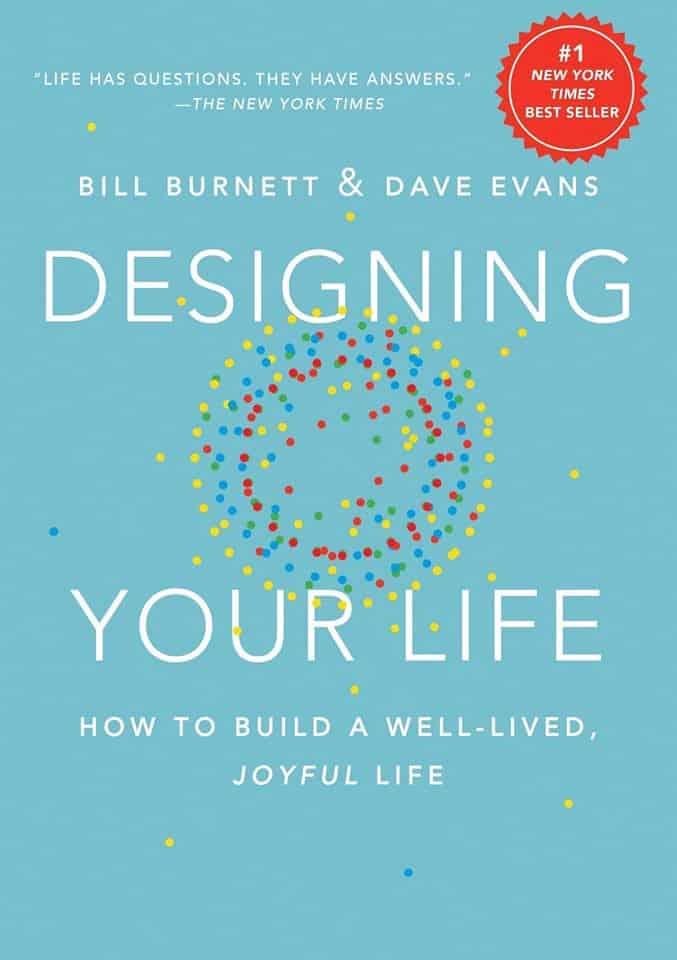
In an era defined by rapid technological shifts and economic uncertainty, the search for personal direction has become a primary preoccupation for many. For decades, traditional career counseling relied on static personality tests and rigid linear trajectories. However, a new methodology, pioneered by Stanford University design professors Bill Burnett and Dave Evans, is challenging these norms. Their book, Designing Your Life, suggests that the principles of product design—prototyping, iteration, and empathy—can be applied with equal efficacy to the construction of a meaningful human existence.
This article explores the practical application of these design-thinking methodologies as a group of peers begins a structured, two-month journey to re-evaluate their professional and personal paths.
The Genesis of Life Design: A Collaborative Approach
The methodology centers on the premise that life is not a problem to be solved, but a project to be designed. Last week, the shift toward this framework gained momentum as a small group of individuals, including the author and two long-term associates—Kim and a college classmate, Craig—began a formal, collaborative study of Burnett and Evans’ curriculum.
By choosing to work through the book’s exercises in tandem, the group aimed to move beyond passive reading into active, accountable implementation. The decision to document this process serves a dual purpose: it provides a roadmap for readers seeking similar clarity, while honoring the intellectual property of the authors through a synthesis of personal reflection and guided assessment rather than a rote reproduction of the text.
Chronology of the Process: From Assessment to Compass
The design process begins not with a leap into the unknown, but with a rigorous acknowledgment of the status quo. The initial phase of the program, titled "Start Where You Are," mirrors strategies often utilized in financial planning. Just as an investor must determine their net worth before plotting a growth strategy, a life designer must establish a baseline.
Phase I: The Baseline Audit
The first step is a multi-dimensional assessment of four core pillars: Health, Love, Play, and Work. This stage is strictly diagnostic; it is not meant to be actionable in the immediate term. Instead, it creates a "snapshot" of the subject’s current reality. By assigning ratings and qualitative descriptions to these four domains, participants gain a clearer picture of their current "map," identifying where they are currently located before attempting to navigate toward a desired destination.
Phase II: Building the Compass
Following the initial audit, the process moves into the development of a metaphorical compass: the Workview and the Lifeview. These two essays represent a formal articulation of personal philosophy and professional intent.
For the participants, this stage proved to be the most revelatory. When comparing results—specifically through a FaceTime session between the author and Craig—it became evident that these documents serve as a powerful tool for deepening interpersonal connections. The process of articulating one’s values in writing forces a level of vulnerability and introspection that casual conversation rarely achieves.
Supporting Data: Comparative Philosophies of Purpose
To understand the practical application of this exercise, one must examine the actual outputs of the participants. The following reflections demonstrate how two individuals, despite sharing similar educational backgrounds, interpret the role of work and the meaning of existence.
The Professional Lens: Workview
Both Craig and the author emphasized that work, while serving as a mechanism for financial stability, must also satisfy higher-order needs.

- Craig’s Perspective: He advocates for "right livelihood," a concept rooted in Buddhist philosophy. He prioritizes tangible outputs and the restoration of natural systems. For Craig, the inherent value of work is tied to its contribution to ecological and social abundance, warning that a focus on status or excessive profit-seeking often leads to dissatisfaction.
- The Author’s Perspective: The author echoes these sentiments, citing the Japanese concept of ikigai—the intersection of passion, mission, vocation, and profession. His focus is on utility and service, aiming to transform his professional output into an accessible, reliable resource for others while maintaining a sustainable balance that avoids the pitfalls of purely transactional labor.
The Existential Lens: Lifeview
The convergence of values becomes even more apparent in their respective Lifeviews. Both individuals reject dogmatic frameworks, opting instead for a secular, humanistic approach to morality.
- Shared Values: Both participants identify "doing no harm" as a fundamental tenet. They view the vastness of the universe not as a source of nihilism, but as a catalyst for creating personal meaning.
- The Power of Connection: The participants agree that morality is defined by the treatment of others, particularly those in positions of vulnerability. They emphasize the importance of social capital—a concept explored in Robert Putnam’s Bowling Alone—and express concern over its modern decline, fueled by digital fragmentation.
Implications: The "Non Nobis Solum" Philosophy
The high degree of alignment between the participants is not purely coincidental. Both individuals are alumni of Willamette University, an institution guided by the motto non nobis solum nati sumus—"not unto ourselves alone are we born."
This shared educational foundation has profound implications for how they approach life design. By incorporating this ethos, they move away from the hyper-individualistic "self-help" tropes common in modern culture and toward a model of "rational self-centeredness." This model posits that an individual must secure their own foundation—taking care of their health, finances, and mental clarity—to effectively serve their family, friends, and community.
Filling the Gaps in Purpose-Driven Workshops
The primary implication of this exercise is the realization that many traditional "finding your purpose" workshops fail because they lack an objective framework. By integrating the specific, modular exercises found in Designing Your Life, participants can bridge the gap between abstract desire and concrete action. The use of Workviews and Lifeviews as "compasses" allows individuals to navigate complex career and life decisions with a consistent internal metric.
Future Outlook: The Good Time Journal
As the participants move into the next phase of the program, the focus will shift toward empirical data collection. Chapters three and four of the Stanford methodology introduce the "Good Time Journal."

Over the coming weeks, the group will log their daily activities, specifically tracking their levels of engagement and energy. This is a crucial step in the design process: using real-world data to identify "flow states." By applying mind-mapping techniques to these logs, the participants hope to uncover patterns that have remained hidden, eventually using these insights to prototype potential future versions of their careers.
The journey has only just begun, but the initial results suggest that the application of design principles to personal life is more than just a trend—it is a robust, repeatable methodology for those seeking to navigate an increasingly complex world with intentionality and grace. As the group prepares to analyze their "Good Time Journals," the broader lesson remains clear: the most important design project an individual will ever undertake is their own life.