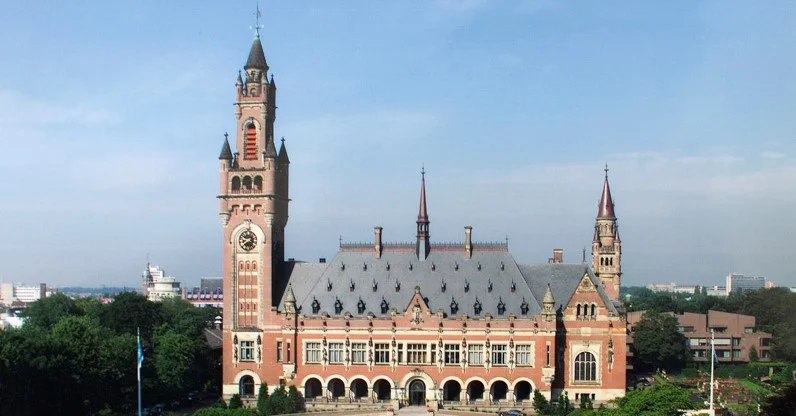
In a move that marks a significant escalation in the diplomatic and legal hostilities between two neighboring African nations, the Democratic Republic of the Congo (DRC) has officially filed an application instituting proceedings against Rwanda before the International Court of Justice (ICJ). The filing, submitted this past Friday, seeks to hold Kigali accountable for what Kinshasa describes as a "multi-decadal campaign of terror, state-sponsored violence, and systematic human rights abuses" in the eastern provinces of the DRC.
The case, which brings the volatile security situation in the Great Lakes region to the doorstep of the United Nations’ principal judicial organ, alleges that Rwanda’s involvement in the region has violated fundamental tenets of international law. The DRC’s application explicitly accuses the Rwandan state of direct responsibility for massacres, sexual violence, state-sanctioned torture, and the forced displacement of millions of Congolese citizens, spanning a timeline from 1996 to the present day.
A Legacy of Violence: The Core Allegations
The documentation submitted to the ICJ paints a harrowing picture of life in eastern Congo, a region defined by its mineral wealth and its tragic susceptibility to foreign interference. According to the Congolese legal team, the violence has not been a series of isolated incidents, but rather a coordinated effort to destabilize the region, primarily through the facilitation and support of armed groups—most notably the M23 (March 23 Movement) rebel group.
The DRC asserts that these abuses have been targeted, with a particular focus on Hutu populations who fled into Zaire (now the DRC) following the 1994 genocide against the Tutsi in Rwanda. However, the scope of the alleged crimes extends far beyond this demographic, encompassing a wide array of indigenous ethnic groups, including the Nyindu, Bembe, Nande, Lega, Hunde, and Bashi.
"The civilian populations of eastern DRC have been victims of massacres, extrajudicial executions, acts of torture, sexual violence, forced displacement, and discrimination of an exceptional magnitude," the government statement noted. By taking this case to the ICJ, the DRC is attempting to move the conflict from the battlefield to the courtroom, seeking a legal declaration that Rwanda’s actions constitute a breach of its obligations under international treaties, including the UN Charter and various humanitarian conventions.
Historical Chronology: Three Decades of Instability
To understand the weight of this filing, one must look at the historical trajectory of the conflict, which has left the region in a state of perpetual fragility since the mid-1990s.
1994–1998: The Aftermath of Genocide
The genesis of the current conflict is inextricably linked to the 1994 Rwandan genocide. Following the victory of the Rwandan Patriotic Front (RPF), millions of Hutus—including those involved in the genocide—fled across the border into Zaire. This migration fundamentally altered the demographic and security landscape of eastern Congo.
1998–2003: The "Great African War"
The region descended into a multi-state conflict involving at least eight African nations. This period cemented the involvement of Rwandan military forces on Congolese soil, ostensibly to root out genocidal elements (the FDLR), but increasingly to exert control over the resource-rich provinces of North and South Kivu.
2004–2013: The Rise of Proxy Militias
Following the formal end of the war, the region remained ungoverned in many areas. The CNDP and later the M23 rebels emerged as powerful insurgent groups. The DRC and various UN experts repeatedly documented evidence of Rwandan logistical support, training, and direct intervention in favor of these groups.
2014–Present: The Resurgence and Current Crisis
After a period of relative dormancy, the M23 movement launched a massive offensive in 2021, seizing large swaths of territory and displacing hundreds of thousands. The conflict has since escalated, with the DRC accusing the Rwandan Defense Forces (RDF) of providing air defense and heavy weaponry to the rebels—a charge supported by recent reports from international monitors and the imposition of sanctions by the United States.
Supporting Data: The Human Cost of Conflict
The human toll of this thirty-year conflict is staggering. While official death tolls are difficult to verify due to the remote nature of the terrain, humanitarian organizations estimate that millions have died—not only through direct violence but as a result of the collapse of healthcare, food insecurity, and displacement-related illnesses.
- Forced Displacement: Current estimates from the UN Refugee Agency (UNHCR) suggest that over 6 million people are internally displaced within the DRC, with a significant majority concentrated in the North Kivu province.
- Sexual Violence: The DRC has been dubbed the "rape capital of the world" by various UN officials. The ICJ filing highlights that sexual violence has been utilized as a strategic tool of warfare to terrorize communities and break social cohesion.
- Economic Exploitation: The conflict is fueled by the illicit trade of minerals—specifically coltan, gold, and tin. The DRC’s filing argues that the insecurity created by Rwanda-backed groups facilitates the illegal extraction and export of these resources, effectively financing the very violence that plagues the region.
Official Responses and Diplomatic Tensions
The filing has elicited a sharp response from Kigali. Rwanda has consistently maintained that its presence—or that of its perceived proxies—is a matter of national security. The Rwandan government argues that it is acting in legitimate self-defense against the FDLR, a group that includes remnants of the forces responsible for the 1994 genocide.
"Rwanda does not support the M23," a spokesperson for the Rwandan government stated following the announcement of the ICJ filing. "Our security concerns are ignored by the international community while the DRC continues to collaborate with genocidal forces that threaten our borders."
Conversely, the Congolese administration, led by President Félix Tshisekedi, has shifted its foreign policy toward a more aggressive stance, accusing the international community of "double standards." By turning to the ICJ, the DRC is signaling that it no longer trusts regional mediation efforts alone to resolve the crisis and is seeking a binding legal determination that could lead to international reparations and diplomatic isolation for Rwanda.
Legal and Geopolitical Implications
The move to the ICJ carries significant weight, though it presents several legal hurdles.
The Question of Jurisdiction
The ICJ can only hear cases where both parties have consented to its jurisdiction. The DRC’s application will rely on specific treaty obligations that both nations are signatories to, which include clauses for dispute resolution at the Court. Rwanda will likely challenge the court’s jurisdiction, arguing that the alleged actions fall outside the scope of these agreements.
International Repercussions
If the case proceeds, it will force the international community to take a definitive stance on the role of Rwanda in the DRC. For years, major Western powers have walked a tightrope, maintaining strong alliances with Rwanda—often praised for its economic development and governance—while expressing concern over its regional military footprint. A ruling by the ICJ could force a recalibration of these relationships, potentially leading to increased sanctions or the withdrawal of military and economic aid to Kigali.
The Future of the Great Lakes
Beyond the legal arguments, the case reflects a desperate attempt by the DRC to reclaim sovereignty over its eastern territories. Whether the ICJ can provide a solution to a conflict that has confounded diplomats for decades remains to be seen. However, the filing serves as a stark reminder that the status quo is unsustainable.
As the proceedings begin, the eyes of the international legal community will be fixed on The Hague. For the people of Goma, Bunia, and the countless villages caught in the crossfire, the ICJ case represents a rare glimmer of hope that the cycle of violence might finally be subjected to the rule of law. Yet, for now, the conflict persists, and the path to peace remains as elusive as ever.