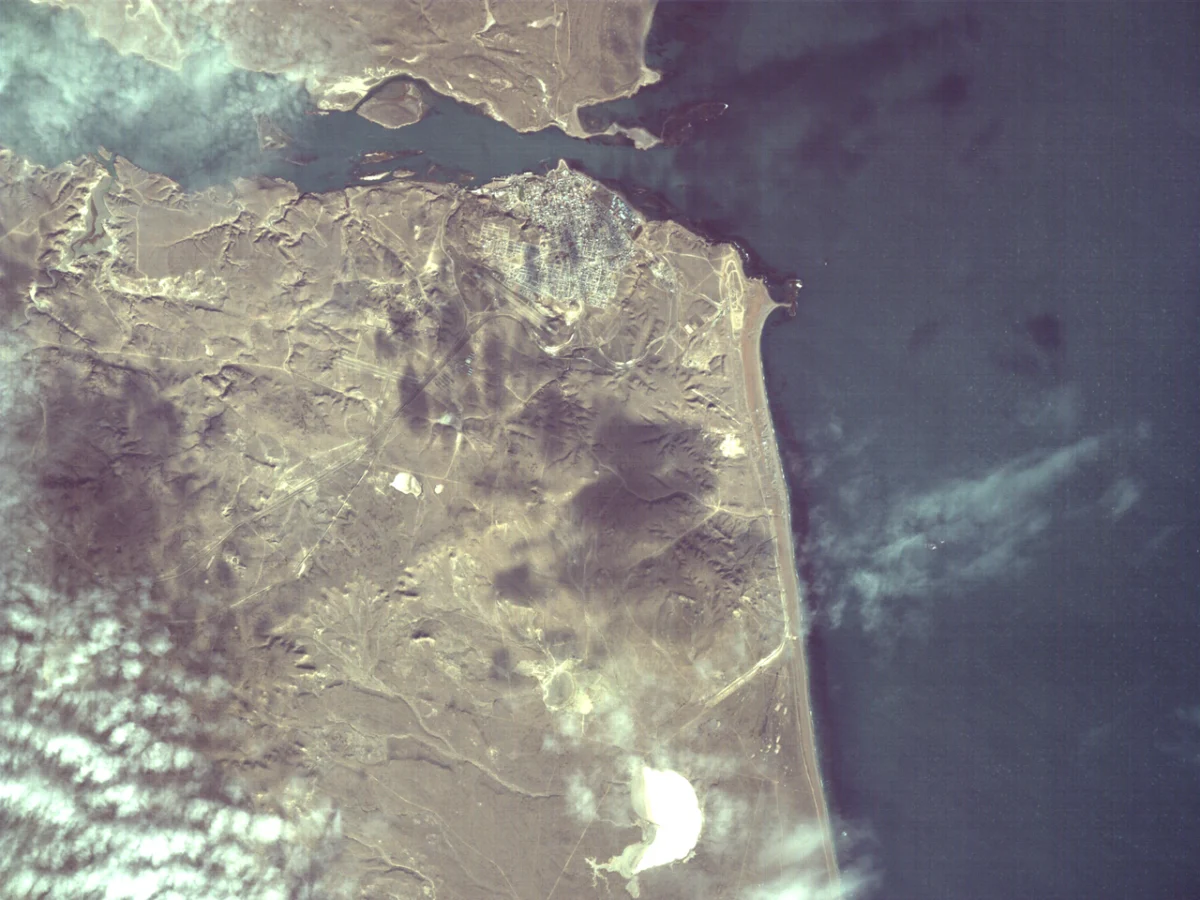
In a landmark achievement for space exploration and artificial intelligence, an Earth observation satellite has successfully identified specific surface features in real-time without human intervention. This milestone, achieved in April 2026 aboard the Yam-9 spacecraft, represents the first reported successful deployment of a vision-language model (VLM) in orbit. By processing complex visual data on the edge—far from the reach of terrestrial data centers—this breakthrough signals a fundamental shift in how we monitor our planet, potentially turning satellites from passive cameras into active, intelligent scouts.
The Paradigm Shift: From Passive Sensors to Autonomous Analysts
For decades, the standard operating procedure for Earth observation has been laborious and data-heavy. Satellites capture terabytes of raw imagery, beam that data back to ground stations, and wait for human analysts or traditional machine-learning algorithms to sift through the noise. This workflow is bottlenecked by bandwidth constraints, latency, and the sheer volume of data, which often results in critical information being buried in a backlog.
The Yam-9 mission, a collaboration between space infrastructure firm Loft Orbital and NASA’s Jet Propulsion Laboratory (JPL), has bypassed this traditional bottleneck. Utilizing Google DeepMind’s Gemma 3—a model purpose-built for constrained hardware environments—the spacecraft successfully interpreted natural language queries to identify specific features. Researchers requested the satellite to classify transitions between natural landscapes and human infrastructure, or to isolate specific industrial hubs. The VLM processed these instructions and identified the targets autonomously.
A Chronology of the Mission
The path to this orbital breakthrough was defined by meticulous engineering and a series of technical hurdles.
- Fall 2025: Loft Orbital launches Yam-9, a pathfinder spacecraft designed specifically to test high-compute, AI-driven applications in the harsh environment of space. The satellite is equipped with an Nvidia Jetson Orin AGX GPU, a high-performance, power-efficient chip capable of handling intensive AI workloads.
- Early 2026: A team led by Juan Delfa Victoria at NASA JPL begins the development of "NAVI-Orbital." This software harness was specifically designed to wrap around the Gemma 3 model, stripping away unnecessary libraries and memory-heavy processes to fit within the limited hardware constraints of an orbital platform.
- April 2026: The historic demonstration occurs. The satellite, positioned in low Earth orbit, receives complex, natural language prompts. It successfully performs onboard data triage, identifying "areas of interest" and effectively demonstrating that the model can handle contextual understanding in space.
- Post-Demonstration: The mission team validates the accuracy of the onboard findings, confirming that the VLM identified the requested features with high precision, mirroring the performance of terrestrial-based AI models.
The Architecture of Orbital Intelligence
The core of this success lies in the synergy between advanced hardware and optimized software. While Gemma 3 is an "off-the-shelf" model, the challenge of running it in space cannot be overstated. Unlike a server farm in a temperature-controlled building, a satellite is subject to extreme radiation, thermal cycling, and limited power.
The NAVI-Orbital software suite acts as the brain of the operation. By streamlining the model’s dependencies, NASA engineers ensured that the VLM could operate within the memory limits of the Jetson Orin. This is a critical development for the "Edge AI" industry. If AI can be effectively shrunk and ruggedized for the vacuum of space, it can be applied to virtually any remote sensor array, from deep-sea probes to autonomous planetary rovers.
Official Perspectives and Industry Implications
The implications of this demonstration are resonating throughout the aerospace sector. Paul Lasserre, Loft Orbital’s Head of AI, characterizes the breakthrough as the "opening of the door to always-on, patrol layers in space."
"If you have a VLM, you can have logic—like ‘monitor this border for me, and let me know when something is suspicious’—and interact back and forth with the satellites," Lasserre noted. This level of interaction turns the satellite from a cold sensor into a conversational tool. Instead of requesting a download of an entire region’s imagery, a user could simply ask the satellite to alert them only when a specific change occurs, such as a new building appearing in a restricted zone or a change in agricultural patterns.
The business model for such services is rapidly evolving. Loft Orbital operates on an "infrastructure-as-a-service" model, where third-party customers utilize their hardware platforms to run custom applications. Their recent deal with EarthDaily—involving six new satellites—highlights the growing demand for high-frequency, actionable data. With a constellation of 50 to 100 satellites like Yam-9, Lasserre estimates that Loft could provide near-real-time global coverage, effectively creating a "patrol layer" that could alert authorities to wildfires, illegal shipping, or environmental shifts within minutes of detection.
Other industry players are watching closely. Planet Labs, a titan in the Earth observation market, is already utilizing Jetson Orin processors on its satellites. While their current usage is focused on more conventional object detection, a company spokesperson confirmed that active research is underway regarding the deployment of VLMs and more advanced autonomous models.
Similarly, Kepler Communications, which maintains the largest orbital compute cluster, hinted at the potential for these systems. While they remained tight-lipped on specific contracts due to non-disclosure agreements, they confirmed that there have been several undisclosed use cases for their compute environment since its launch in early 2026, suggesting that the industry is in a silent race to implement intelligent orbital processing.
Beyond Earth: The Future of Space Exploration
While the immediate benefits of this technology are focused on Earth observation, the roots of the project suggest a much grander vision. The NAVI-Space project began as a conceptual study by JPL researcher Taran Cyriac John, who was investigating digital assistants for astronauts on the Moon or Mars.
The logic is simple: astronauts performing complex tasks in pressurized, cumbersome suits cannot afford the time or effort to interface with traditional computers. An interactive, voice-controlled AI assistant—capable of understanding the context of their environment and offering real-time guidance—would be a life-saving tool.
"We’re thinking, okay, you have astronauts with pressurized suits, and you know they cannot be tapping on a keyboard, whatever they want to do is complex," said Delfa Victoria. "So, how about we provide an assistant, like in video games and in movies, where you see an AI which is interactive?"
Conclusion: A New Frontier of Autonomy
The success of the Yam-9 mission is not merely a technical novelty; it is a proof-of-concept for the next generation of space infrastructure. We are transitioning from an era where space assets were essentially "dumb" cameras in the sky to an era of "intelligent observers."
As power and memory management strategies improve, these models will become more sophisticated, enabling satellites to perform more complex reasoning without human intervention. This evolution will reduce the costs of data processing, increase the value of satellite imagery, and potentially provide the backbone for future human exploration of the solar system.
As we look toward the next decade, the "HAL 9000" references may be inevitable, but the reality is far more pragmatic. The goal is not to create an all-knowing, autonomous entity, but to provide humans with a more capable, responsive, and efficient partner in the final frontier. With the successful deployment of Gemma 3 on Yam-9, that partnership has officially moved from the realm of science fiction into the reality of low Earth orbit.