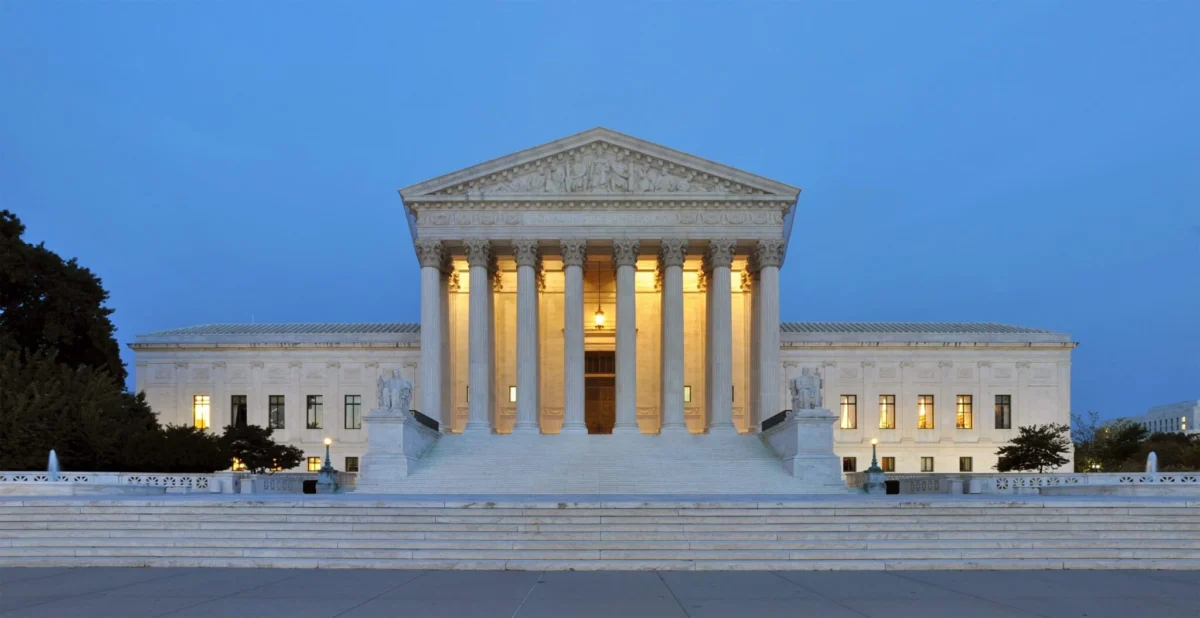
As the United States hurtles toward the midterm elections, a fierce legal battle over the administration of mail-in voting has reached the steps of the Supreme Court. The Trump administration has filed an urgent request for the High Court to intervene, seeking to vacate a federal judge’s order that currently prevents the U.S. Postal Service (USPS) from enforcing strict new protocols for handling election mail. This latest maneuver marks a significant escalation in a nationwide controversy over federal oversight of state-run electoral processes.
The Core Dispute: Federal Authority vs. State Sovereignty
At the center of this litigation is a controversial rule enacted by the USPS last month. Stemming from Executive Order 14399—titled "Ensuring Citizenship Verification and Integrity in Federal Elections"—the directive imposes a series of technical requirements on state and local election officials.
Under the new rule, jurisdictions are mandated to:
- Submit all mail-ballot envelope designs to the USPS for federal review and approval.
- Incorporate specific, federally mandated barcodes on all election mail.
- Upload comprehensive databases containing the names and addresses of all mail-in voters to a centralized federal portal.
The administration maintains that these requirements are "modest" administrative adjustments designed to ensure the reliability of the postal system during the high-volume midterm season. They cite 39 USC 401(2) and 404(a)(1), which grant the Postal Service broad authority to manage its operations and ensure the efficient delivery of mail.
However, opponents—including various state attorneys general and voting rights advocates—contend that the directive is an unconstitutional overreach. They argue that the Elections Clause of the U.S. Constitution (Article I, Section 4, Clause 1) explicitly reserves the authority to regulate the "Times, Places and Manner" of congressional elections to state legislatures and the federal Congress, not to an executive agency like the USPS. They argue the rule creates an unprecedented federal gatekeeper role in local election administration, effectively threatening to reject ballots that fail to conform to new federal aesthetic or data-reporting standards.
A Chronology of the Legal Conflict
The trajectory of this case has been marked by rapid-fire judicial decisions and evolving administrative actions.
- March 2026: President Trump signs Executive Order 14399, signaling the administration’s intent to tighten federal oversight of election mail.
- June 2026: Initial legal challenges are filed by state officials, arguing the order infringes upon state constitutional authority. The courts initially struggle to find a "ripe" case, as the USPS had not yet finalized the regulations.
- August 2026: Following the publication of the final rule, a federal judge in the U.S. District Court of Massachusetts issues a 14-day temporary restraining order (TRO), effectively blocking the USPS from enforcing the new requirements.
- Early September 2026: The Supreme Court stays an earlier injunction, ruling in an unsigned opinion that the initial lawsuit was premature because the policies were not yet finalized.
- Mid-September 2026: The USPS publishes the final rule, creating an immediate, concrete legal injury for the plaintiffs and prompting the current round of litigation.
- Late September 2026: The administration petitions the Supreme Court to overturn the Massachusetts district court’s TRO, arguing that the urgency of the midterm elections necessitates immediate high-court intervention.
Jurisdictional Hurdles and Legal Strategy
The administration’s current application to the Supreme Court faces a significant procedural obstacle: the nature of the lower court’s order. Typically, a Temporary Restraining Order (TRO) is considered an interlocutory decision—a preliminary step that is generally not appealable under 28 USC 1292(a)(1).
In its filing, the administration’s legal team argues that this specific TRO functions as a de facto permanent injunction. They posit that because mail-in voting processes are already underway and ballots are scheduled to enter the mail stream, the traditional timeline for appellate review would render any eventual victory moot. They argue that the Supreme Court must treat the TRO as an appealable injunction to prevent irreparable harm to the federal government’s regulatory authority.
Legal analysts suggest that the Court’s willingness to hear this application will depend on whether a majority of the justices agree that the "extraordinary circumstances" of an impending election cycle justify bypassing standard appellate procedure.
Supporting Data and Technical Implications
The technical requirements of the USPS rule have sparked concern among election officials across the country. According to internal reports from the National Association of Secretaries of State, the requirement to upload voter databases to a federal portal raises significant cybersecurity and privacy concerns. Many states currently manage voter registration data through localized, highly secure systems. Integrating these systems with a federal portal on such short notice, officials warn, could lead to data bottlenecks or vulnerabilities.
Furthermore, the "envelope design" requirement is viewed by many as an undue burden. Election officials often order millions of envelopes months in advance. The prospect of having to scrap existing inventory or re-design materials to satisfy federal barcode mandates could cause widespread delays in ballot distribution. If ballots are delayed, the window for voters to receive, mark, and return their ballots shrinks, which critics argue is a form of voter suppression by administrative friction.
Official Responses and Political Reactions
The administration has remained firm in its stance, asserting that the requirements are essential for "integrity." White House press briefings have emphasized that the rule is intended to prevent the "misrouting" of ballots and to ensure that the USPS has the data necessary to handle the surge in volume.
"This is not about suppression; it is about synchronization," a spokesperson for the Department of Justice stated following the filing. "The Postal Service needs the ability to track and verify election mail to ensure every legal vote is counted correctly."
Conversely, critics characterize the move as a partisan effort to disrupt the democratic process. In a joint statement, several state attorneys general described the directive as "an unprecedented attempt to federalize the administration of local elections." They argue that the rule is designed to create chaos in blue-leaning districts where mail-in voting is high, potentially leading to a massive spike in rejected ballots.
Implications for the Midterm Elections
The stakes for the upcoming midterm elections cannot be overstated. With the margin of control for both the House and the Senate razor-thin, even small disruptions in the mail-in ballot process could alter the outcome of critical races.
If the Supreme Court grants the stay and allows the USPS rule to proceed, thousands—perhaps millions—of voters may find their ballots rejected for technicalities related to the new envelope and data protocols. Such an outcome would likely trigger a wave of post-election litigation, potentially delaying the certification of results and eroding public confidence in the electoral system.
If the Court declines to intervene, or if it upholds the lower court’s decision to block the rule, the administration will have suffered a significant blow to its executive authority. It would effectively affirm that the federal government lacks the power to unilaterally dictate the mechanics of state-run elections.
As the Court deliberates, the nation watches closely. The ruling will not only determine the rules of the road for the 2026 midterms but will also set a long-term precedent for the balance of power between federal agencies and state election authorities in the United States. With the clock ticking toward Election Day, the pressure on the judiciary to provide clarity is immense, leaving the country in a state of suspended anticipation.