Since the mid-1960s, Colombia has been defined by a shadow-conflict—a protracted, brutal struggle between the state, paramilitary factions, and various guerrilla organizations. While international headlines often focus on the shifting power dynamics of these cartels and insurgencies, the most profound legacy of this era is written in the lives of those left behind. Thousands of citizens have been "forcibly disappeared," a clinical euphemism that masks a reality of profound, unending trauma.
The new film Five Years, Four Months, which recently premiered in the Crystal Globe competition at the Karlovy Vary International Film Festival, serves as a searing meditation on this national wound. Directed by Juan Miguel Gelacio and Esteban Hoyos García, the film moves beyond the political headlines to explore the intimate, stagnant, and often hallucinatory landscape of grief.
The Landscape of Absence: Main Facts and Narrative Focus
Five Years, Four Months is not a documentary in the traditional sense, though it is deeply rooted in the lived experiences of Colombian women. The directors have crafted a fictional protagonist, Martha Baquero—a composite character built from the real-life testimonies of mothers who collaborated with the filmmaking team.
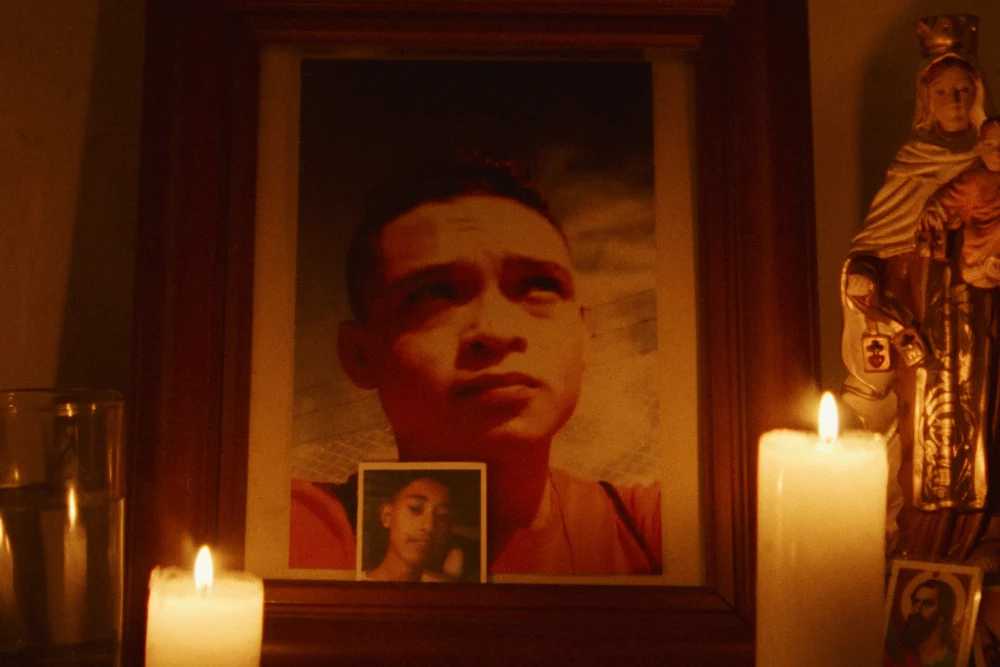
The film follows Martha’s odyssey as she searches for the remains of her son, Fabian. Her life is a cycle of bureaucratic endurance and grueling physical labor: hours spent on buses, the repetitive filing of state paperwork, and the back-breaking, painstaking process of exhuming potential burial sites.
What elevates the film from a mere procedural to a profound work of art is the directors’ choice to focus on the "in-between" moments. By filming the long, silent bus rides and the quiet, lonely nights of waiting, Gelacio and García capture the specific alienation of the bereaved. Martha is physically present in the world—she navigates traffic, she listens to the wind, she observes animals—but she is psychologically untethered. She exists in a state of suspended animation, perpetually waiting for an answer that the state has failed to provide for decades.
Chronology of a Disappeared Nation
To understand the weight behind Five Years, Four Months, one must look at the timeline of the conflict that birthed these thousands of ghost stories:
- 1964–1980s: The Genesis of Disappearances. The conflict between the Colombian government and groups like the FARC and ELN begins. During these early decades, the practice of "disappearing" enemies of the state or the cartel becomes a strategic tool to instill terror and deny accountability.
- 1990s–2000s: Escalation. The rise of powerful right-wing paramilitary groups (the AUC) leads to an increase in massacres and systematic disappearances. The "disappeared" become a political category, a way for armed actors to erase evidence of human rights abuses.
- 2016: The Peace Accords. The historic peace agreement between the Colombian government and the FARC-EP brings a formal end to a significant portion of the fighting. However, it also brings the "truth" to the surface, as families begin the arduous process of seeking out clandestine mass graves.
- Present Day: The search continues. For families, the cessation of active warfare has not brought closure. Instead, it has brought a shift in the nature of their grief: from the fear of active violence to the exhausting, life-long marathon of forensic identification and state litigation.
Supporting Data: The Scale of the Crisis
The statistics regarding the disappeared in Colombia are staggering, though they remain, by definition, incomplete. According to the National Center for Historical Memory (CNMH), the number of victims of forced disappearance in Colombia is estimated to be over 80,000, though independent human rights organizations suggest the figure could be significantly higher.
- The "False Positives" Scandal: A particularly grim chapter of this history involves the "False Positives" scandal, where the military murdered civilians and presented them as guerrilla fighters killed in combat to boost their kill counts. This directly contributed to the thousands of families now searching for bodies in unmarked graves.
- Gendered Impact: The burden of the search falls disproportionately on women. As portrayed in the film, the network of mothers and grandmothers has become the primary engine of justice in Colombia, acting as forensic investigators, advocates, and emotional support systems for one another.
Official Responses and the Failure of Justice
The Colombian state has attempted to address the issue through various institutional bodies, such as the Unidad de Búsqueda de Personas dadas por Desaparecidas (UBPD), established following the 2016 peace deal. While these institutions provide a formal mechanism for families to register their missing, the pace of exhumation and identification remains glacially slow.
Critics argue that the state’s response is often performative. Families are frequently met with systemic indifference: lost records, underfunded forensic laboratories, and a legal system that requires them to prove the death of a loved one before providing support, often ignoring the fact that they have no body to prove it with. Five Years, Four Months captures this frustration by showing the "endless paperwork" that defines Martha’s life—a cycle of bureaucracy that seems designed to exhaust the spirit of the grieving.
The Implications of "The Infinite Wait"
The film suggests that for the victims of the conflict, the trauma is not a static event that occurred in the past; it is an active, ongoing condition. This has profound implications for how society understands trauma.
The Sensorial Experience of Trauma
Gelacio and García use sound design to amplify the world around Martha, turning the mundane—the rustle of leaves, the roar of a bus engine—into a source of tension. This reflects a state of hyper-vigilance, where the brain, unable to find closure, remains on constant alert. Martha’s experience is one of sensory overload, where the beauty of the Colombian landscape (the "lush nature" featured in the film’s climax) feels both alien and mocking in the face of her loss.
The Community of Grief
A key element of the film is the dance therapy class, where Martha connects with other women. These groups represent a vital, grassroots form of resistance. They prove that while the state may have failed these families, the families have not failed each other. However, the film also poses a difficult question: Is community enough? When Martha is told by another woman about a way to "speak with a dead man," her willingness to follow that path shows that for some, official truth is insufficient. They need something metaphysical, something that transcends the limitations of forensic evidence.
The Moral Choice
The film’s climax, where Martha speaks of her son for the first time, is not a resolution in the traditional sense. It does not give us the "answer" to Fabian’s fate. Instead, it gives us something more important: an admission of love. By showing the audience that the path from raw, debilitating grief to a belief in "benevolent ghosts" is a small, understandable step, the directors invite us to empathize with the irrationality that trauma necessitates.
Conclusion: Cinema as a Witness
Five Years, Four Months is a testament to the power of cinema to act as a witness to the "unseen." In the world of the film, Martha’s silence is not an absence of emotion; it is an opaqueness that hides a depth of feeling too vast to be articulated. Jenny Nava’s performance, largely wordless and consistently haunting, anchors the film in a reality that is both specific to Colombia and universal to anyone who has lost someone to the machinery of conflict.
As the film concludes, it leaves the viewer not with a sense of closure, but with a lingering sense of presence. The "dizzying gulf" between those who know the trauma of disappearance and those who are lucky enough to be spared it remains, but through the lens of Gelacio and García, we are invited to bridge it—if only for the duration of the film.
In a world where conflicts are often summarized by numbers and maps, Five Years, Four Months insists that we look at the face of the mother who is still waiting. It is a reminder that while history may move on, the heart does not—at least not until the answers have been found, and the ghost has been laid to rest.