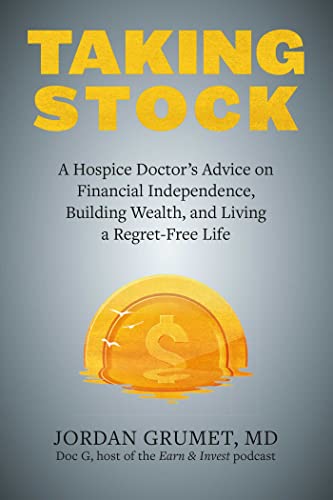
In the high-stakes world of personal finance, the focus is almost exclusively on portfolios, compound interest, and retirement trajectories. However, Jordan Grumet, a hospice physician and author of Taking Stock, argues that our obsession with the "number" often blinds us to the reality of the human experience. Having spent years walking the final, lonely path with the dying, Grumet has developed a unique philosophy: the most important investments we make are rarely found on a balance sheet.
As Grumet often notes, "When the undertaker speaks, you should really listen." By spending his career in close proximity to mortality, he has gained insights that transcend standard financial advice. While his book, Taking Stock, provides the technical scaffolding for financial stability, its core message is a sobering reminder that money is merely a tool, not the objective.
The Chronology of Reflection: Lessons from the Bedside
The wisdom shared by Grumet did not emerge from a boardroom or a hedge fund office. Instead, it was cultivated through years of witnessing the "life review" process—a phase where patients, facing their own mortality, strip away the superficial layers of their existence to examine what remains.
The narrative of his observations often follows a recurring pattern:
- The Phase of Regret: Patients initially focus on missed professional opportunities or financial losses.
- The Shift to Interpersonal Depth: As the end nears, these regrets dissolve, replaced by a profound longing for reconciliation and human connection.
- The Acceptance of Legacy: Finally, there is a transition toward evaluating the impact left on children and the broader community.
Grumet recounts the story of Gerald, a patient whose struggle with alcoholism and familial estrangement began with a simple job loss. Gerald’s journey—from the collapse of his marriage to the physical deterioration caused by his choices—serves as a cautionary tale. His primary regret was not the lack of savings, but the inability to forgive himself early enough to salvage his relationship with his daughter. This underscores a vital point: financial recovery is possible, but time and emotional repair are finite resources.
Supporting Data: The Pillars of Non-Monetary Wealth
Grumet categorizes the essential "investments" of life into five distinct buckets. These are not merely suggestions for self-help; they are the strategic components of a life well-lived.
1. Investing in Yourself: The Power of Self-Forgiveness
The human capacity for self-blame is immense, yet it is often the greatest barrier to progress. Grumet posits that self-forgiveness is the primary investment in one’s own mental capital. By letting go of past mistakes, we free up the psychological bandwidth required to pursue future goals. He advocates for a "slow and steady" approach—much like the tortoise and the hare—where incremental 1% gains compound into significant life transformations.
2. The Compounding Nature of Education
Knowledge acts as an "emergency fund" for happiness. In an era where information is abundant, Grumet encourages a relentless pursuit of learning. He argues that we must be willing to say "yes" to uncomfortable or unfamiliar experiences. This curiosity acts as a hedge against stagnation. Just as monetary investments grow exponentially, so does intellectual capital. The habit of reading, debating, and exploring ensures that an individual remains vibrant and inquisitive until the very end.
3. The Ultimate Asset: Other People
If you want to measure the success of a life, look at the people left behind. Grumet describes walking into hospital rooms and immediately knowing who the "successful" investors were. They are surrounded by letters, friends, and the visible signs of a life spent building relationships. Investing in people yields the highest "interest" in the form of emotional security and a legacy that outlives the individual.
4. The Legacy of the Next Generation
Investing in children—not just through financial support, but through the transmission of values, kindness, and virtue—is how we ensure our influence persists. Grumet’s own career was shaped by the legacy of his father, proving that we are living embodiments of those who raised us. By teaching children how to interact with money and purpose, we ensure that our impact continues long after we are gone.
5. Physical and Mental Equilibrium
Financial planning requires cognitive clarity and emotional stability. If an individual is physically or mentally unwell, their ability to make sound financial decisions is compromised. Grumet stresses that this does not require perfection—a common pitfall—but rather consistent, sustainable habits. Whether it is meditation, thirty minutes of daily movement, or seeking professional counseling, maintaining the vessel that carries us through life is non-negotiable.
Implications for Financial Independence
The traditional definition of "Financial Independence" (FI) is often limited to the point where passive income exceeds expenses. However, Grumet challenges this narrow interpretation. He suggests an exercise for readers: create a three-column inventory of your non-monetary assets.
By listing your skills, your relationships, your health, and your intellectual pursuits, you create a "Wealth Inventory." When you combine this with your net worth, you gain a true picture of your total resources. If these assets are sufficient to allow you to pursue your authentic purpose, you have achieved a form of independence that no market crash can strip away.
Professional and Societal Responses
The financial community has historically been slow to embrace the "soft" side of wealth management. However, recent trends toward "holistic financial planning" suggest a shift. Advisors are increasingly recognizing that clients who are unhappy or isolated are more likely to make erratic, fear-based investment decisions.
Experts in the field, including figures like JL Collins, have collaborated with Grumet to emphasize that "getting the money right" is merely a prerequisite. It is the tactical foundation that allows for the "real" work of living. The consensus among those who study both the market and the human condition is clear: financial literacy is a necessary condition, but it is not sufficient for a meaningful life.
Conclusion: A Call to Action
The most profound lesson from the hospice room is that death is not a surprise, yet we live as if it were. Building a life of purpose takes time, energy, and a willingness to endure the "strain" of deep connection and personal growth.
Grumet’s call to action is simple but demanding: start now. Do not wait for a diagnosis or a retirement date to begin investing in your non-monetary wealth.
The Non-Monetary Investment Inventory Exercise:
- Step 1: Block off two hours of quiet time this week.
- Step 2: Create three columns on a sheet of paper.
- Step 3: List your top ten relationships, your top ten skills/knowledge areas, and your top ten physical/mental health goals.
- Step 4: Evaluate how your current time and financial allocation support these lists.
As Grumet concludes, "Be as prepared for life as you would be for death." By treating your time, your relationships, and your personal growth with the same rigor you apply to your 401(k), you ensure that when the final chapter is written, you are not just a wealthy individual, but a person who truly lived.
Investing in yourself is not a luxury; it is the most prudent financial decision you will ever make. Start today, while the clock is still in your favor.