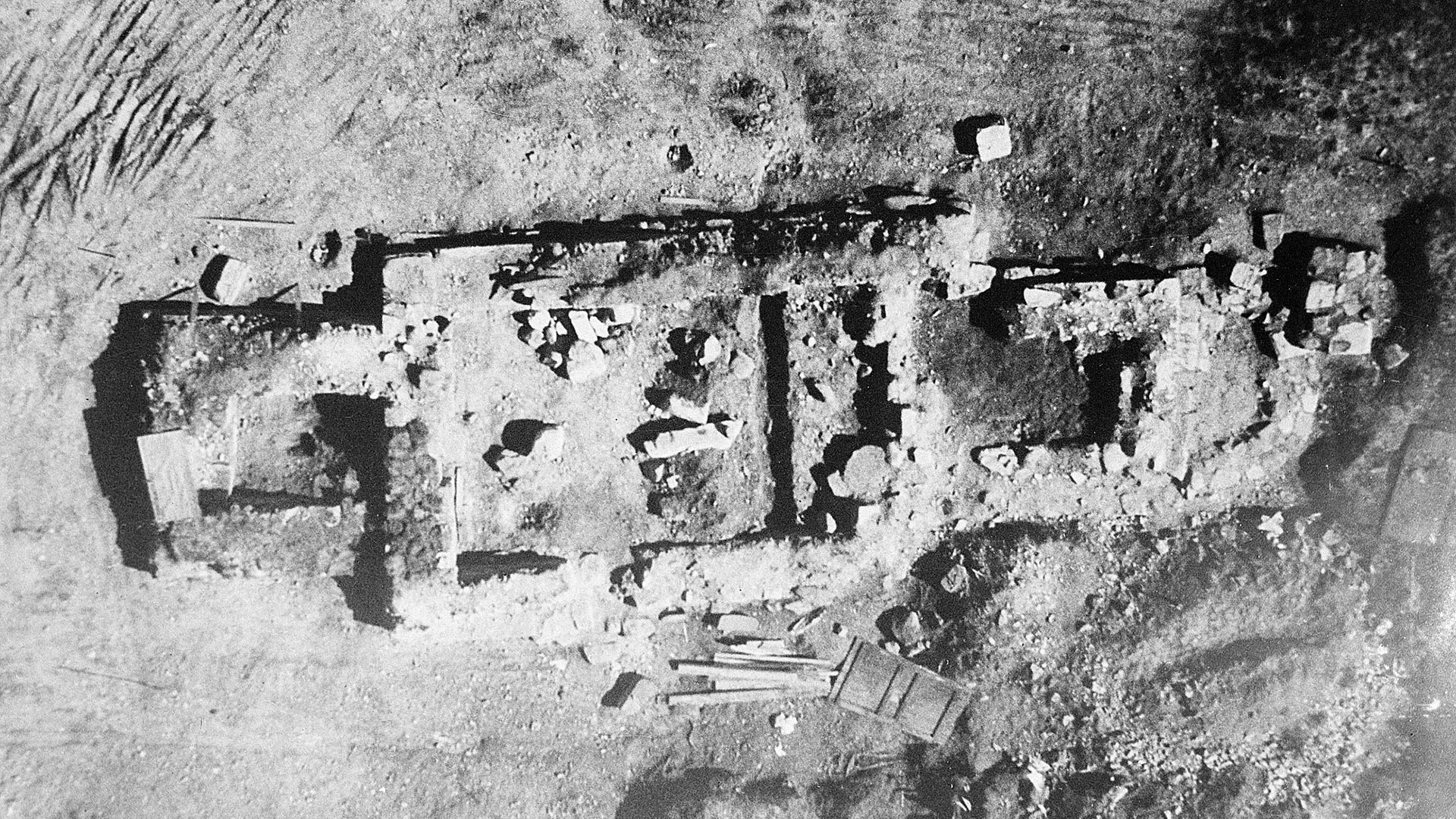
For centuries, the sight of an adult and a child interred within the same medieval grave has prompted a reflexive conclusion from archaeologists and historians alike: they are witnessing a tragic scene of domestic loss, a parent and child laid to rest together in their final, eternal embrace. It is a narrative of intimacy that has anchored our understanding of the medieval family unit. However, groundbreaking new research from Stockholm University, published in the journal Science Advances, is systematically dismantling this assumption. By peering into the genetic blueprints of the deceased, researchers have discovered that the ties binding the dead were often forged by community, creed, and custom—not blood.
The Genetic Investigation: Challenging Conventional Wisdom
The study, led by the Centre for Palaeogenetics at Stockholm University, represents a landmark shift in the methodology of archaeology. The team conducted a comprehensive genetic analysis of 142 individuals who lived during the late Viking Age and the transition into the Middle Ages. The subjects were recovered from three significant archaeological sites in Sweden: the bustling trading hub of Sigtuna near Stockholm, the rural, tradition-steeped Västerhus in Jämtland, and the southern site of Fjälkinge in Skåne.
Among the 142 individuals, more than 60 were children or adolescents. By extracting and sequencing ancient DNA (aDNA) from these remains, the researchers sought to move beyond the subjective interpretations of grave goods and spatial arrangement, aiming instead for the cold, empirical truth of biological relatedness.
The results were startling. Despite the common assumption that shared burial space implies a biological bond, the genetic data revealed that close relatives were remarkably rare among those placed in the same grave. This trend held steady even in cemeteries where the wider population showed clear, dense networks of biological kinship. The grave, it seems, was not necessarily a family plot, but rather a reflection of the social structures of the time.
Official Perspectives: The Experts Weigh In
The lead author of the study, Maja Krzewińska, highlights the paradigm shift necessitated by these findings. "We often assume that adults and children sharing a grave were parents and children or other close family members," Krzewińska explains. "In most cases, that was not what we found. This suggests that the decision of who should be buried together was driven by factors entirely distinct from the nuclear family structure we recognize today."
This sentiment is echoed by Anna Kjellström, a researcher at the Department of Archaeology and Classical Studies, who notes the long-standing frustration within the discipline. "Archaeologists have debated the relationships between people buried together in this type of grave for a long time. We have relied on spatial proximity as a proxy for family, but that has always been an interpretative leap. Ancient DNA has finally given us the tool we have been waiting for to test these interpretations directly and rigorously."
The implication is that in the medieval period, burial was a performative act—a ritualized space where the community’s social, religious, and political values were inscribed onto the landscape. If a child was buried with an adult who was not their parent, that choice was intentional, perhaps signaling fosterage, godparenthood, or a shared social status within the parish.
Childhood and the Mirror of Adult Customs
One of the most compelling aspects of the Stockholm study is its illumination of the status of children in early Christian Scandinavia. Before the advent of aDNA, determining the sex of children in the archaeological record was a notorious challenge; juvenile skeletons lack the distinct morphological markers found in adult pelvises and skulls that allow for reliable sex identification.
The DNA analysis allowed the researchers to bypass this anatomical barrier, identifying the sex of the children with high precision. This enabled the team to map the children’s burial positions against the burial patterns of the adults. The data revealed a striking continuity: children were not relegated to a separate, "child-specific" category of burial. Instead, they were integrated into the adult social order from a very young age.
At the Västerhus site, for instance, the cemetery was strictly organized, with men and women generally buried on opposite sides of the churchyard. The research showed that boys and girls were placed in accordance with this gendered spatial division, mirroring the adult patterns.
Anders Götherström, Professor of Molecular Archaeology, emphasizes the social implications of this finding: "The children were not treated as a separate category. In death, they appear to have been treated according to the same social and religious principles as adult men and women. This suggests that gender identity was recognized from an early stage of life and was rigorously reflected in burial practices. It paints a picture of a society where the transition to adulthood was not a sudden event, but a gradual integration into an established, gender-coded system."
The Pilgrimage of Lady 56: A Life Reconstructed
While the study as a whole focuses on broad demographic patterns, the data also allowed for the intimate reconstruction of a single, extraordinary life. Among the individuals buried at Västerhus was a woman identified by researchers as "Lady 56."
Genetic analysis allowed the team to map her biological network: she was buried alongside her parents, her brother, and her two daughters. While they were not all in the same grave, they were clustered within the same churchyard. However, it was a non-biological artifact found with her body that revealed the true scope of her life: a scallop shell.
In the medieval context, the scallop shell was the definitive icon of the Camino de Santiago, the arduous pilgrimage route to the shrine of Saint James in northwestern Spain. For a woman from rural Jämtland to possess such an object is a testament to an incredible journey. She had traveled thousands of kilometers—likely on foot or by a mix of land and sea transport—across a continent characterized by fractured political boundaries and immense physical challenges.
Lady 56 died before the age of 30, yet she had completed one of the most significant spiritual and physical undertakings of the Middle Ages. Her story serves as a poignant reminder that medieval lives, often assumed to be stationary and isolated, could be marked by long-distance mobility, profound religious devotion, and a sophisticated connection to the wider European world.
Implications for Future Archaeological Research
The research from Stockholm University marks a watershed moment for the field of archaeogenetics. By integrating the microscopic precision of DNA sequencing with the macroscopic insights of traditional archaeology, researchers are beginning to move beyond mere speculation about the past.
The implications of this study are threefold:
- Deconstructing the "Family" Narrative: The study proves that spatial proximity in the grave is not a reliable indicator of biological kinship. Historians must now treat grave associations as social, rather than biological, data points.
- Gendered Socialization: The finding that children were buried according to adult gender-normative patterns suggests that medieval society possessed a highly structured, internalized set of social expectations that were imposed on individuals from birth.
- The Connectivity of the Medieval World: As seen with Lady 56, the integration of genetic and material culture allows us to trace the mobility of individuals in ways that were previously impossible, highlighting the surprising interconnectedness of medieval Europe.
As we continue to develop these technologies, the "silent" populations of the past—the children, the commoners, and the anonymous figures of the medieval churchyards—are finally beginning to speak. The Stockholm study reminds us that while we share a common biological history, the ways we choose to organize, honor, and remember one another in death are deeply rooted in the complex, shifting, and often unexpected social tapestries of the living. The "family" we see in the ground may not be a family at all, but rather a community that defined itself through a language of burial that we are only just beginning to translate.