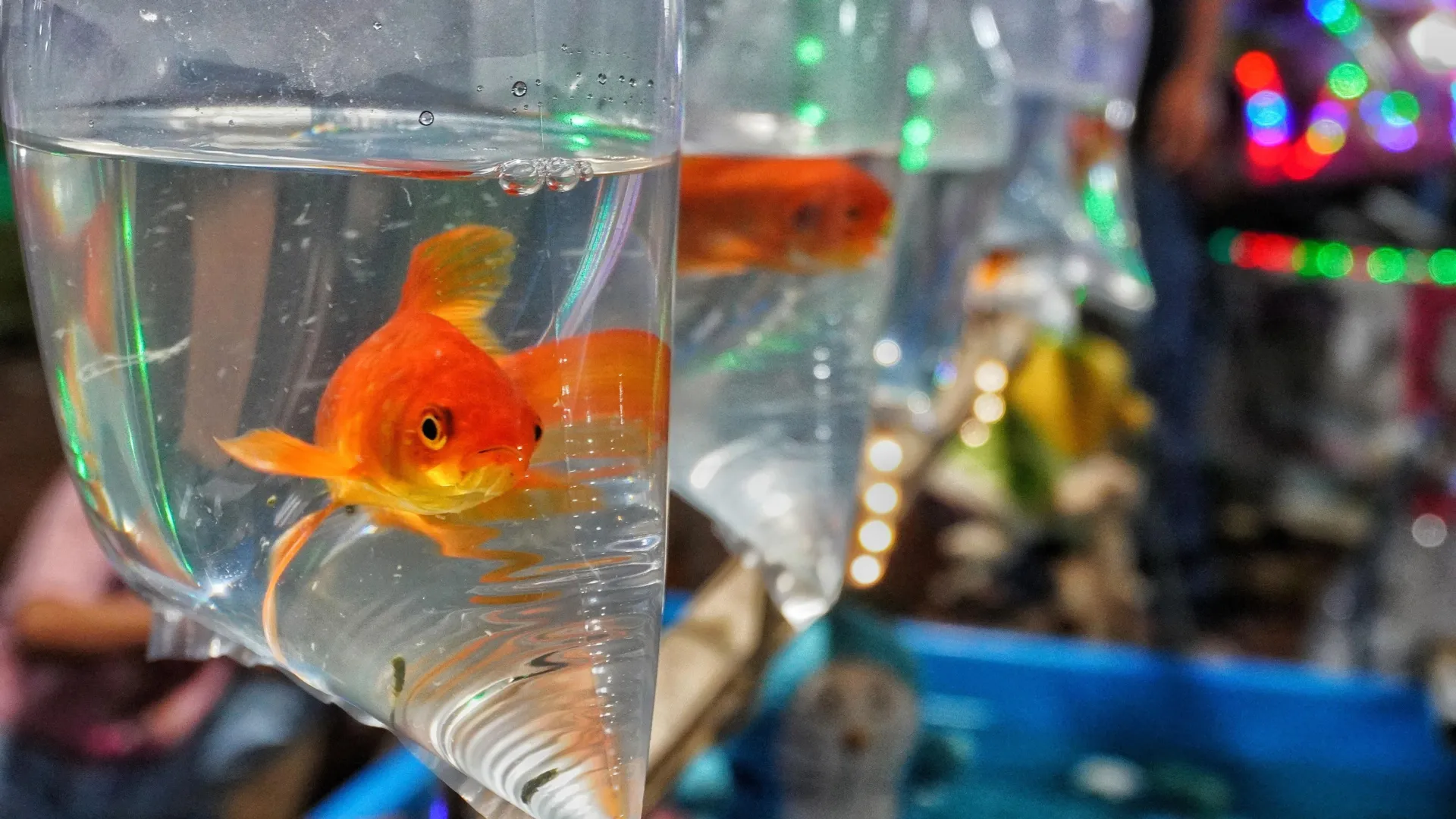
For millions of households, the goldfish (Carassius auratus) is the quintessential "starter pet." Found in glass bowls and desktop tanks across the globe, they are viewed as docile, low-maintenance companions. However, a groundbreaking peer-reviewed study recently published in the Journal of Animal Ecology has stripped away this benign facade, revealing that when these fish transition from the living room to the wild, they transform into an ecological wrecking ball.
Conducted by researchers at The University of Toledo and the University of Missouri, the study provides some of the most compelling experimental evidence to date that invasive goldfish are not merely harmless additions to local waterways, but catalysts for dramatic, often irreversible, degradation of freshwater ecosystems.
The Study: Unveiling the Ecological "Regime Shift"
The research, titled "Invasive goldfish trigger a regime shift in experimental lake ecosystems of varying trophic state," was designed to move beyond anecdotal observations. To understand the true impact of goldfish in the wild, the research team, led by Dr. William Hintz of UToledo’s Department of Environmental Sciences and Lake Erie Center, employed large-scale outdoor freshwater mesocosms.
These mesocosms—essentially large, controlled outdoor tanks—were engineered to simulate real-world lake conditions, allowing scientists to monitor the behavior and impact of goldfish in a controlled environment that mimics the complexities of nature. The team investigated the effects of goldfish across two distinct ecological spectrums: nutrient-poor (oligotrophic) waters and nutrient-rich (eutrophic) waters.
The findings were stark: regardless of the water’s nutrient profile, the introduction of goldfish triggered a "regime shift." In ecology, a regime shift represents a critical threshold where an ecosystem, pushed too far by external stressors, undergoes a rapid and fundamental reorganization. Once an ecosystem crosses this threshold into a degraded state, recovery is not only difficult but often prohibitively expensive and logistically daunting.
Chronology of an Invasion: How the Threat Unfolds
The lifecycle of an invasive goldfish problem typically follows a predictable, yet devastating, timeline:
- The Release/Escape: The process begins with the "act of kindness"—a pet owner, believing they are setting their fish "free," releases it into a local pond or lake. Alternatively, floods can wash ornamental fish from backyard ponds into river systems.
- The Growth Spurt: In a confined aquarium, goldfish are often stunted by the size of their tank. In the wild, freed from these spatial constraints and provided with abundant natural food sources, they undergo rapid, massive growth.
- The Disturbance: Once established, these large goldfish begin to stir up benthic (bottom) sediments. This process, known as bioturbation, clouds the water column, preventing sunlight from reaching submerged aquatic vegetation, which is the foundation of a healthy lake habitat.
- Ecological Competition: As the goldfish population grows, they consume vast quantities of invertebrates and outcompete native fish species for limited resources.
- The Collapse: The cumulative effect of habitat destruction and resource depletion leads to the collapse of native biodiversity, resulting in a system dominated by murky water, algae blooms, and a lack of the native flora and fauna that once defined the lake’s health.
Supporting Data: Disentangling the Variables
A major challenge in invasive species research is distinguishing between the impact of a specific species and the general impact of simply increasing the number of fish in a body of water. To address this, the researchers utilized both additive and substitutive experimental designs.
By carefully controlling the fish density and species composition, the team was able to isolate the "goldfish factor." Their analysis proved that while total fish abundance does play a role in aquatic changes, the specific behaviors of goldfish—such as their aggressive foraging and sediment-disturbing habits—accounted for the most severe ecological damage observed in the study.
The data revealed that the presence of goldfish consistently led to a decrease in water quality and a measurable decline in the condition of native fish populations. Furthermore, the researchers observed a significant impact on phytoplankton, invertebrate communities, and the proliferation of filamentous algae, all of which are essential indicators of a lake’s overall health.
Official Responses and Expert Insight
The lead investigator, Dr. William Hintz, emphasized the urgent need for a shift in public perception. "It is critically important to inform the public that their pets can become pests that will harm freshwater ecosystems," Hintz stated. "The evidence is now clear—releasing a goldfish into the wild might be seen as an act of kindness, but it can turn into a major ecological threat."
Co-author Rick Relyea, a professor in the University of Missouri College of Agriculture, Food and Natural Resources and director of the Johnny Morris Institute of Fisheries, Wetlands and Aquatic Systems, echoed these concerns regarding the goldfish’s behavior.
"If goldfish are released into the wild, they rapidly grow into very large fish that stir up lake sediments, consume large numbers of prey and compete with native fish," Relyea noted. The researchers are now calling for a concerted effort among natural resource agencies to categorize goldfish as a high-priority invasive species, necessitating immediate focus on prevention, early detection, and rapid response strategies.
The Broader Implications: A Global Problem
The goldfish trade is a multi-billion dollar global industry. Because these fish are so widely distributed and so inexpensive, they are often treated as disposable. This creates a unique challenge for conservationists: how do you convince the public to be cautious with a creature that is marketed as a "disposable" pet?
The study highlights that the problem is not limited to one region; the global pet trade facilitates the movement of these species across continents at unprecedented levels. Once a goldfish population establishes itself in a watershed, the potential for it to spread through interconnected rivers and during extreme weather events becomes a permanent, long-term environmental management headache.
The Cost of Inaction
The "regime shift" mentioned in the study is the most alarming implication for policymakers. Managing an ecosystem that has already shifted to a degraded state is a monumental task. It involves costly dredging, chemical treatments, and intensive biological monitoring. Prevention—stopping the fish from entering the water in the first place—is infinitely cheaper than the multi-million dollar restoration projects often required to reverse the damage caused by invasive species.
A Call to Action for Pet Owners
The researchers stress that the solution starts with education. Pet owners who find themselves unable to care for their goldfish have several humane and environmentally responsible alternatives:
- Return to Retailer: Many local pet stores are willing to accept surrendered animals, especially if they are healthy.
- Rehoming: Utilizing online aquarium hobbyist groups or local social media networks can often connect goldfish with responsible new owners who have the proper equipment.
- Wildlife Authorities: Contacting local state or provincial wildlife agencies can provide guidance on the correct protocol for surrendering an animal that is no longer wanted.
Changing the Narrative
The narrative surrounding goldfish must change from "harmless pet" to "potential ecological threat." This shift is necessary to ensure that natural waterways—which serve as the lifeblood of biodiversity—are protected from the unintended consequences of human sentimentality.
Conclusion: Science as a Guardrail
The collaboration between The University of Toledo and the University of Missouri serves as a vital reminder that scientific research is essential for guiding public policy and individual behavior. By quantifying the damage caused by a common pet, this study provides a clear mandate for stronger public education and more proactive resource management.
The "goldfish in the pond" story is no longer a tale of harmless, quiet swimming. It is a cautionary tale of how human actions, however well-intentioned, can trigger a cascade of environmental destruction. As we look to the future of conservation, the goldfish serves as a potent reminder: in nature, there is no such thing as a "small" impact, and the consequences of our choices ripple far beyond the borders of our own backyards.