By Syeda Aamna Hasan
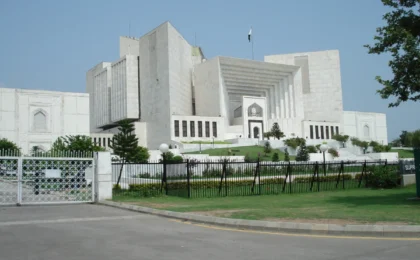
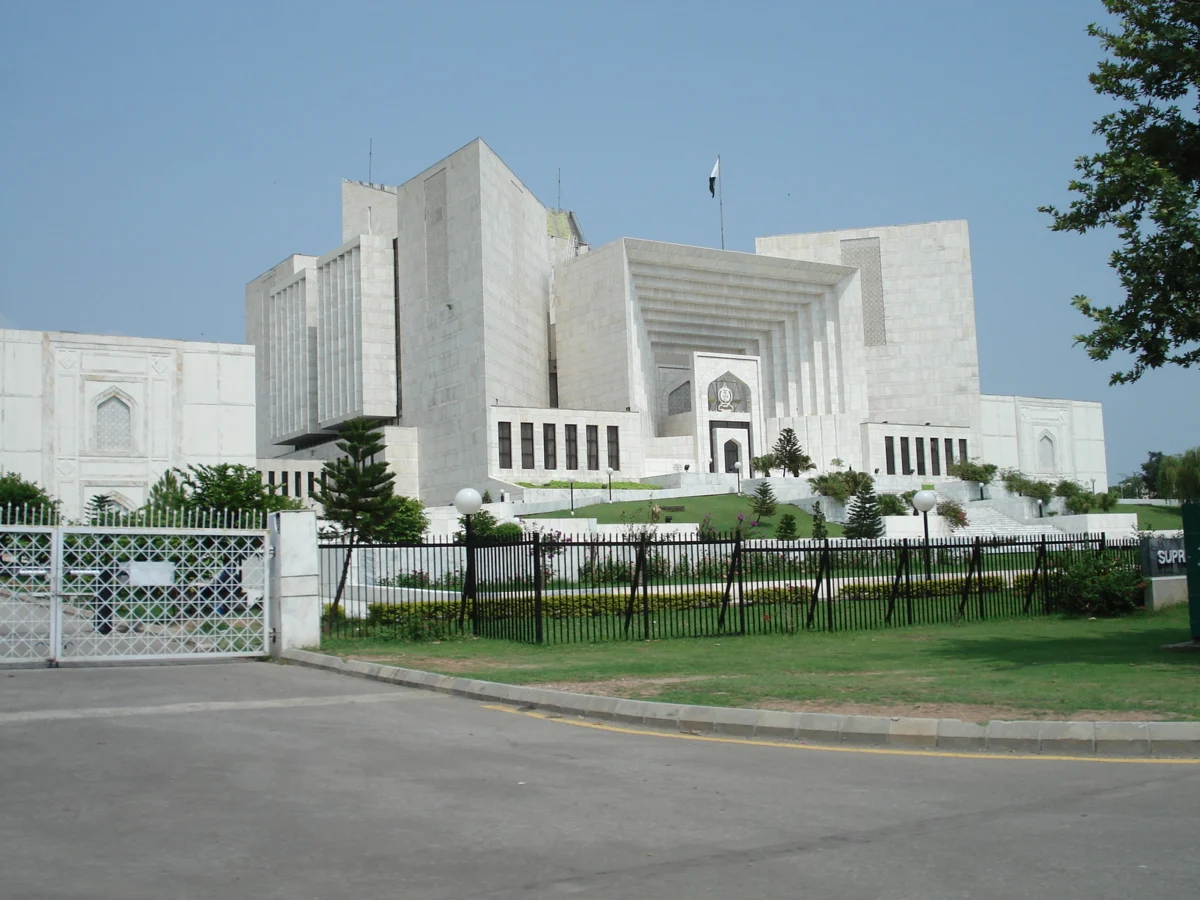
In an unprecedented development that has sent shockwaves through Pakistan’s legal and political landscape, a burgeoning jurisdictional dispute between the Supreme Court of Pakistan and the newly established Federal Constitutional Court (FCC) has effectively stalled the legal proceedings surrounding the medical treatment of former Prime Minister Imran Khan. The stand-off, which erupted on Wednesday, September 16, marks the first significant friction point between the country’s highest judicial authority and the nascent constitutional body, raising fundamental questions about the separation of powers and judicial hierarchy in Pakistan.
The Core Conflict: A Battle of Jurisdictions
At the heart of the impasse lies the question of authority. On September 16, a three-member Supreme Court bench—comprising Justice Shahid Waheed, Justice Naeem Akhtar Afghan, and Justice Ishtiaq Ibrahim—found itself at odds with a directive issued just 24 hours earlier by the FCC.
The FCC, invoking powers granted under Article 175-E of the Constitution (introduced via the 27th Constitutional Amendment), had issued an order to requisition the case records pertaining to Imran Khan’s transfer to Shifa International Hospital. The FCC intended to fix the matter for hearing before its own bench, effectively attempting to "pull" a case that was already under the active, ongoing consideration of the Supreme Court.
The Supreme Court bench, clearly unsettled by the FCC’s move, deferred proceedings for three weeks. During this time, the Court has tasked the Attorney General of Pakistan, Mansoor Usman Awan, with providing a comprehensive legal opinion on whether the FCC possesses the constitutional authority to requisition records from a matter already pending before the Supreme Court and, more crucially, whether such an order is binding upon the Supreme Court itself.
Chronology of the Legal Standoff
The current situation is the culmination of a series of legal maneuvers that began in mid-August:
- August 18: The Supreme Court issues an interim order directing authorities to transfer Imran Khan from Adiala Jail to Shifa International Hospital in Islamabad. The order mandates the formation of a multidisciplinary medical board and includes specific instructions regarding Khan’s family meetings and communication with his sons.
- Late August: Rather than complying with the Supreme Court’s specific directive to use a private facility, the government transfers Khan to the state-run Pakistan Institute of Medical Sciences (PIMS), citing "security considerations." While doctors from Shifa were involved in his examination at PIMS, the legal team for the PTI founder alleges non-compliance.
- Early September: Dr. Uzma Khan, Imran Khan’s sister, files a contempt petition, arguing that the state failed to adhere to the August 18 order.
- September 15: The Federal Constitutional Court intervenes in a separate case involving three other Adiala Jail prisoners who sought similar medical relief. In its order, the FCC explicitly requests the transfer of all case files related to the "Imran Khan medical transfer" matter from the Supreme Court to the FCC.
- September 16: The Supreme Court convenes to hear the contempt petition. The hearing is dominated by the discovery of the FCC’s requisition order. The Court expresses grave reservations regarding the FCC’s attempt to assert control over a pending Supreme Court matter and adjourns for three weeks.
The "Security vs. Compliance" Debate
The government’s position remains consistent: it maintains that the safety of the former Prime Minister is paramount, and therefore, movement to a public facility like PIMS is a necessary compromise to ensure security protocols are met. However, the legal representatives of the PTI founder argue that the state’s behavior constitutes a dangerous precedent.
Counsel for Khan has consistently argued that if the government found the August 18 order difficult or dangerous to implement due to security concerns, the appropriate legal recourse was to approach the Supreme Court for a modification or clarification. By unilaterally choosing to disregard the directive to use a private hospital, the executive branch effectively engaged in an act of "selective compliance," which the petitioner’s side argues is an affront to the dignity of the judiciary.
Supporting Data: The Role of Article 175-E
The intervention of the FCC is predicated on Article 175-E, a provision introduced as part of the 27th Constitutional Amendment. This article was designed to give the FCC jurisdiction over matters involving major questions of constitutional law. Proponents of the FCC argue that the interpretation of prisoner rights and state obligations regarding medical care touches upon constitutional fundamentals.
However, legal analysts point out that the legislative intent behind the 27th Amendment was never to create a "super-court" that could override the Supreme Court in active, non-finalized cases. The controversy centers on the interpretation of "requisitioning records." While the FCC has the power to oversee constitutional matters, the Supreme Court is questioning whether this power allows for the mid-stream takeover of a case that has been under judicial supervision for weeks.
Official Responses and Judicial Inquiry
During the September 16 hearing, Attorney General Mansoor Usman Awan was placed in the difficult position of representing the state while navigating the delicate tension between two superior courts. He advanced the argument that the Constitution provides a clear demarcation of jurisdiction. He posited that it is legally untenable for two superior courts to exercise concurrent jurisdiction over the same matter, as this would inevitably lead to conflicting orders and legal chaos.
Justice Shahid Waheed, speaking for the bench, emphasized that the Supreme Court is not prepared to surrender its authority without a thorough review of the constitutional implications. The bench explicitly noted that its August 18 order remains operative. The government’s failure to fully implement that order, combined with the FCC’s attempt to assert control, has created a "legal vacuum" where the status of the former Prime Minister’s medical treatment is currently in limbo.
Implications for Pakistan’s Judiciary
The fallout of this dispute extends far beyond the medical records of Imran Khan. It touches upon:
- Judicial Hierarchy: If the FCC is permitted to requisition records from the Supreme Court, it effectively alters the judicial hierarchy, potentially relegating the Supreme Court to a subordinate status in constitutional matters.
- Institutional Stability: The sight of two top-tier courts in an open tug-of-war is likely to undermine public confidence in the judicial system. It suggests a lack of coordination and a potential for institutional gridlock that could paralyze the legal system during a time of extreme political volatility.
- The "27th Amendment" Test: This case serves as a high-stakes stress test for the 27th Constitutional Amendment. The Supreme Court’s eventual ruling on the FCC’s powers will likely define the parameters of the FCC’s influence for years to come.
Conclusion: A Three-Week Waiting Game
As the Supreme Court enters a three-week hiatus on the matter, the eyes of the nation remain fixed on the upcoming deliberations. The government is expected to clarify its position on why PIMS was chosen over Shifa, while the Attorney General must provide a constitutional roadmap that avoids a total collapse of judicial order.
For Imran Khan, the delay means that the uncertainty surrounding his medical care continues. For the legal community, the delay is a necessary, albeit tense, pause to determine the future of the judiciary itself. Whether this conflict is resolved through a consensus-based interpretation of the law or whether it requires further legislative clarification remains to be seen. In the interim, the August 18 order stands, yet its implementation remains as elusive as ever, caught in the crossfire of a nascent constitutional crisis.
Disclaimer: The opinions expressed in this report are those of the author and do not necessarily reflect the views of the publication or its affiliates.