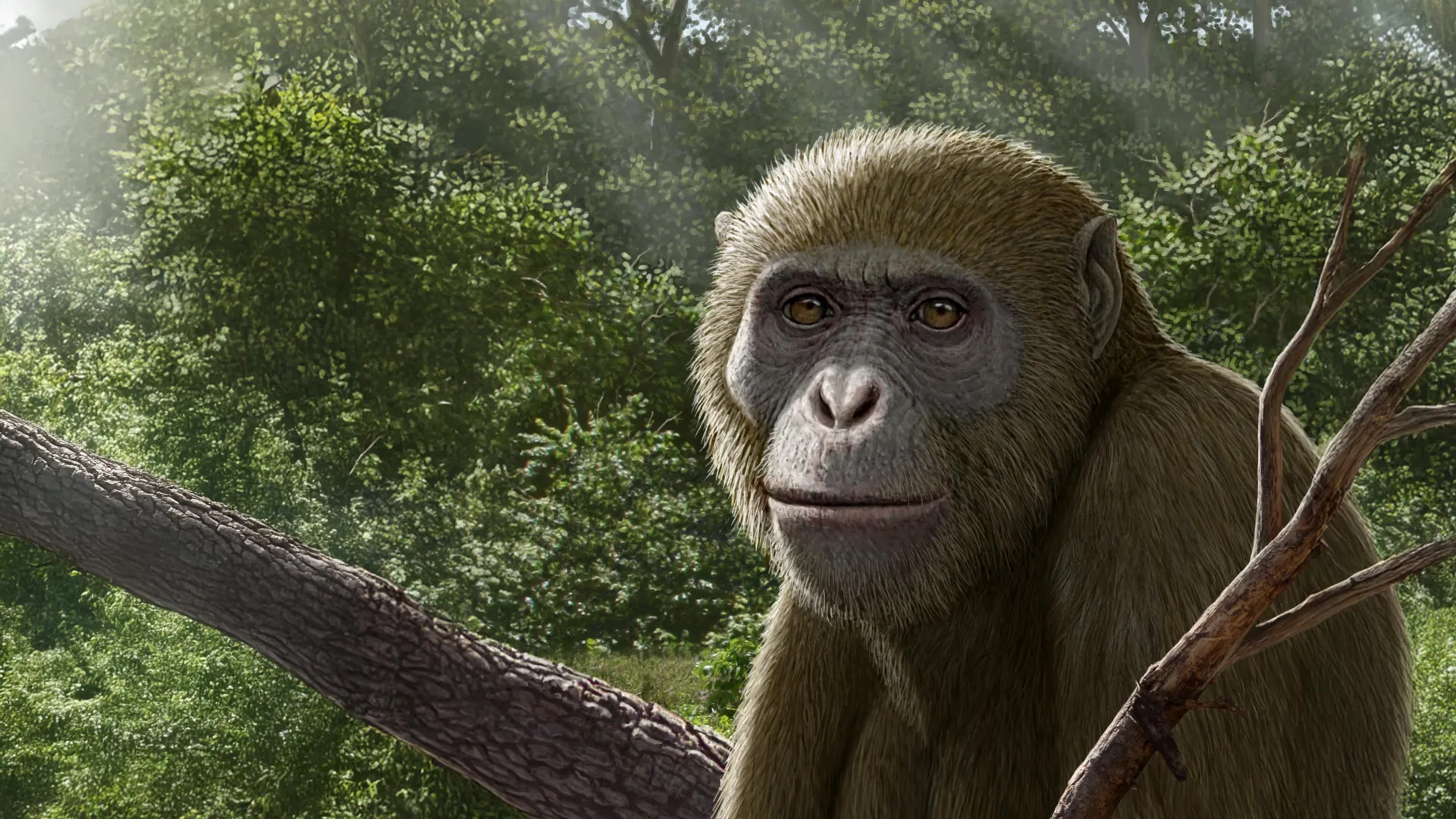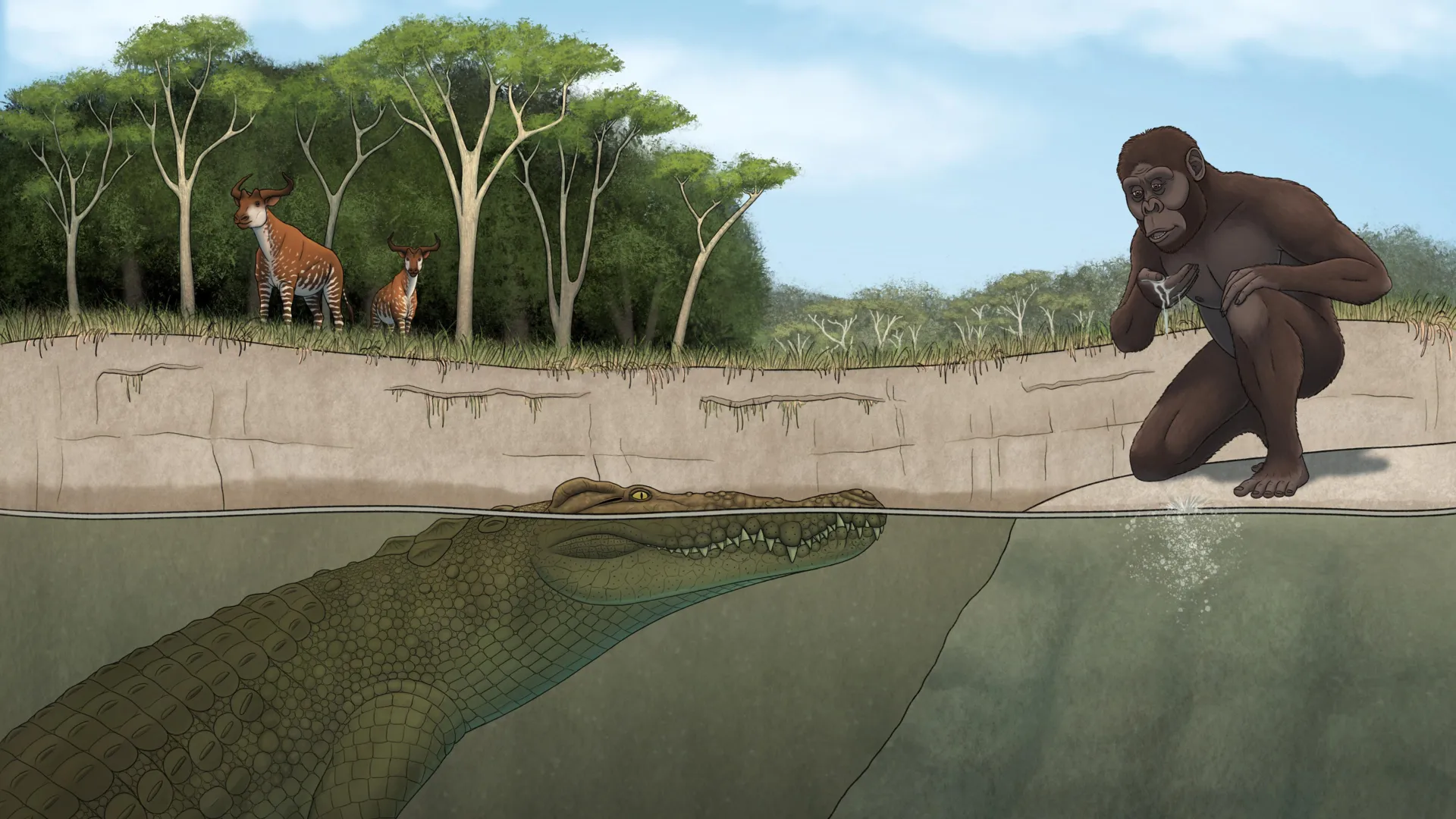
More than three million years ago, the sun-drenched landscapes of the Afar region in present-day Ethiopia were a theater of evolution. Among the scrublands and riverbanks roamed Australopithecus afarensis, the species to which the iconic fossil "Lucy" belongs. For decades, paleoanthropologists have scrutinized this environment to understand the pressures that shaped our ancestors. Now, a groundbreaking study published in the Journal of Systematic Palaeontology has unveiled a terrifying new piece of that evolutionary puzzle: a formidable, previously unknown species of crocodile that likely served as the primary threat to our early ancestors.
Formally named Crocodylus lucivenator—or "Lucy’s hunter"—this massive reptile dominated the waterways of the Hadar Formation. The identification of this species, led by researchers at the University of Iowa, provides the most comprehensive look yet at the apex predator that shared the landscape with some of the earliest hominins, fundamentally altering our understanding of the perils faced by our ancient forebears.
The Chronology of a Paleo-Encounter
The Pliocene epoch, specifically the interval between 3.4 million and 3 million years ago, was a time of significant biological transition in East Africa. While Lucy is celebrated for demonstrating the early emergence of bipedalism—a trait that predated the significant expansion of the human brain—her world was far from hospitable.
The fossils of Crocodylus lucivenator date precisely to this window. For years, these remains sat in the collections of the National Museum of Ethiopia, their unique characteristics largely overlooked or misidentified as belonging to known extant species. However, the University of Iowa-led team, through an exhaustive analysis of 121 fossilized specimens—including skulls, teeth, and jaw fragments—has determined that this crocodile was a distinct biological entity that existed contemporaneously with A. afarensis.
The timeline is significant. As the ancestors of humanity began to navigate the complex mosaics of the Hadar landscape—which shifted between dense gallery forests, open wet grasslands, and riparian corridors—they were forced to contend with an environment where the water was just as dangerous as the terrestrial plains. Crocodylus lucivenator occupied these waterways, serving as the undisputed king of the ecosystem. Unlike other species that might have shared the broader Eastern Rift Valley, this crocodile appears to have held a singular, unchallenged position within the Hadar region, persisting throughout the climatic fluctuations of the era.
Anatomical Marvels: Defining Crocodylus lucivenator
The identification of Crocodylus lucivenator was not merely a matter of finding new bones, but of reinterpreting the biological architecture of the ones already found. Christopher Brochu, a professor in the Department of Earth and Environmental Sciences at the University of Iowa and a veteran of 35 years of crocodilian research, first encountered these specimens in 2016.
"I was just blown away because it had this really weird combination of character states," Brochu remarked.
Among the most striking features of this ancient beast was a prominent, bulbous hump located in the middle of its snout. This structure is a departure from the morphology of the modern Nile crocodile, which lacks such an ornament. Instead, the hump bears a striking, if superficial, resemblance to structures seen in modern American crocodiles. Researchers hypothesize that this feature was not merely decorative but served as a critical component of sexual selection and courtship displays. Much like modern crocodilians, which use head-lowering maneuvers to display their physical traits to potential mates, C. lucivenator likely used its snout to signal strength and vitality.
Furthermore, the species possessed a snout that extended significantly further beyond its nostrils than its contemporaries. This elongation, which aligns it more closely with the snouts of modern, specialized crocodilians, likely provided it with an advantage in grasping and maneuvering prey in murky, vegetated waters. Measuring between 12 and 15 feet in length and weighing up to 1,300 pounds, the animal was a formidable physical presence, equipped with the bite force and stealth required to ambush anything from large mammals to unwary hominins approaching the water’s edge.
Scientific Evidence and Behavioral Insights
The research team, which included experts from the National Museum of Ethiopia, Arizona State University, and the University of Cambridge, utilized a multi-disciplinary approach to reconstruct the life of the predator. By analyzing the fossil record of the Hadar Formation, they mapped the animal’s prevalence within the ecosystem.
Beyond the physical description, the fossils offered glimpses into the brutal social dynamics of the species. One particular specimen preserved evidence of significant, partially healed injuries on its jaw. These traumatic markers indicate a violent encounter with another crocodile, providing physical proof of territorial disputes or dominance contests—a behavior that has persisted across the crocodile family tree for millions of years.
Stephanie Drumheller, a teaching associate professor at the University of Tennessee who contributed to the study, noted the significance of these injuries. "The fossil record preserves similar injuries in extinct groups as well, so this kind of face-biting behavior can be found throughout the crocodile family tree," she explained. "We can’t know which combatant came out on top of that fight, but the healing tells us that, winner or loser, this animal survived the encounter."
This evidence of intra-species conflict underscores the high-stakes environment of the Pliocene. It was an ecosystem of intense competition, where only the most adaptable and aggressive predators could secure territory and resources.
Official Responses and Expert Perspective
The implications of this discovery are profound for those who study human evolution. Christopher Brochu’s assessment of the predator’s relationship with early humans is direct and sobering.
"It was the largest predator in that ecosystem, more so than lions and hyenas, and the biggest threat to our ancestors who lived there during that time," Brochu said. "It’s a near certainty this crocodile would have hunted Lucy’s species. Whether a particular crocodile tried to grab Lucy, we’ll never know, but it would have seen Lucy’s kind and thought, ‘Dinner.’"
Co-author Christopher Campisano of Arizona State University highlighted the crocodile’s unique resilience. While other species moved in and out of the region as the environment shifted between forest and shrubland, C. lucivenator remained a constant presence. This persistence suggests that the crocodile was an incredibly efficient generalist, capable of exploiting the varied aquatic niches provided by the Hadar lake and river systems.
The naming of the species—lucivenator—serves as a permanent linguistic bridge between the evolution of our own lineage and the predatory forces that shaped it. By formally recognizing this animal, the team has provided a focal point for future discussions on the "selective pressures" that defined the Pliocene.
Evolutionary Implications: A Hominin’s Peril
The discovery of Crocodylus lucivenator forces a re-evaluation of the dangers faced by Australopithecus afarensis. While we often focus on the dietary habits, social structures, and bipedal locomotion of early hominins, we must also consider the persistent, existential threat posed by apex predators.
The ability of early humans to survive and eventually thrive in an environment dominated by such a specialized hunter speaks to the ingenuity and adaptability of our ancestors. It raises questions about how Lucy’s species navigated these waterways: Did they have an innate fear of the water? Did they develop communal strategies to avoid, or perhaps detect, these submerged hunters?
The Hadar Formation, already a UNESCO World Heritage site since 1980, has once again proven its value to science. It remains one of the few places on Earth where the record of human evolution is inextricably linked with the record of the predators that hunted them. The discovery of C. lucivenator is a reminder that the story of human evolution is not just a story of our ancestors, but a story of the entire, brutal, and beautiful ecosystem that forged them.
As researchers continue to excavate and analyze the treasures of the Afar region, the legacy of "Lucy’s hunter" will undoubtedly serve as a cornerstone for future studies. It stands as a testament to the fact that while our ancestors were on the path to becoming the dominant species on the planet, they spent millions of years living in the shadow of giants—or in this case, in the silent, waiting reach of a massive, hump-snouted predator.
This research was supported by the U.S. National Science Foundation, the Leakey Foundation, the University of Iowa Office of International Programs, and the College of Liberal Arts and Sciences at Iowa, marking a significant international effort to piece together the mosaic of our deep, dangerous past.