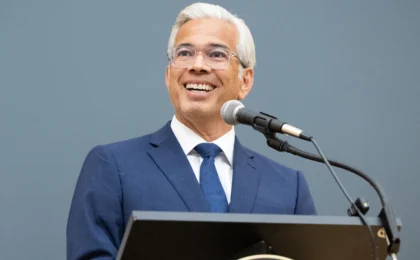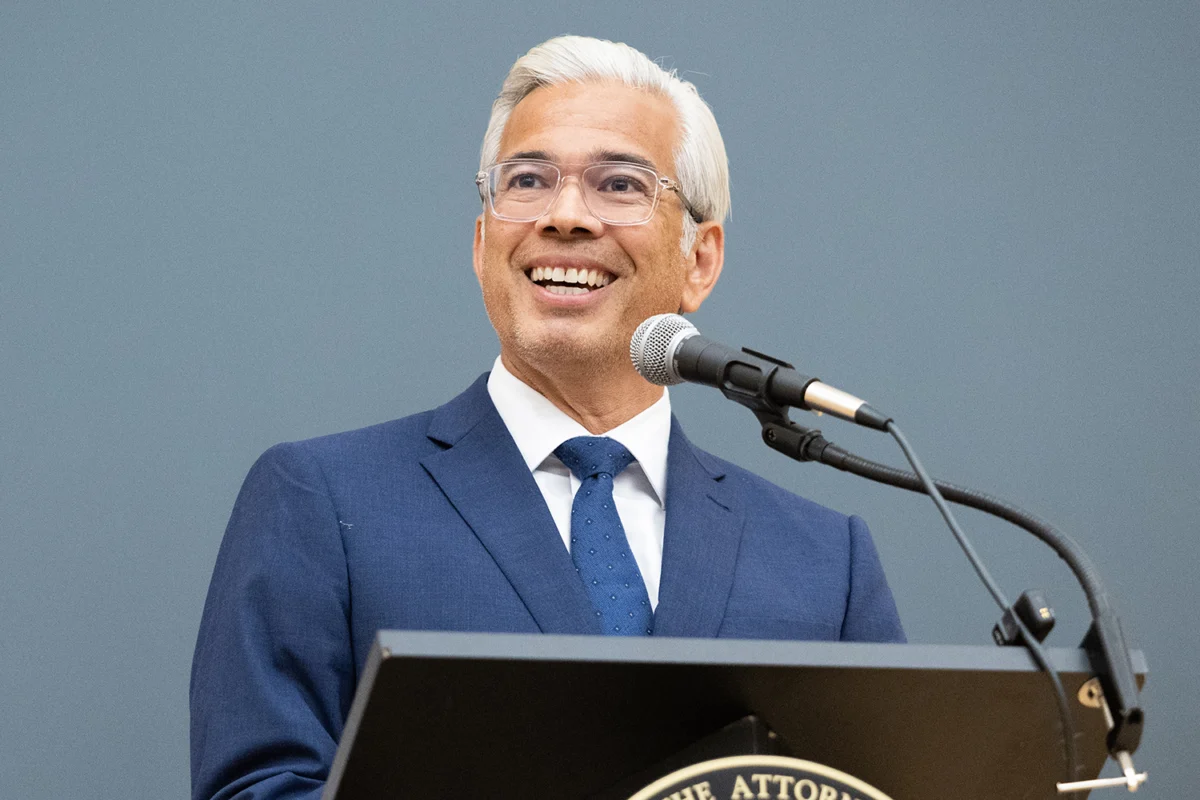
In a dramatic reversal that has sent shockwaves through the corridors of California’s legal and political establishment, Attorney General Rob Bonta has abandoned his high-profile challenge to the merger of Paramount and Warner Bros. The case, which was initially framed by Bonta as a bold stand against the politicization of federal antitrust enforcement, crumbled in just two months, leaving observers to wonder whether the state’s aggressive pursuit of corporate consolidation is sustainable in an era of intense economic lobbying and executive-level interference.
The retreat marks a significant victory for Paramount, which managed to successfully navigate a complex legal landscape without securing a single favorable court ruling. Instead, the company utilized a potent combination of economic threats and high-level political leverage to force the Attorney General’s hand, exposing the limitations of state-level intervention when faced with the collective weight of a nervous governor and a restless industry.
The Genesis of a Legal Conflict
The saga began in July, when Bonta launched his lawsuit to block the Paramount-Warner Bros. merger. At the time, Bonta characterized the move not merely as a regulatory intervention, but as a moral imperative. He pointedly accused the Trump administration’s Department of Justice (DOJ) of dereliction of duty, claiming that federal regulators had identified the merger as unlawful only to be silenced by the White House.
"They are greenlighting deals that their own antitrust section at the U.S. DOJ knows and believes are unlawful, and they’re overriding them in the White House with political decisions," Bonta declared during his initial press conference. "They are not just missing in action; they are making things worse for Americans. So, our role is more important."
Bonta’s framing of the issue was explicitly political. In his announcement, he mentioned President Trump seven times, invoking the "no kings" doctrine as a rallying cry against what he described as a culture of corporate cronyism, where billionaire executives allegedly curry favor with the executive branch to secure favorable regulatory outcomes.
Chronology: From Aggression to Settlement
The trajectory of the case serves as a masterclass in how corporate interests can maneuver around government oversight:
- July: Rob Bonta files suit, challenging the merger on antitrust grounds, citing the lack of federal oversight as a primary catalyst for his intervention.
- August: Paramount, under the leadership of CEO David Ellison, intensifies its lobbying efforts. Ellison, who had spent the better part of a year courting the Trump administration—including high-profile appearances at UFC events—leverages this proximity to suggest the merger is a federal priority.
- Early September: Governor Gavin Newsom publicly signals that a prolonged legal battle would be detrimental to California’s economy. His administration suggests that a settlement is preferable to a trial that might create years of uncertainty for the industry.
- Mid-September: Paramount issues a credible threat: if the deal is not cleared by October 1, the company will relocate operations to Tennessee. This ultimatum hits a nerve in Sacramento, where leaders are already anxious about a historic production slump in Hollywood.
- Late September: The Trump-led DOJ and two Republican state attorneys general file interventions, effectively challenging the state’s right to enforce antitrust laws in national mergers.
- October: Bonta formally drops the case in exchange for modest, largely symbolic conditions, signaling the end of the state’s resistance.
The Weight of Economic Stakes
The primary catalyst for Bonta’s retreat was the "one-two punch" of Governor Newsom’s intervention and the existential threat posed by Paramount’s plan to flee the state. Hollywood is currently grappling with a severe production contraction, and the prospect of a major studio departing for Nashville was viewed by many in Sacramento as a political catastrophe.
"Paramount played their cards perfectly," says Abiel Garcia, a former California deputy attorney general. "Bonta had the upper hand on the legal merits of the case, but he got cut at the knees on every other issue. When the governor starts signaling that he wants a settlement, the Attorney General’s leverage effectively evaporates."
This sentiment is echoed by Bill Kovacic, a professor at George Washington University. "It seems the Attorney General overestimated the political support he was going to receive from the governor and other luminaries in his party," Kovacic noted. "That’s a sharp reminder of the power companies have to shape opinions by throwing their economic weight around."
Official Responses and Internal Tensions
The fallout from the settlement has sparked a broader debate about the independence of state Attorneys General. While Bonta framed his work as filling a "void" left by the federal government—a role he has also assumed in cases involving Ticketmaster, HPE/Juniper Networks, and Nexstar/Tegna—his colleagues have been careful to distance themselves from the political dynamics seen in California.
Phil Weiser, the Attorney General of Colorado, provided a pointed commentary on the independence of his office when asked about the matter: "My governor has never, publicly or privately, given me any feedback on any antitrust case."
Within the California AG’s office, the tension remains palpable. Paula Blizzard, head of the antitrust section, attempted to maintain professional decorum during a recent panel at George Washington University. When questioned about Newsom’s push for a settlement, she replied that AGs are "separately elected as independent officials." After a pause, she added, "That’s probably all I can say."
The Implications for Future Antitrust Enforcement
The collapse of the Paramount suit raises critical questions about the future of antitrust enforcement in the United States. If state-level enforcers are vulnerable to the same political and economic pressures that have paralyzed federal agencies, what recourse remains for competition in the marketplace?
1. The Erosion of State Authority
The intervention of the federal DOJ and Republican AGs in this case, arguing against state-level authority, suggests a coordinated effort to narrow the scope of who can challenge mega-mergers. If this precedent holds, states may find it increasingly difficult to act as a backstop for competition policy.
2. The Power of Corporate Lobbying
The fact that Paramount secured the result it wanted without a single favorable court ruling is a testament to the power of "outside-the-courtroom" strategy. By aligning with industry unions like the Directors Guild of America and IATSE—who favored the settlement for the sake of job stability—Paramount effectively neutralized the argument that the merger was a detriment to the industry.
3. The "Political" Label
Bonta’s strategy of tying the antitrust suit to the Trump administration backfired by allowing opponents to frame his actions as purely partisan. By branding the lawsuit as an anti-Trump crusade, Bonta made it easy for his critics to dismiss his legal arguments as theater, effectively drowning out the substantive antitrust concerns regarding market concentration and consumer pricing.
Conclusion: A Cautionary Tale
The Paramount-Warner Bros. outcome is a sobering lesson for regulators. It highlights that in the modern American economy, legal strength is often insufficient to overcome political and economic gravity. Rob Bonta attempted to position himself as a champion of independent, principle-driven antitrust enforcement, but he ultimately learned that the governor’s office, the unions, and the threat of corporate migration carry a weight that few elected officials can withstand.
As the dust settles, the implications for the broader marketplace remain concerning. With federal regulators largely sidelined or compromised, and state-level enforcers susceptible to the pressure of local economic optics, the barriers to massive corporate consolidation appear lower than ever. The "no kings" rallying cry may have been a powerful rhetorical tool, but in the halls of power, the influence of the boardroom continues to reign supreme.