In the vast, shifting expanse of the South Pacific, the bond between a mother humpback whale and her calf is one of nature’s most profound expressions of devotion. Yet, when that bond is severed by the tragedy of a stillbirth, the ocean often keeps its secrets. Recently, however, researchers from Griffith University and the Sea World Foundation were granted a rare and poignant glimpse into this hidden world, documenting a humpback mother’s prolonged, silent vigil over her deceased calf off the southern Gold Coast of Australia.
The encounter, which occurred in 2025, has sent ripples through the scientific community. It offers a hauntingly intimate look at the emotional architecture of one of the planet’s most intelligent marine mammals, suggesting that humpback whales—like their more socially complex cousins, the toothed whales—may possess the capacity for grief and profound maternal attachment.
The Chronology of an Unexpected Encounter
The discovery began as a routine day for the Sea World Foundation rescue team. Captain Andrew Mulville, who has spent years patrolling these waters, initially perceived the whales as merely resting. In the rhythmic, rolling currents of the Gold Coast, it is not uncommon to see humpbacks engaged in surface-active behaviors or the lethargic drift of a mid-migration rest.
"When I actually worked out what was happening, I was totally surprised," Captain Mulville recalled. "At first sight, I thought it was just two whales resting on the surface, but their behavior was unusual. It was definitely not what I was expecting to see out at sea that day."
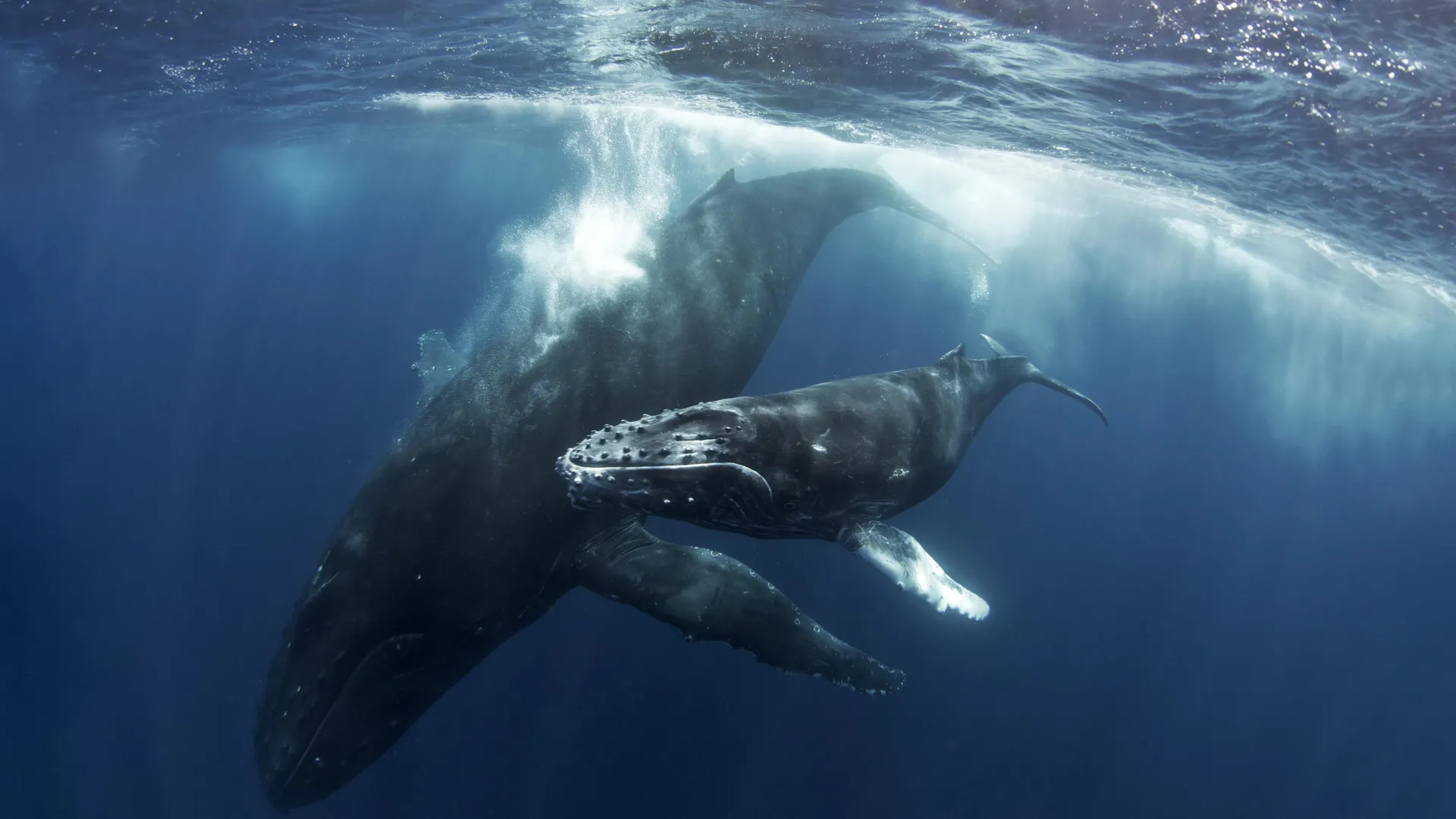
As the team moved closer, the reality of the situation became clear: a female humpback was accompanied by an escort whale, but her focus was entirely anchored to the small, lifeless form of her calf drifting beneath her. The mother remained in the immediate vicinity of the calf for several hours, with researchers noting that her presence likely extended for days. She maintained consistent eye contact and positioned her massive frame alongside the calf, mirroring the protective posture of a living, breathing companion.
This was not a fleeting moment of confusion; it was a sustained period of post-mortem attendance. The mother’s movements were deliberate, characterized by a lack of the usual erratic swimming patterns associated with stress or flight, replaced instead by a somber, steady stillness.
Rare Death-Related Behavior: A Comparative Perspective
To understand the significance of this observation, one must look at the historical context of cetacean research. Dr. Olaf Meynecke, a lead researcher from Griffith University’s Whales and Climate Research Program, notes that the study of post-mortem behavior in cetaceans has historically been skewed toward odontocetes—toothed whales and dolphins.
"Attentive behavior toward dead individuals has been recorded mainly in toothed whales and delphinids," Dr. Meynecke explains. "We have seen instances where mothers lift their deceased calves to the surface, as if attempting to keep them breathing. That is a very active, physical intervention. What we observed here with the humpback was something different, yet equally significant."
Unlike the active lifting observed in species like orcas or bottlenose dolphins, the humpback mother’s behavior was one of submerged, quiet communion. She maintained proximity and orientation, a behavior consistent with the care-giving responses documented in other socially complex mammals. This "post-mortem attendance," as researchers call it, suggests an inherent, deeply ingrained maternal drive that persists even when the biological reality of death has taken hold.
Supporting Data and Scientific Framework
The study, recently published in the journal Discover Animals under the title ‘First documentation of humpback whale (Megaptera novaeangliae) post-mortem attendance of a stillborn,’ serves as a critical data point in the field of marine mammal cognition.
For decades, the scientific community has debated the existence of "grief" in non-human animals. Anthropomorphism—the attribution of human traits to animals—is a common pitfall in such studies. However, Dr. Meynecke and his colleagues are careful to categorize these behaviors through the lens of evolutionary biology and social cohesion.
The Complexity of Baleen Whales
Humpback whales are baleen whales (mysticetes), which generally exhibit different social structures than the highly tight-knit, pod-based societies of toothed whales. Because mysticetes are often migratory and less reliant on permanent social groupings, their emotional responses to death have remained largely unstudied.
The documentation provided by the Griffith-Sea World team is invaluable because it proves that this capacity for attachment is not exclusive to highly social, pod-based cetaceans. It suggests that the "emotional life" of a whale—its ability to recognize loss and respond to it—may be a fundamental trait shared across the infraorder, rather than an anomaly limited to a few species.
Official Responses and Expert Analysis
The academic response to the study has been one of tempered excitement. The rarity of such sightings means that every documented case acts as a building block for a broader theory on whale consciousness.
"We are looking at a window into the cognitive and emotional capacities of these giants," says Dr. Meynecke. "By observing how they respond to death, we are not just seeing a sad event; we are seeing the manifestation of social bonds that have evolved over millions of years. This behavior indicates a strong maternal attachment that does not simply ‘switch off’ the moment a calf expires."
The Sea World Foundation has emphasized that such observations are only possible through the persistent presence of marine researchers in the field. As climate change alters migratory paths and ocean temperatures shift, the pressure on nursing mothers increases, making the study of neonatal mortality a growing priority for conservationists.
Implications for Marine Science and Ethology
The implications of this observation stretch far beyond the individual mother whale. They challenge our fundamental understanding of how large marine mammals process trauma and death.
Understanding Animal Cognition
If humpback whales are capable of prolonged, attentive behavior toward a dead calf, what does this tell us about their capacity for memory and anticipation? Does the mother "understand" that her calf is gone, or is she driven by an instinctual, unending cycle of care? While we may never have the answers to these questions in the human sense, the observation forces a re-evaluation of the "intelligence" of baleen whales.
Evolutionary Significance
Why would a mother persist in such behavior? From an evolutionary standpoint, the expenditure of energy to guard a deceased calf is "costly." It puts the mother at risk of predation and delays her ability to rejoin the migration or feed. Researchers hypothesize that this behavior may be a byproduct of a highly developed maternal instinct that, while maladaptive in the event of a stillbirth, is essential for the survival of the species in the face of environmental threats.
A Call for Systematic Documentation
The study concludes with a strong recommendation for the global marine research community: the need for systematic, standardized documentation of neonatal mortality. By creating a repository of such events, scientists can begin to look for patterns. Is this behavior increasing? Does it vary by region or age of the mother? These questions are essential for the long-term conservation of the species.
Conclusion: A Window into the Emotional Life of the Ocean
The sight of a mother whale refusing to abandon her dead calf is, to the human observer, profoundly heartbreaking. It forces us to confront our own relationship with loss and to recognize that we are not the only beings on this planet capable of experiencing the heavy, silent weight of grief.
As we continue to observe the humpback whale, we are constantly reminded that our knowledge of the deep ocean is only a fraction of what exists. The 2025 encounter off the Gold Coast stands as a testament to the fact that these animals are not merely biological machines programmed for survival. They are social, emotional, and deeply complex beings whose lives—and deaths—are marked by the same bonds of love and loss that define our own human experience.
Through the work of researchers like those at Griffith University and the Sea World Foundation, we are finally beginning to hear the stories the ocean has been trying to tell us all along. The vigil of the mother whale is a silent plea for understanding, a reminder of the fragility of life, and an invitation to look deeper into the mysterious, intelligent, and feeling world beneath the waves.