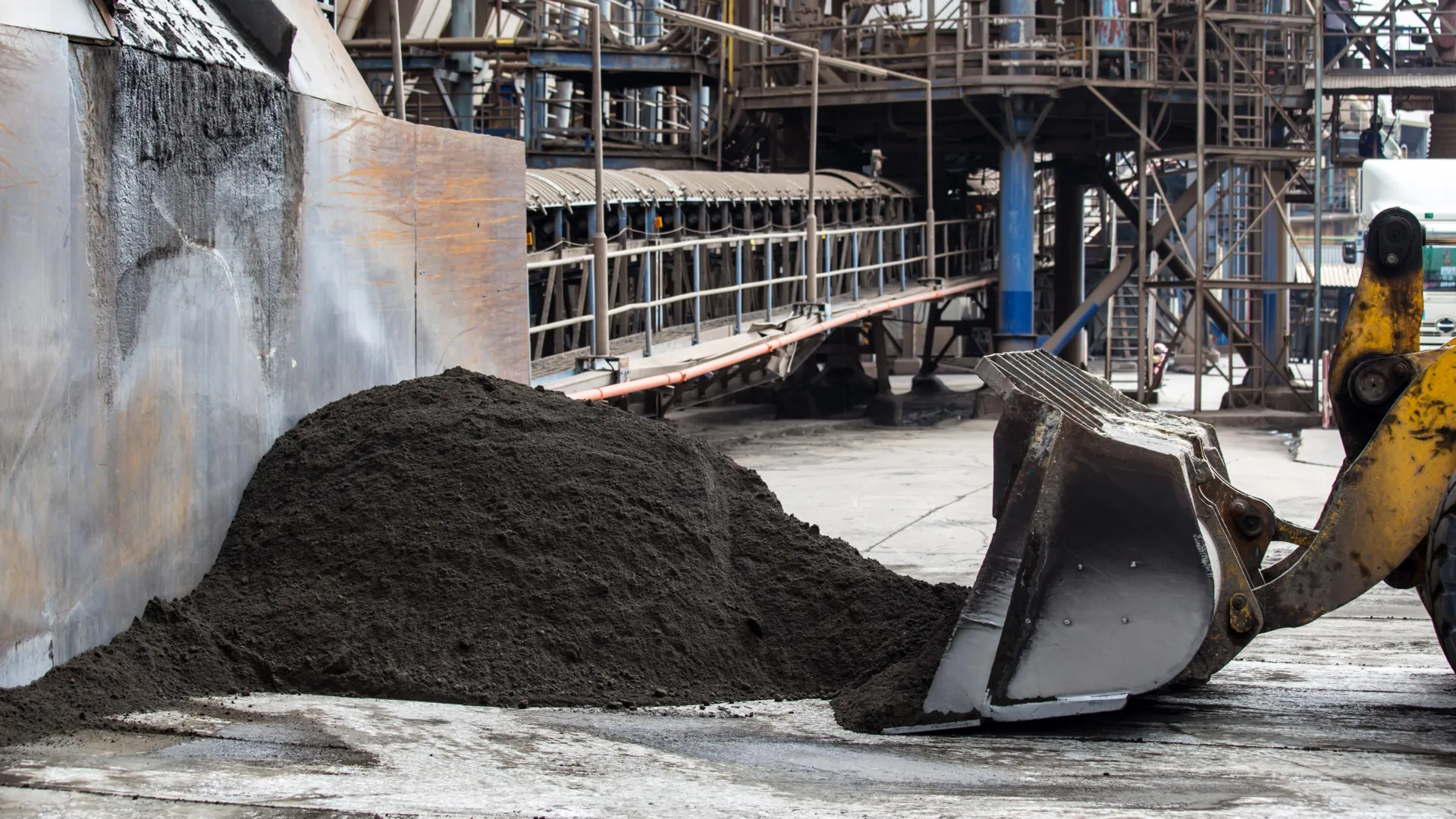
In the shadow of industrial progress lies a mounting crisis: vast, sprawling landscapes of coal ash, red mud, and mine tailings. Traditionally viewed as hazardous environmental burdens, these waste streams are increasingly being reimagined by scientists as “urban mines.” A pioneering research initiative, spearheaded by the Worcester Polytechnic Institute (WPI) and bolstered by a $3.3 million grant from the National Science Foundation (NSF), seeks to transform this discarded detritus into a cornerstone of a sustainable, domestic supply chain for critical minerals.
The Hidden Value in Industrial Residue
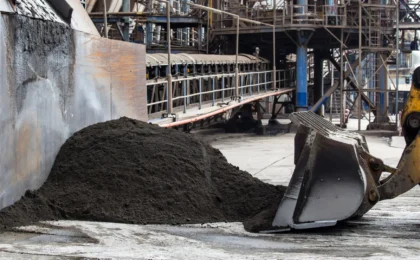
The scale of the challenge is matched only by the scale of the opportunity. Industrial sectors—ranging from energy production and metallurgy to construction—generate gargantuan quantities of silicon-rich waste. This includes metallurgical slag, concrete debris, and the millions of tons of coal ash sequestered in ponds and landfills across the United States.
While environmental regulators have long focused on the containment of these materials to prevent groundwater contamination, geochemists and materials scientists see something else entirely: a treasure trove. These waste streams are rich in silica and harbor significant concentrations of Rare Earth Elements (REEs) and other critical minerals essential for modern life. From the semiconductors in our smartphones to the permanent magnets in electric vehicle motors and the specialized components of national defense systems, the reliance on these minerals is absolute.
Current estimates are staggering. Industry data suggests that U.S. coal ash landfills alone contain roughly 11 million tons of REEs. At current market valuations, this “trash” represents an untapped asset worth approximately $8.4 billion—nearly eight times the nation’s total identified raw domestic reserves.
A New Frontier: The Chronology of the Project
The initiative, formally titled under the NSF’s "Growing Convergence Research" program, is a five-year, two-phase odyssey. It represents a fundamental departure from traditional mining and refining methods, which are notoriously energy-intensive and chemically aggressive.
- Phase I: Foundation and Biomimicry (Years 1–2): The initial phase focuses on the fundamental science of "biosilicification." The team is tasked with mapping the mechanisms by which biological entities—specifically diatoms, sea sponges, and certain plants—efficiently extract dissolved silicon from their environments to construct complex, intricate silica architectures under ambient conditions.
- Phase II: Scalability and Implementation (Years 3–5): The second phase will transition from laboratory bench-scale discovery to pilot-scale testing. Researchers will assess the economic viability and industrial scalability of these bio-inspired processes, aiming to create a closed-loop system where waste is not just treated, but repurposed into high-value silicon-derived products.
The project is a transdisciplinary powerhouse, led by Mingjiang Tao, an associate professor in the WPI Department of Civil, Environmental, and Architectural Engineering. He is joined by co-principal investigators Carrick Eggleston and Yan Wang, alongside a consortium of academic experts from George Mason University, the University of California San Diego, the University of Massachusetts Amherst, and the University at Buffalo.
Biomimicry: Looking to Nature for Solutions
The core innovation of the WPI project lies in its departure from the “brute force” methods of traditional metallurgy. Today’s industrial refining often requires extreme temperatures and the use of harsh, toxic chemicals to liberate minerals from silicon matrices. This process is both expensive and environmentally taxing.
The research team is asking a different question: How does a sea sponge do it?
Diatoms and sea sponges have spent millions of years perfecting the art of handling silicon. They utilize specialized biomolecules and organic scaffolds to capture dissolved silica and shape it with microscopic precision at room temperature. By decoding these biological “blueprints,” the WPI team aims to engineer synthetic biomolecules that can perform similar feats on industrial waste.
"We want to develop a process that uses as much of each waste stream as possible," says Mingjiang Tao. "By separating strategically important elements while simultaneously converting the remaining material into useful products, we are aiming for a whole-material approach that could fundamentally change how industries manage waste and obtain essential resources."
Artificial Intelligence: Accelerating the Discovery Curve
One of the most significant hurdles in materials science is the time-intensive nature of trial-and-error experimentation. To bypass these delays, the WPI-led team is integrating advanced computational modeling and Artificial Intelligence (AI) into their workflow.
The project utilizes AI to predict how engineered biomolecules will interact with the complex, heterogeneous chemistry of industrial waste. By simulating these interactions in a digital environment, the researchers can filter out ineffective approaches before they ever reach the lab bench. This computational layer effectively acts as a catalyst for innovation, allowing the team to identify promising pathways for mineral recovery at a pace previously impossible.
The research is divided into specialized domains:
- Biosilicification: Tao oversees the fundamental study of how organisms form silica and how these pathways can be translated to industrial mineral recovery.
- Geochemical Optimization: Carrick Eggleston, an expert in geochemistry, leads the investigation into reaction pathways. His work focuses on the dissolution, repolymerization, and carbonation of silicate materials—the chemical "heavy lifting" required to make the biological approach work on an industrial scale.
- Bio-enabled Metallurgy: Yan Wang, a pioneer in sustainable manufacturing and battery recycling, directs the development of the processes that will ultimately extract the REEs and critical minerals from the treated waste.
Economic and Environmental Implications
The success of this project could have profound implications for the U.S. economy and national security. By creating a domestic pipeline for critical minerals recovered from waste, the nation can reduce its dependence on volatile international supply chains and environmentally destructive primary mining operations.
Furthermore, the environmental footprint of this process is significantly lower than current standards. By utilizing bio-inspired, low-temperature methods, the project aims to minimize the carbon intensity of mineral production. If the waste can be successfully converted into marketable materials—such as high-grade silica for semiconductors or additives for sustainable construction—the “waste problem” could effectively become a “resource solution.”
Official Perspectives and Educational Impact
The NSF’s support for this project underscores a growing national priority: the need for "convergence research." This paradigm recognizes that the most complex societal challenges cannot be solved by a single discipline. By weaving together biology, materials science, data science, and engineering, the WPI team is modeling a new way of conducting science.
Beyond the research output, the project serves as a training ground for the next generation of engineers and scientists. Graduate and undergraduate students at WPI are being integrated into the project, gaining hands-on experience in one of the most vital fields of the 21st century. Through the university’s immersive STEM experience, these students are learning to navigate the intersections of sustainability, biotechnology, and data science.
As the project unfolds, it aims to create an ecosystem that bridges the gap between academic research and industrial application. By engaging policymakers and industry partners, the team hopes to pave the way for a circular economy—a model where the residues of yesterday’s industrial processes become the raw materials for tomorrow’s technologies.
Conclusion
The WPI-led initiative represents a bold step toward a future where "waste" is a term relegated to the history books. By listening to the lessons taught by the natural world and leveraging the power of modern computation, the researchers are turning the tide on industrial pollution. Should they succeed, the massive, stagnant landfills of today may well become the vibrant, sustainable resource hubs of tomorrow, proving that the most advanced solutions to our technological needs have been hiding in plain sight, waiting for the right scientific lens to bring them into focus.