The German political landscape, long characterized by its predictable stability and the dominance of “big tent” centrist parties, is undergoing a seismic shift. Recent electoral results—from the bustling, progressive streets of Berlin to the economically anxious corners of Mecklenburg-Western Pomerania—reveal a nation increasingly polarized, divided by geography, generation, and ideology. As traditional power brokers falter, a new guard is emerging, fueled by the housing crisis, the lingering scars of globalization, and a profound sense of generational disconnect.
Main Facts: The Rise of the New Left and the Far-Right Surge
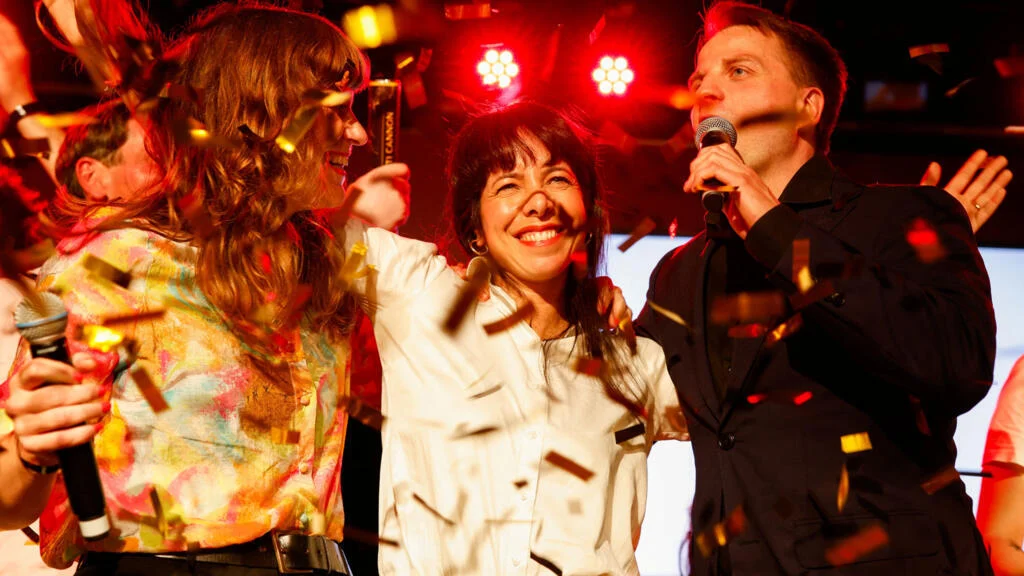
The centerpiece of this political upheaval is Berlin, where Elif Eralp, a 45-year-old daughter of Turkish political exiles, has spearheaded a historic municipal victory for the far-left Die Linke party. Her success is not merely a localized win; it is a signal of a potent, grassroots-driven movement that resonates with the frustrations of urbanites struggling under the weight of an unforgiving real estate market.
Eralp’s campaign, characterized by a sophisticated, social-media-savvy strategy, mirrored the populist energy seen in progressive movements abroad, such as the rise of Zohran Mamdani in New York. Her platform—centered on the ambitious, arguably radical, goals of rent freezes and the nationalization of major private real estate conglomerates—tapped into a raw nerve in the German capital.
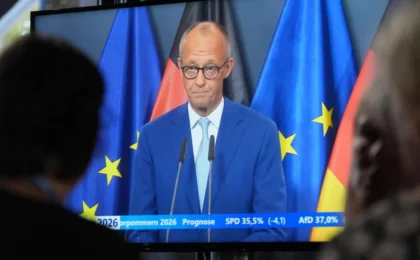
Simultaneously, the electoral map is being redrawn in the country’s northeast. In Mecklenburg-Western Pomerania, the political establishment has suffered a stinging rebuke. The Christian Democratic Union (CDU), the party of former Chancellor Angela Merkel, faced an unprecedented humiliation: for the first time since the end of World War II, the party failed to secure sufficient votes to maintain a seat in the regional parliament. Meanwhile, the far-right Alternative for Germany (AfD) surged, outperforming the Social Democrats (SPD) and underscoring a growing receptivity to nationalist rhetoric in regions left behind by the march of global commerce.
Chronology: A Timeline of Electoral Disruption
The current state of German politics did not emerge in a vacuum. It is the result of years of simmering resentment and policy gridlock.
- Pre-2020: The buildup of the housing crisis in Berlin, fueled by hyper-gentrification and the entry of global speculative capital into the German real estate market, creates a "pressure cooker" environment.
- 2021-2022: The SPD and CDU attempt to manage a post-Merkel transition while navigating the economic shocks of the pandemic and the subsequent energy crisis following the invasion of Ukraine.
- The Election Cycle (Recent Sunday): Berlin voters head to the polls, resulting in the Die Linke breakthrough. Simultaneously, regional elections in Mecklenburg-Western Pomerania send shockwaves through the federal government as the CDU is pushed to the margins.
- The Aftermath: National media and political analysts begin to identify a clear pattern: a widening chasm between the urban, progressive centers and the disenchanted, economically stagnating periphery.
Supporting Data: The Anatomy of the Divide
The data emerging from these elections paints a stark picture of a country splintering along several fault lines.
The Housing Crisis
In Berlin, the affordability of housing has transitioned from a municipal policy issue to a foundational political identity. With rents rising at rates far outpacing wage growth, the promise of "expropriation" (nationalization) of real estate giants has moved from the fringe to the mainstream. Eralp’s success demonstrates that voters are no longer satisfied with incrementalist rent caps; they are demanding structural systemic change.
The Generational and Gender Gap
Sociological data suggests the divide is not just about geography. There is a burgeoning gender-ideological split:
- Younger Women: Increasingly leaning toward left-wing, progressive, and environmentalist parties, driven by concerns over social equality, climate change, and systemic justice.
- Younger Men: Showing a statistically significant shift toward the far-right. Analysts point to a sense of "lost status," where traditional masculine identities in the industrial rust belt feel threatened by the rapid pace of cultural and economic change.
The Globalization "Winners and Losers"
The success of the AfD in Mecklenburg-Western Pomerania is a classic case study of the "left-behind" phenomenon. While Berlin thrives as a hub for tech and creative industries—the "winners" of globalization—the northeastern states continue to grapple with depopulation, aging infrastructure, and the erosion of local manufacturing, creating fertile ground for anti-establishment sentiment.
Official Responses and Political Implications
The political establishment has reacted with a mixture of disbelief and frantic recalculation.
For the Social Democrats (SPD), the results are a "limited damage" scenario that nonetheless exposes their vulnerability. While they managed to retain some influence, their inability to stem the tide of the AfD in the northeast suggests that the party’s traditional appeal to the working class is fracturing.
The CDU, meanwhile, is in a state of existential crisis. The failure to win seats in Mecklenburg-Western Pomerania is a historic stain on a party that once defined the German consensus. Party leaders have begun calling for a "deep soul-searching" and a pivot back to core conservative values, though critics argue that the party’s inability to address the economic anxieties of the rural electorate remains its primary obstacle.
The Path Forward: Can the Promises be Kept?
The central question now facing Elif Eralp and the new municipal government in Berlin is one of implementation. Nationalizing real estate firms is a legal and economic minefield. Critics warn of the potential for capital flight, constitutional challenges in the Federal Court, and the sheer logistical nightmare of managing thousands of residential units. Eralp’s challenge is to prove that her platform is more than just rhetorical fire-breathing—it must be a viable blueprint for governance.
Implications for Germany’s Future
The "Berlin vs. The Rest" dynamic is the most significant threat to German domestic stability in decades. If the capital continues to pull toward a radicalized, state-interventionist model while the periphery moves toward nationalist, anti-liberal sentiments, the cohesive "middle" that has defined the Federal Republic since 1949 may effectively cease to exist.
A New Era of Coalition Politics
We are witnessing the end of the "Big Tent" era. Future German governments will likely be forced into increasingly complex, fragile, and multi-party coalitions. The days of clear-cut, single-party mandates are fading, replaced by a "patchwork" politics where compromise is becoming harder to find.
The Globalization Paradox
Germany stands at a crossroads. As a primary beneficiary of the European Union and global trade, it must now reconcile the immense benefits of that position with the domestic inequality it creates. The rise of the far-left in the cities and the far-right in the provinces are, in many ways, two sides of the same coin: a rejection of the status quo that has failed to provide security for the average citizen.
Conclusion: The Speed of Change
How fast and how deep is this change? The speed is unprecedented. In less than a single electoral cycle, the political gravity has shifted from the center-right to the extreme edges of the spectrum. The "boomer" generation, which has held the levers of power for decades, is being confronted by a youth demographic that is fundamentally different, more polarized, and less patient.
As the dust settles, the message from the ballot box is clear: the German electorate is no longer interested in the politics of inertia. Whether through the lens of housing justice in Berlin or the search for identity in the northeast, the populace is signaling a hunger for a new social contract. Whether that contract leads to a more equitable society or a more fractured one will be the defining story of the next decade of German history.
Produced by François Picard, Théophile Vareille, Juliette Laffont, Ilayda Habip, and Charles Wente.