By Sports Desk
In an evening that will be etched into the annals of World Cup lore, Belgium pulled off one of the most improbable rescues in recent tournament history. Facing a dominant and disciplined Senegal side in a Round of 32 clash in Seattle on Wednesday night, the Red Devils were staring into the abyss of elimination. Down 2-0 and seemingly outclassed for the better part of an hour, Belgium’s second-half resurgence—fueled by tactical ingenuity and individual brilliance—culminated in a 3-2 victory that broke Senegalese hearts and sent the European side through to the Round of 16.
The match, played in front of a fervent crowd at Lumen Field, served as a stark reminder of the World Cup’s inherent volatility. For Senegal, the Lions of Teranga, the night was a tale of two halves: a tactical masterclass followed by a defensive collapse under the weight of unrelenting pressure.
The First Half: A Tactical Masterclass from Dakar
From the opening whistle, it was clear that Senegal had arrived with a definitive plan. Under the watchful eye of their coaching staff, the African side played with a level of organization and clinical discipline that completely stifled Belgium’s initial attempts to control the midfield.
Senegal’s build-up play was methodical, exploiting the space behind Belgium’s defensive line with calculated precision. The breakthrough arrived in the 24th minute. After a series of rapid, one-touch passes that dismantled the Belgian press, Habib Diarra found himself in space, slotting the ball home with the composure of a seasoned veteran.
If the opener was a statement of intent, the second goal served as a declaration of dominance. Shortly after the halftime interval, in the 51st minute, Ismaïla Sarr doubled the advantage. Following a surge down the flank, Sarr showcased his pace and power, firing a thunderous strike past the Belgian keeper. At 2-0, the stadium felt as though the script had been written: Senegal, the disciplined underdog, was set to send a European powerhouse packing.
The Turning Point: Tactical Shifts and the "Lukaku Factor"
By the 60th minute, Belgium looked listless. Their passing was disjointed, and their defensive transitions were sluggish. However, the game changed the moment Romelu Lukaku stepped onto the pitch at the start of the second half.
The Manchester City striker brought a renewed sense of urgency to the Belgian front line. His physical presence acted as a fulcrum, drawing Senegalese defenders out of position and creating pockets of space for his teammates. Alongside Lukaku, manager Rudi Garcia made a series of critical adjustments. By pushing the wing-backs higher and narrowing the midfield, Garcia effectively neutralized Senegal’s counter-attacking lanes.
The introduction of Thomas Meunier in the 79th minute was the final piece of the tactical puzzle. Meunier provided the width that Belgium had been desperately lacking, forcing Senegal’s defensive unit to stretch horizontally. The pressure began to mount, and cracks in the Senegalese resolve—previously ironclad—began to show.
The Closing Act: A Three-Minute Storm
The final ten minutes of regulation time will be replayed in Senegalese households for years to come. With the clock ticking toward the 90-minute mark, Belgium’s persistence finally yielded results.
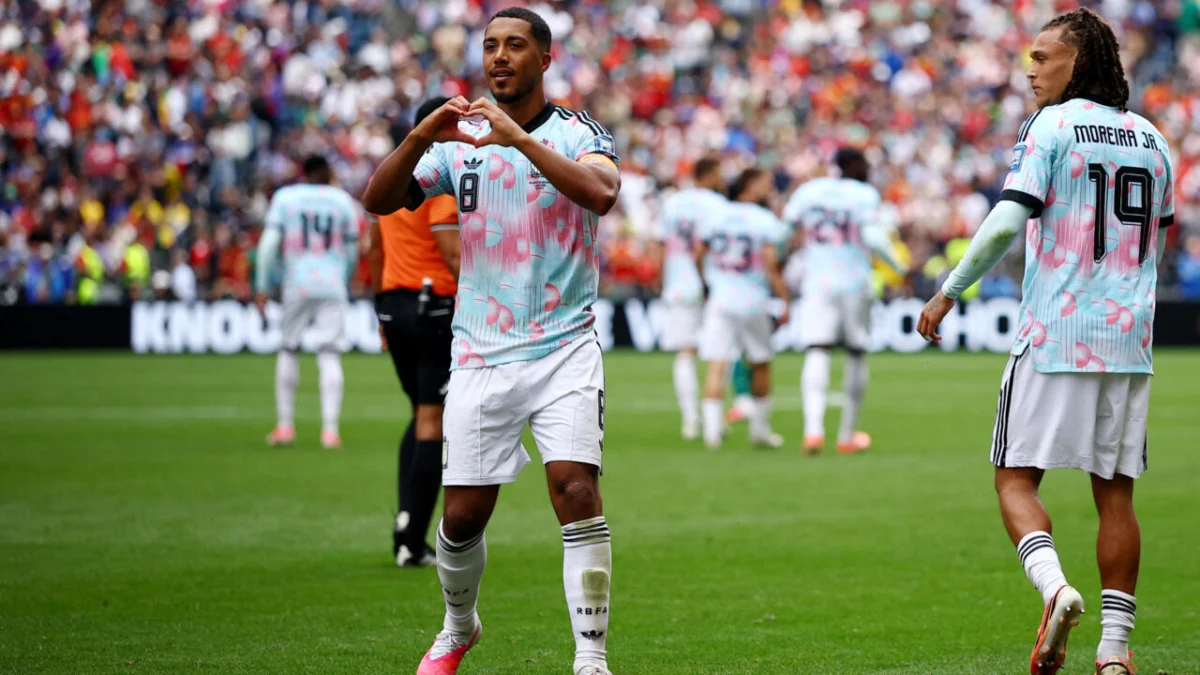
In the 86th minute, Lukaku—the catalyst for the comeback—pounced on a loose ball in the six-yard box, tapping home to reduce the deficit to 2-1. The goal sent a jolt of electricity through the Seattle crowd, and the momentum shifted irreversibly. Three minutes later, the unthinkable occurred. Thomas Meunier, surging down the right wing, delivered a pinpoint cross into the box. Youri Tielemans, timing his run to perfection, rose above the defense to power a header into the back of the net. 2-2. The roar in the stadium was deafening.
Extra Time: A Cruel Conclusion
As the match spilled into extra time, the psychological landscape had shifted entirely. Senegal, having dominated for 80 minutes, looked shell-shocked. Their legs were heavy, and their once-sharp passing had been replaced by desperate, long-ball clearances.
Belgium, conversely, looked revitalized. They controlled the tempo, probing the edges of the Senegalese penalty area with methodical patience. The tension was palpable, as both sides seemed terrified of making the one mistake that would end their tournament.
That mistake came in the 117th minute. Lamine Camara, perhaps fatigued by the sheer physical exertion of the match, made a rash challenge on Tielemans inside the box. The referee hesitated, but after a prolonged VAR review, the penalty was signaled. It was a heartbreaking moment for Senegal, a team that had played with such courage for the majority of the night.
Youri Tielemans, tasked with the pressure of a nation’s expectations, stepped up to the spot. With ice-cold composure, he dispatched the ball into the top corner, securing his brace and completing the turnaround.
Supporting Data and Match Statistics
To understand the magnitude of this comeback, one must look at the statistical shift between the two halves:
- Possession: Senegal held 58% of the ball in the first half; Belgium dominated with 64% in the second half and extra time.
- Shot Conversion: Senegal’s two goals came from just four shots on target in the first 60 minutes. Belgium’s three goals came from an intense barrage of 12 shots on target in the latter stages of the game.
- Defensive Blocks: Senegal recorded 14 successful defensive blocks in the first half, but that number dropped to just three in the final 30 minutes of the match, highlighting the exhaustion of their defensive core.
- Passing Accuracy: Belgium’s pass completion rate rose from 72% in the first half to 89% after the 75th minute, reflecting the stabilizing influence of Garcia’s tactical changes.
Official Responses and Post-Match Analysis
In the post-match press conference, the contrast in emotions was stark.
Senegal manager Aliou Cissé, visibly devastated, praised his team’s heart: "We played a magnificent game for 80 minutes. We followed the plan, we dominated, and we were the better side. Football is a cruel sport; one moment of lapse in concentration at this level, and you are punished. I am proud of my boys, but we are leaving with a heavy heart."
Rudi Garcia, meanwhile, hailed the resilience of his squad: "We knew Senegal was a difficult opponent. They are organized, fast, and very intelligent. At halftime, I told the boys that if we could move the ball faster and isolate Lukaku, we could change the game. The players deserve the credit—they never stopped believing, even when the mountain looked too high to climb."
Implications: The Road Ahead
This victory serves as a significant confidence booster for Belgium. While their first-half performance will raise questions about their defensive vulnerability against high-pressing teams, their ability to mount a comeback of this scale suggests a championship-caliber mentality.
For Senegal, the exit is a bitter pill to swallow. However, their performance in Seattle confirms their status as a rising force in global football. Their ability to outplay a European giant for the majority of a knockout match is a sign of the closing gap between the world’s footballing continents.
Belgium now turns its eyes toward the Round of 16. With this dramatic win behind them, they face the winner of the USA-Bosnia clash with a renewed sense of destiny. As the World Cup moves into the deeper stages, the Seattle miracle stands as a testament to the fact that in this tournament, the game is never truly over until the final whistle blows.
Whether Belgium can replicate this high-octane form against more tactical opposition remains to be seen, but for now, they are the team that refused to die, the team that turned a nightmare into a dream in the dying embers of a Seattle night.