BERLIN – The German political landscape is undergoing a period of intense volatility as Chancellor Friedrich Merz’s center-right government reels from a double-pronged electoral defeat in regional contests held on September 20, 2026. The results, which have sent shockwaves through the corridors of power in Berlin, signal a deep-seated public dissatisfaction with the current administration’s trajectory, casting a long shadow over the remainder of Merz’s term.
The Main Facts: A Dual Defeat
In what analysts are calling a "Black Sunday" for the Christian Democratic Union (CDU), the Chancellor’s party faced significant losses in two strategically vital states: Berlin and Mecklenburg-Western Pomerania.
In the capital city of Berlin, exit polls have projected a stunning victory for the left-wing party Die Linke. The result represents a dramatic pivot for the city, which has historically oscillated between center-left and center-right governance. Meanwhile, in the coastal state of Mecklenburg-Western Pomerania, the far-right Alternative for Germany (AfD) is projected to secure the largest share of the vote, narrowly edging out the Social Democrats (SPD).
These losses are particularly stinging for Chancellor Merz, who assumed the chancellorship just 16 months ago with a mandate to modernize the German economy and streamline the federal bureaucracy. Instead, his tenure has been marked by persistent inflationary pressures, debates over energy security, and an increasingly fractured coalition environment.
Chronology: The Road to the September 20th Vote
To understand the gravity of these results, one must look at the timeline leading up to this weekend’s polls.
- May 2025: Chancellor Merz initiates the "Renewal Agenda," a series of austerity measures aimed at curbing the deficit, which immediately sparks protests from labor unions.
- January 2026: Mid-term polling shows the first significant dip in CDU approval ratings, as the cost-of-living crisis deepens.
- June 2026: The collapse of the national "Grand Coalition" talks regarding agricultural subsidies creates internal friction within the government.
- August 2026: The official campaigns for Berlin and Mecklenburg-Western Pomerania begin, with the AfD and Die Linke focusing their messaging on the Chancellor’s "broken promises" regarding the housing market and industrial transition.
- September 20, 2026: Election Day. Exit polls released at 6:00 PM confirm a collapse in support for the CDU in both regions, triggering an emergency cabinet meeting late in the evening.
Supporting Data: Analyzing the Voter Shift
The data from the exit polls suggests a profound realignment among the German electorate.
The Berlin Shift
In Berlin, Die Linke capitalized on the city’s housing crisis. Their platform, which advocates for aggressive rent control and the expropriation of large corporate-owned housing stock, resonated with a younger, urban demographic that has felt economically sidelined by the CDU’s pro-business policies. Preliminary data indicates a 7% swing toward the left compared to the previous election cycle.
The Mecklenburg-Western Pomerania Surge
In the northeast, the AfD’s victory is largely attributed to a protest vote against the federal government’s environmental mandates, which many rural voters claim have disproportionately harmed local industry. The party successfully consolidated support among voters aged 40–60, a demographic that had previously remained loyal to the SPD or the CDU. The narrow margin—a mere 1.2% lead over the SPD—underscores the hyper-competitive nature of the region.
Official Responses: The Chancellor’s Stance
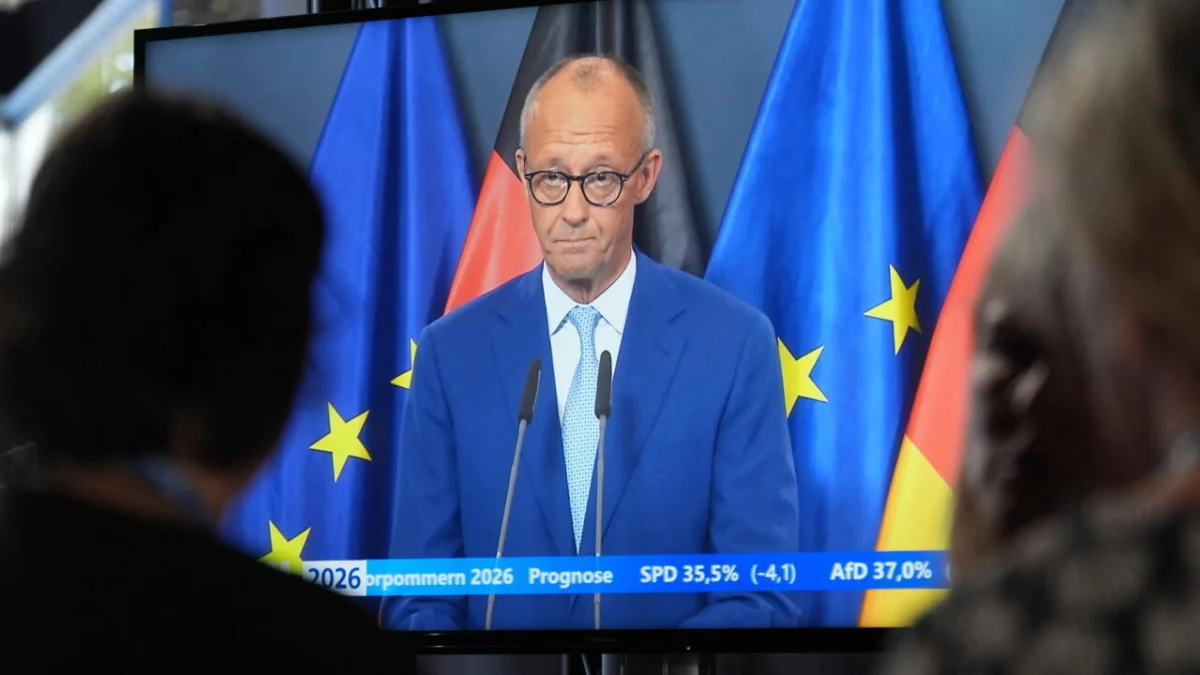
Speaking from a television studio in Schwerin shortly after the results were confirmed, Chancellor Friedrich Merz did not mince words. In a moment of rare political candor, he described the CDU’s performance as a "disaster."
"The voters have spoken with a clear, albeit harsh, voice," Merz said, his expression somber. "We have clearly failed to communicate the necessity of our long-term reforms to the average citizen. However, this is not a time for retreat. It is a time for correction."

Despite calls from some members of the opposition to call a vote of no confidence, the Chancellor reaffirmed his commitment to his agenda. "The reforms we have initiated—the digital transformation of our administration, the diversification of our energy grid, and the strengthening of our defense sector—are essential for Germany’s survival in the next decade. I will not abandon these goals, but we will adapt our implementation strategy to be more inclusive of the people’s concerns."
Conversely, the leaders of the winning parties were quick to demand change. The spokesperson for Die Linke in Berlin labeled the result a "referendum against the austerity of the Merz era," while the AfD leadership in Mecklenburg-Western Pomerania declared that the "old party hegemony is finally coming to an end."
Implications: What This Means for Germany
The political consequences of this election extend far beyond the state capitals.
1. A Stalled Reform Agenda
With these electoral losses, Chancellor Merz faces a difficult path forward. His ability to pass legislation in the Bundesrat (the federal legislative body representing the states) will be significantly curtailed. Opposing parties now have a stronger mandate to block federal initiatives, potentially leading to a period of legislative gridlock in Berlin.
2. Internal Party Pressure
Within the CDU, whispers of dissent are growing. Senior party members are reportedly debating whether Merz’s leadership style—often described as uncompromising and technocratic—is the primary driver of the electoral decline. While no direct challenge to his leadership has been mounted yet, the upcoming party conference in November is now expected to be a high-stakes showdown.
3. The Rise of Political Polarization
The fact that both the far-left and far-right have seen gains suggests that the political center in Germany is hollowing out. This polarization makes coalition building increasingly difficult. If the current trend continues, Germany may face a future of fragile, multi-party governments that are unable to address structural economic challenges, potentially leading to long-term stagnation.
4. International Standing
Germany has long been the anchor of European stability. A weakened Chancellor, preoccupied with internal survival, may have less political capital to influence EU-wide decisions on security and trade. Observers in Brussels are already expressing concern that a distracted Berlin could lead to a vacuum in European leadership.
Conclusion
As the dust settles on the September 20th elections, one thing remains clear: the German electorate is dissatisfied with the status quo. Chancellor Friedrich Merz is at a crossroads. He can either double down on his current policies, risking further isolation, or pivot toward a more populist-friendly approach that prioritizes immediate economic relief over long-term restructuring.
For now, the Chancellor remains in power, but his authority is clearly diminished. The coming months will be a test of his political survival, and the results of this weekend’s voting will undoubtedly be studied as the defining moment of the mid-2020s in German political history. As the country looks toward the future, the question remains: can the current government regain the trust of the people, or is Germany heading toward an era of permanent political instability?