For nearly half a century, the global financial services industry has been anchored by a singular, non-negotiable pillar: "Know Your Customer" (KYC). These regulations, designed to prevent money laundering, fraud, and the financing of terrorism, forced banks to spend billions of dollars perfecting the art of verifying human identity. However, as artificial intelligence transitions from a passive tool to an autonomous actor, a seismic shift is occurring in the halls of global finance.
The industry is now facing a new, more complex mandate: "Know Your Agent" (KYA).
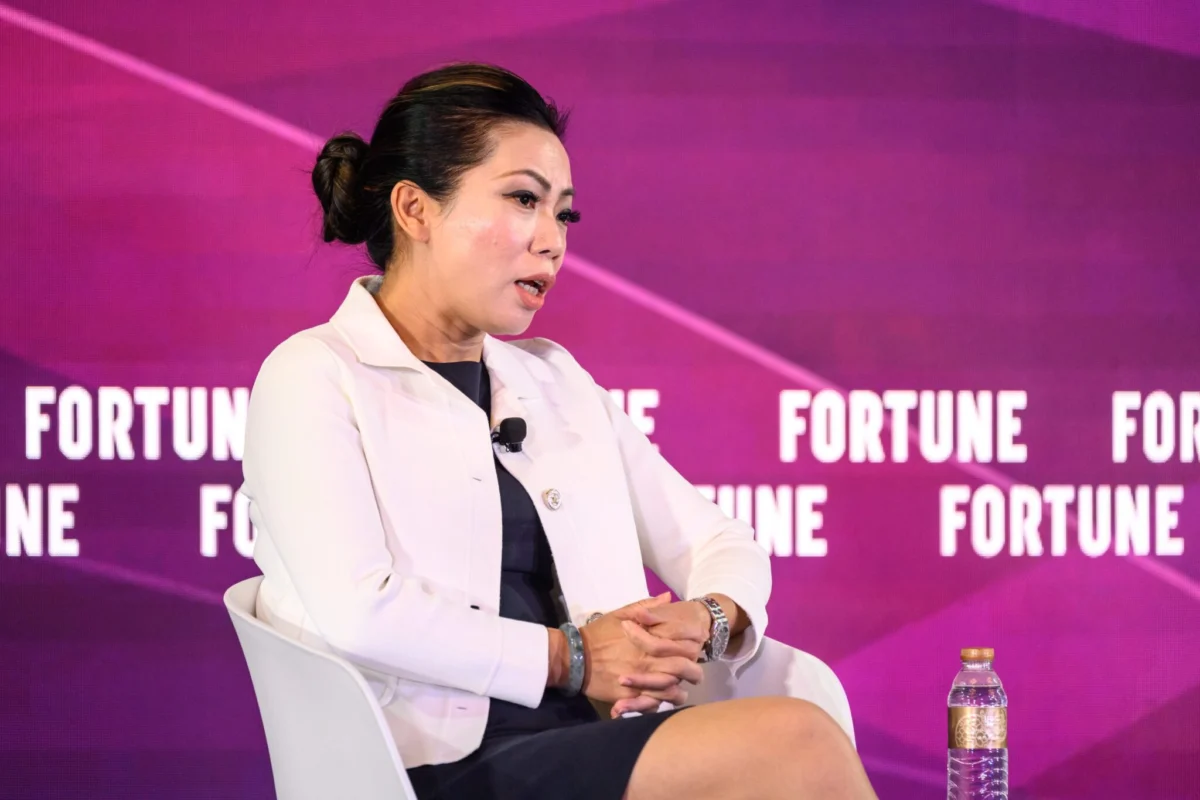
This transition was the focal point of the Fortune Leaders Forum in Macau on September 8, 2024, where industry leaders warned that the infrastructure of global commerce—built by humans, for humans—is fundamentally unprepared for the "agent economy." As AI agents begin to wield digital wallets and make independent purchasing decisions, the financial world must decide who these agents belong to, who authorized them, and who is liable when they fail.
Main Facts: The Rise of Agentic Commerce
The concept of "agentic commerce" refers to a landscape where AI agents—autonomous software entities powered by Large Language Models (LLMs)—act as intermediaries for consumers and businesses. Unlike a traditional algorithm that follows a rigid "if-then" script, an AI agent can interpret a goal (e.g., "Find the most cost-effective supply chain route and execute the contracts"), reason through the steps, and perform financial transactions without direct human intervention at every stage.
At the Fortune Leaders Forum, Zhuoqun Bian, President of Ant Digital Technologies (the enterprise arm of Ant Group), issued a stark warning to the assembled executives. She argued that the traditional KYC framework is no longer sufficient. "In the agent economy, you need to know your agents," Bian stated. "Who’s the agent? Who does it belong to? Who authorized it?"
The scale of this shift is difficult to overstate. According to a landmark January 2024 report by McKinsey & Company, AI agents could orchestrate as much as $5 trillion in global consumer spending by 2030. This "automation curve" suggests that we are moving toward a reality where the majority of digital transactions are "machine-to-machine" rather than "human-to-machine."
However, Bian pointed out a fundamental flaw: current financial infrastructure is anthropocentric. Every credit card network, digital wallet, and banking ledger was designed with the assumption that a human finger is pressing the button or a human face is being scanned for biometric verification. To accommodate agents, Bian insists that the entire global financial infrastructure needs to be "rebuilt or enhanced."
Chronology: The Road to KYA Interoperability
The movement toward a "Know Your Agent" standard has accelerated rapidly in 2024, moving from theoretical academic papers to active industry collaboration.
- January 2024: McKinsey & Company releases its report on "Agentic Commerce," forecasting a $5 trillion market by 2030 and highlighting the friction between autonomous AI and legacy payment systems.
- April 2024: The International Monetary Fund (IMF) publishes a technical note addressing the systemic risks of AI in finance. The note specifically identifies the "probabilistic" nature of AI as a threat to the "deterministic" requirements of payment rails.
- September 6, 2024: Ant International (the global payments arm of Ant Group) announces a landmark collaboration with Mastercard and Visa. The goal is to develop a "Know Your Agent" interoperability framework. This partnership aims to create a standardized way for card networks and digital wallets to recognize and trust AI agents across different ecosystems.
- September 8, 2024: At the Fortune Leaders Forum in Macau, Zhuoqun Bian publicly advocates for the KYA framework, emphasizing that financial institutions must prioritize agent identity with the same rigor—if not more—than human identity.
- Present Day: The collaborative work continues through BuildFin.ai, an industry platform convened by the Monetary Authority of Singapore (MAS). This platform serves as a "regulatory sandbox" where the world’s largest financial players are testing how to tokenize agent identities and permissions.
Supporting Data: The $5 Trillion Disconnect
The impetus for KYA is driven by the sheer projected volume of autonomous transactions. The McKinsey estimate of $5 trillion by 2030 suggests that agents will not just be "helpers" but primary economic drivers.
The Problem of Probability
A significant hurdle identified by the IMF in its April note is the technical mismatch between AI and banking. Traditional payment rails—such as real-time gross settlement (RTGS) systems and card networks like Visa—rely on deterministic rules. In a deterministic system, the same input must always produce the same output to ensure financial stability and legal certainty.
In contrast, AI agents are probabilistic. Because they are adaptive and learn over time, an agent might respond to the same prompt in slightly different ways depending on its latest training data or the context of the conversation. For a bank, this "hallucination" or variance is a nightmare. If an agent is authorized to spend $100 but, due to a probabilistic error, attempts to execute a $1,000 transaction, the accountability structure of the current system breaks down.
The Cost of Error
The industry is also weighing the "scale of impact." In traditional digital banking, a user error usually affects one transaction. In an agentic workflow, a single flawed instruction given to an autonomous agent could result in thousands of erroneous transactions executed in milliseconds before a human can intervene.
Official Responses: Industry Perspectives
The discourse surrounding KYA has drawn input from the world’s most influential financial entities, each focusing on a different aspect of the risk-reward profile.
Ant Digital Technologies: The Infrastructure View
Zhuoqun Bian’s perspective is rooted in the necessity of a new "trust layer." She posits that if a bank cannot verify the "lineage" of an agent—who created it, what its permissions are, and which human is ultimately responsible—the transaction should not be processed. For Ant Digital, the solution lies in blockchain and "tokenized identity," where an agent’s credentials can be verified instantly across global borders.
JPMorgan Private Bank: The Operational View
Benson Wong, Managing Director and Head of Digital at JPMorgan Private Bank, offers a more nuanced take on the technology itself. Speaking on the reliability of agents, Wong noted, "I personally have never come across a situation where the technology of an agent failed us… It’s always around the operating model, the processes, and the compliance and the controls."
Wong’s concern is not that the AI will "break," but that the human-designed systems surrounding the AI are too slow or too rigid to manage it. He highlighted the difference between an agent giving a wrong answer (an "embarrassing moment") and an agent executing a flawed financial workflow ("vastly scaled impacts"). For JPMorgan, the challenge is building "guardrails" that can keep pace with the speed of autonomous decision-making.
The IMF: The Stability View
The IMF’s position is focused on the macro-financial implications. Their researchers argue that "payment rails… rely on predictable rules, legal certainty, and clear accountability structures." Without a KYA framework, the IMF fears that the widespread use of AI agents could introduce "procyclicality" or systemic "flash crashes" in digital markets if thousands of agents react to a market signal simultaneously in an uncoordinated or erroneous fashion.
Implications: The Future of Global Compliance
The shift from KYC to KYA carries profound implications for the legal, technical, and ethical landscape of the 21st century.
1. Redefining Legal Personhood and Liability
One of the most pressing questions is: Who is the "legal person" behind the agent? If an AI agent buys a non-refundable asset that its owner didn’t want, is the owner liable? Is the developer of the LLM liable? Or is the bank liable for failing to "know" the agent? KYA frameworks will likely require a "Human-in-the-Loop" (HITL) registry, where every autonomous agent must be tethered to a verified human or corporate entity that assumes full financial responsibility.
2. The End of Siloed Ecosystems
The collaboration between Ant International, Visa, and Mastercard suggests that KYA cannot be solved by one company alone. For agentic commerce to work, a "trusted agent" must be recognized globally. An agent created in a Singaporean fintech environment must be "knowable" to a merchant in London or a bank in New York. This requires a level of interoperability and data sharing that the financial industry has historically resisted.
3. The Security Paradox
While KYA is intended to increase security, it also creates a new target for cybercriminals. If an agent’s "identity token" is stolen, a hacker could theoretically use that agent’s pre-authorized permissions to drain accounts with a level of autonomy that a stolen credit card doesn’t allow. "Knowing your agent" will therefore require advanced biometric or cryptographic proofs that go far beyond current passwords or two-factor authentication.
4. A New Era of "Super-Compliance"
As Zhuoqun Bian concluded in her Macau address, "You need to know your agents much more than you know your customers." This is because customers are limited by human speed and physical presence. Agents are not. They are tireless, scalable, and operate at the speed of light.
The transition to KYA is not merely a technical update; it is a fundamental re-imagining of trust in the digital age. As we move toward 2030 and the projected $5 trillion agent-led economy, the financial institutions that thrive will be those that stop looking for a human face behind every transaction and start looking for a verified, accountable, and "known" digital mind.