In the annals of marine biology, some discoveries are made by venturing into the unknown, while others are made by revisiting the past with a clearer lens. A stunning revelation has emerged from the depths of the Gulf of Guinea, where a coral reef system—long dismissed as a biological graveyard—has been found not only alive but thriving. The discovery, situated off the coast of Benin, challenges decades of scientific assumptions and suggests that the West African continental shelf may be hiding a vast, undocumented underwater wilderness.
The Ghost of the 1960s: A Premature Eulogy
The story of this "Lazarus reef" begins in the mid-1960s. During an era when marine exploration was focused primarily on identifying productive fishing grounds to support local economies, researchers conducted extensive surveys of the seafloor off the coast of Benin. Armed with the limited technology of the time, these early oceanographers mapped the continental shelf and encountered structural signatures that hinted at the presence of a deep-water coral reef.
However, the analysis of these signatures led to a grim conclusion. Based on the data available at the time, the researchers deemed the reef "probably dead." For over 60 years, this assessment stood unchallenged, codified in historical records and academic archives. The site was effectively written off as a relic of a bygone ecological era—a skeletal formation of calcium carbonate devoid of the vibrant life that characterizes healthy coral ecosystems.
It wasn’t until the early 2020s that a team led by Gérard Zinzindohoué of the Institut de Recherches Halieutiques et Océanologiques du Bénin (IRHOB) decided to challenge this long-standing narrative. Armed with modern sonar technology and the Deep Sea Camera System provided by the National Geographic Exploration Technology Lab, the team set out to determine whether the "dead" reef was truly silent or simply unheard.
The Expedition: A Technological Leap
The journey to rediscover the reef was far from a simple sightseeing mission. "It was not an easy field campaign," Zinzindohoué admitted. The mission was characterized by the grueling reality of deep-sea research: long, volatile days at sea, persistent technical failures, and an agonizing sense of uncertainty.
The turning point came when the team’s sonar began to pick up structural signatures consistent with reef formations. These initial blips provided the first glimmer of hope that the 1960s records had been misinterpreted. To verify these findings, the team deployed an underwater drone equipped with high-definition camera arrays.
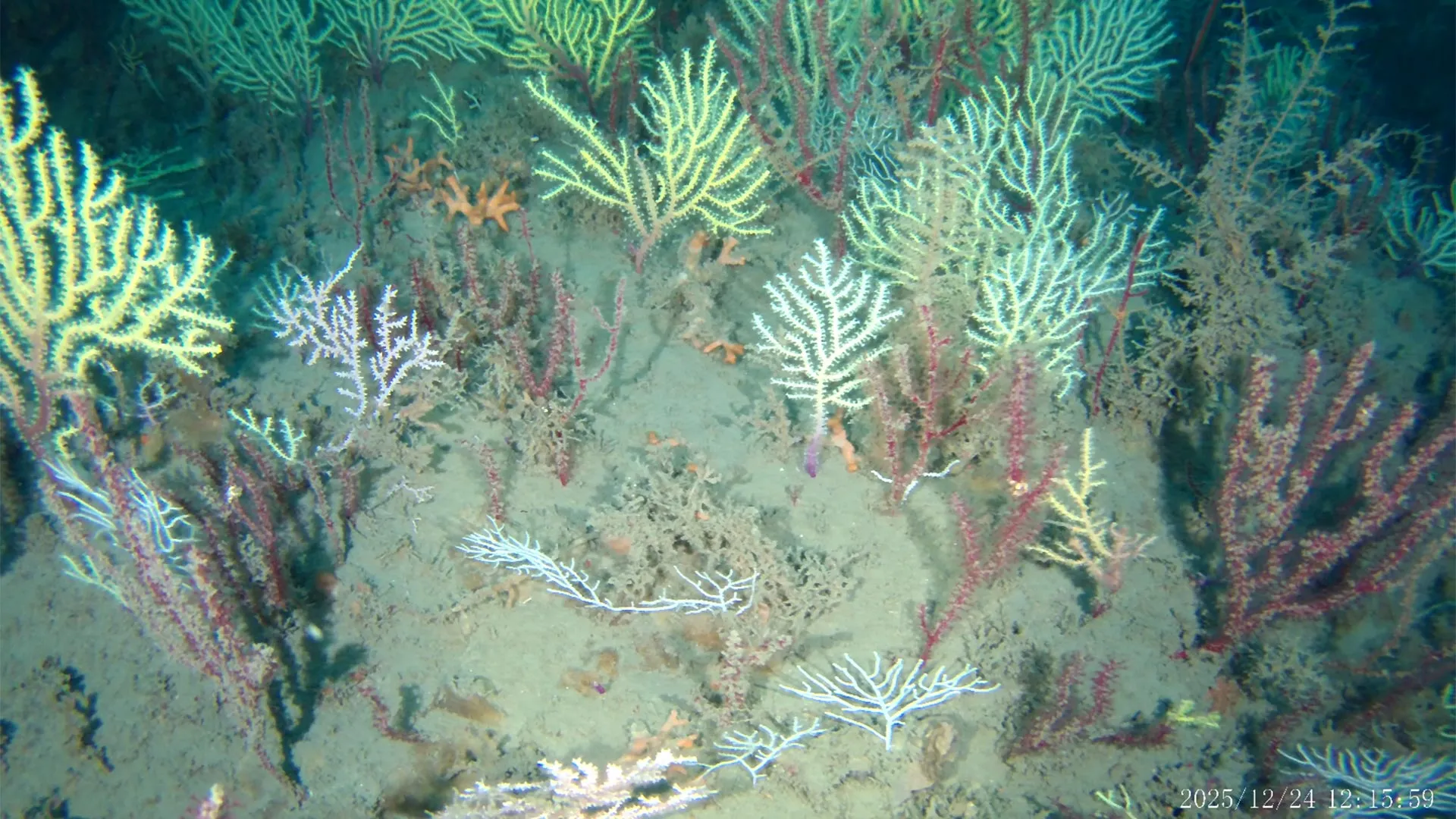
"That was a big moment for us," Zinzindohoué recalled. "Suddenly, we could actually see the seafloor. I still remember seeing those first images. It was a mix of excitement and disbelief, because after all this time thinking about this reef, suddenly there was something real in front of us." What the cameras captured was not a graveyard, but a flourishing mesophotic coral ecosystem.
Understanding Mesophotic Coral Ecosystems
The researchers suspect that the initial 1960s survey failed because it was looking for a traditional, shallow-water reef structure. In reality, the site is a mesophotic coral ecosystem (MCE). Unlike the brightly colored, sun-drenched reefs that define the popular image of coral systems, mesophotic reefs exist in the "twilight zone" of the ocean, typically between 30 and 150 meters deep.
"A mesophotic coral ecosystem lives deeper than the usual shallow coral reefs, in zones where light is much more limited," Zinzindohoué explained. "Unlike typical shallow reefs, it does not always form a single continuous reef structure. Instead, it can appear as patchy or scattered coral communities spread across the seafloor."
These ecosystems are adapted to low-light conditions and play a critical role in marine biodiversity, often acting as refugia for species that cannot survive in warmer, shallower waters. Because they are harder to reach and visually distinct from shallow reefs, they have been historically under-studied, particularly along the West African coast.
Data Analysis: A Thriving Biodiversity Hotspot
The visual evidence gathered by the National Geographic camera systems provided irrefutable proof of life. The survey scanned 11.5 kilometers of the seafloor, identifying two primary areas where healthy coral colonies had established themselves on rocky outcrops.
The biodiversity found within these patches was remarkable. Researchers identified eight distinct types of coral, serving as the foundation for a vibrant community of fish. The reef provides shelter and feeding grounds for a variety of species, including:
- Golden African snappers
- Blackbar soldierfish
- Guinean angelfish
- West African goatfish
- Monrovia doctorfish
- Three-banded butterflyfish
- Two distinct species of damselfish
These species rely on the structural complexity of the coral to evade predators and hunt for food. The discovery suggests that the reef acts as an oasis in the otherwise relatively barren sandy stretches of the continental shelf.
Implications for Marine Conservation and Future Research
The discovery in Benin is more than just a successful survey; it is a wake-up call for the scientific community. "To our knowledge, this is the first confirmed record of a living mesophotic coral ecosystem on the Gulf of Guinea continental shelf," Zinzindohoué stated.
He argues that this finding is likely a reflection of a systemic knowledge gap regarding coastal regions in West Africa. The fact that researchers were able to locate a healthy ecosystem in a place documented as "dead" for over half a century suggests that there may be countless other undocumented or forgotten reefs waiting to be mapped.
However, the researchers are careful to emphasize the need for caution. While the initial footage is promising, it is only a preliminary look. The team has not yet collected physical biological samples, meaning that the specific identification of coral species remains provisional based on visual data. Furthermore, it is currently impossible to determine whether the corals were truly dead in the 1960s and have since recovered, or if the original survey simply lacked the resolution to distinguish between dead substrate and a healthy, patchy mesophotic community.
The 40-Kilometer Mystery
Perhaps the most tantalizing aspect of the discovery is the potential scale of the site. The historical reports from the 1960s suggested that the reef might be part of a massive, continuous coral barrier extending roughly 40 kilometers parallel to the Benin coastline. The current team has only surveyed a tiny fraction of this area.
"If I had all the grant money in the world, the first thing I would do is return to the site with a proper scientific diving and sampling program," said Zinzindohoué. "These are ecosystems that are still poorly known in this part of the world, and every additional piece of information matters."
For Zinzindohoué, the true value of the reef lies in its potential as a historical archive. By studying the growth patterns and the chemical composition of the corals, scientists hope to piece together how the ocean in the Gulf of Guinea has shifted over the last 60 years. Understanding these changes is vital for predicting how climate change will affect West African marine life in the coming decades.
As the team prepares for potential future expeditions, the scientific community is left with a profound realization: the ocean remains the planet’s final, greatest frontier. When we look at the sea with old eyes, we see ghosts; when we look with new technology, we find the vibrant, living future. The Benin reef is not just a discovery—it is an invitation to look again at everything we thought we already knew.