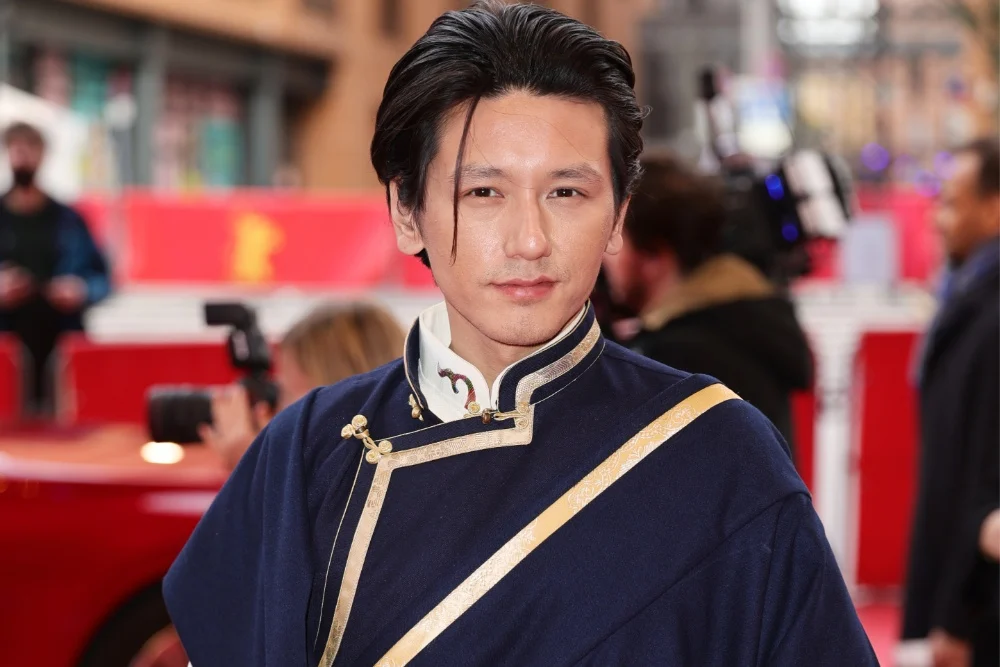
As the film industry descends upon the Toronto International Film Festival (TIFF), the spotlight has found a singular, rising talent: Tenzin Dalha. While currently commanding attention as part of the high-profile Apple Original film Tenzing, a new, strategic revelation has shifted the narrative. Producers of the upcoming Bengali-language thriller Chheledhora have officially confirmed that Dalha will star as the male lead opposite the formidable Swastika Mukherjee.
This announcement, timed to coincide with the actor’s global emergence, marks a significant moment for Indo-American production house Sita22 Films. It weaves together the trajectory of a breakout star with a project that seeks to redefine the boundaries of regional Indian cinema.
The Intersection of Two Worlds: From Mount Everest to Ziro Valley
The news of Dalha’s casting in Chheledhora was kept under tight wraps during the initial project announcement earlier this year, which highlighted only Mukherjee’s involvement. This calculated silence was a deliberate move by the production team, designed to allow Dalha’s international profile to crystallize before introducing him to audiences in a grittier, more localized capacity.
"We made a very conscious decision not to announce Tenzin when we first revealed Chheledhora," said Ann Mukherjee, founder of Sita22 Films. "We knew he had this extraordinary international moment ahead of him with Tenzing, and TIFF felt like exactly the right time for audiences to discover another side of him. Tenzin possesses a quiet emotional intelligence and restraint that makes him a fascinating counterpoint to Swastika’s tremendous emotional force."
For Dalha, the timing feels serendipitous. "It feels particularly special to be discussing one project while at the festival for another," he noted. "They are completely different films, yet both are rooted in human grit, empathy, and the lengths to which humans are capable of going for the people they love."
Chronology of a Rising Star
Tenzin Dalha’s current momentum is no overnight success story; it is the culmination of careful craft and project selection.
- Early Development: Dalha began his journey, building a reputation for nuanced performances that favored emotional depth over conventional tropes.
- The Tenzing Breakthrough: His casting in Jennifer Peedom’s Tenzing propelled him onto the global stage. The film, a gala presentation at TIFF, stars Genden Phuntsok as the legendary mountaineer Tenzing Norgay. With a supporting cast that includes Hollywood heavyweights Tom Hiddleston, Willem Dafoe, and Caitríona Balfe, the project is positioned as a major cultural event. It hits theaters on October 9, followed by an Apple TV+ global rollout on October 16.
- The Chheledhora Reveal: While filming Tenzing brought him international acclaim, the quiet, intense production of Chheledhora in the Northeast of India allowed him to sharpen his teeth in a different, more intimate genre. The project is currently in the final stages of post-production.
Anatomy of a Thriller: The Narrative Fabric of Chheledhora
Chheledhora, written and directed by Shieladitya Moulik—the visionary behind acclaimed films like Sweater and Surjo—is a narrative experiment that challenges the conventions of the "missing child" sub-genre.
The Plot
The story is set in motion by a desperate act of parental defiance. Swastika Mukherjee portrays Brishti, a divorced mother who "steals" her own daughter for a birthday outing. What begins as a rebellious bid for connection devolves into a nightmare when the child is genuinely abducted. This catalyst forces a group of deeply flawed adults into an erratic, high-stakes journey through the rugged landscapes of Arunachal Pradesh.
The Moral Compass
One of the most compelling aspects of Moulik’s script is the inversion of the hero archetype. As the adults succumb to their own biases and failings, the children within the story gradually emerge as the true moral compass. It is a psychological thriller that uses the physical terrain of the Ziro Valley to mirror the internal, fractured states of its characters.
Official Perspectives: A Philosophy of Global-Local Cinema
The production of Chheledhora is not merely an artistic endeavor; it is a manifesto for how independent production houses can navigate the global market.
"The idea was never to make a Bengali film that simply happens to travel to the Northeast," says Jitin Hingorani, who serves as both co-producer and creative producer, while heading content and development at Sita22 Films. "The journey changes these characters, and the Northeast becomes part of the film’s emotional language."
Hingorani emphasizes that the intentional casting of Tenzin Dalha and Swastika Mukherjee—two performers from distinct cinematic and cultural backgrounds—was designed to create a specific, palpable tension on screen. "Pairing them gives us two performers coming from very different cinematic and cultural energies," he explains. "That tension is part of what makes the film so exciting."
Ann Mukherjee echoes this sentiment, framing the film as part of a larger, ambitious goal for Sita22 Films. "We want to tell stories that are deeply rooted in India but aren’t constrained by conventional ideas of language, geography, or identity," she states. "At Sita22, our mandate is to find stories that can be hyper-local and super-global at the same time, and Chheledhora embodies that philosophy beautifully."
Implications: Changing the Landscape of Indian Regional Cinema
The implications of Chheledhora are twofold: it signals a shift in the production standards of Bengali cinema and demonstrates the power of international collaboration in local storytelling.
Breaking Linguistic Barriers
By utilizing the landscape of Arunachal Pradesh and integrating the cultural texture of India’s Northeast into a Bengali-language narrative, the film challenges the traditional "Bollywood vs. Regional" dichotomy. It asserts that a film can be deeply specific to a region while remaining accessible to a global audience.
The Technical Edge
The production has prioritized high-caliber technical execution, evidenced by the involvement of Italian cinematographer Vincenzo Condorelli. His lensing of the Ziro Valley is expected to provide more than just a backdrop; the weather, the geography, and the isolation are intended to function as characters themselves. Dalha noted the impact of the environment: "Shooting in Ziro and Arunachal Pradesh provided the perfect backdrop for a thriller, and the weather set the tone right for the ambience."
The "Broken" Character Archetype
The film’s refusal to lean into clear-cut "good vs. bad" dynamics reflects a growing sophistication in Indian cinema. Dalha, reflecting on his role, praised Moulik’s writing for its "understanding of humans as imperfect complex beings." By focusing on characters who make "questionable choices for their loved ones," the film aims to foster a more profound, uncomfortable connection with the audience.
Conclusion: A Future Built on Grit
As Tenzin Dalha stands at the center of two disparate but equally intense projects, his career reflects a broader trend in the film industry: the rise of the actor-as-bridge. Whether he is portraying the stoic determination of a mountaineer or the complex, flawed protagonist of a dark thriller, Dalha represents a new generation of talent that is unafraid to traverse international borders and genre lines.
With Chheledhora moving through post-production, audiences are left to anticipate a film that promises to be as haunting as it is heartfelt. If the chemistry between the "force of nature" that is Swastika Mukherjee and the "emotional intelligence" of Tenzin Dalha delivers on its promise, Sita22 Films may well have created a new benchmark for how we define "global" cinema in the modern age.
For now, the world watches Toronto, waiting to see what happens when the dust of the Everest expedition settles and the, at times, dangerous, at times beautiful, journey through the Ziro Valley begins.