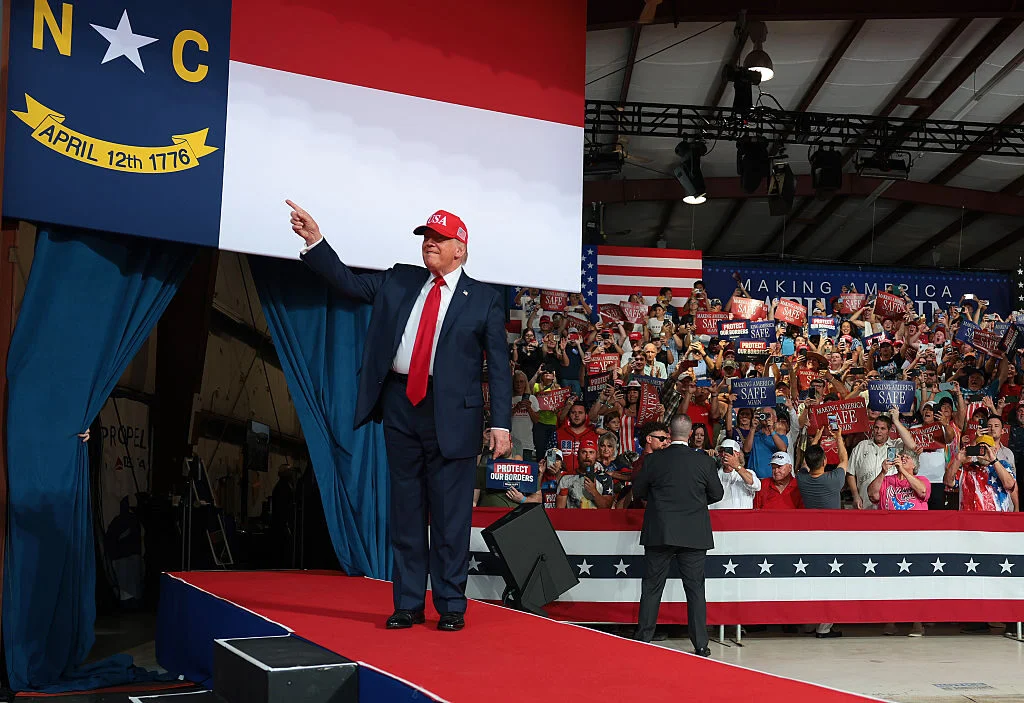
GASTONIA, N.C. — Facing persistent national economic headwinds and a challenging polling deficit in a crucial battleground state, President Donald Trump headlined a high-stakes campaign rally in Gaston County on Wednesday evening. The event aimed to energize the Republican base and boost the candidacy of former Republican National Committee Chair Michael Whatley in his uphill battle for the United States Senate against former Democratic Governor Roy Cooper.
Speaking to thousands of supporters gathered in deep-red Gastonia, just west of Charlotte, Trump attempted to nationalize the contest, urging loyalists to view the upcoming midterm election as a direct referendum on his own presidency. However, the rally occurred against a backdrop of anxiety among congressional Republicans, who are contending with voter frustration over elevated consumer prices, volatile energy markets linked to ongoing foreign policy tensions in Iran, and the trailing position of their endorsed candidate in North Carolina.
With just 48 days remaining before Election Day, the race to succeed retiring Republican Senator Thom Tillis has emerged as a central battleground in the struggle for control of the Capitol. For Democrats, who need a net gain of four seats to secure a Senate majority, North Carolina represents their top pickup opportunity nationwide. For Republicans, holding the seat is vital to preserving their pathway to a legislative majority.
Chronology of the 2026 North Carolina Senate Contest
The trajectory of the North Carolina Senate race shifted significantly following the retirement announcement of two-term Republican Senator Thom Tillis. Seeking to keep the seat in GOP hands, President Trump personally recruited Michael Whatley, who had recently served as chair of the Republican National Committee after previously leading the North Carolina Republican Party.
Whatley’s entry was designed to consolidate the party’s grassroots structure and leverage Trump’s endorsement to build early momentum. However, the political landscape transformed when Democrats successfully recruited former Governor Roy Cooper. Having completed two terms as governor in addition to serving four terms as the state’s attorney general, Cooper brought near-universal statewide name recognition and a formidable campaign fundraising network to the contest.
Throughout late summer, polling consistently showed Cooper maintaining a resilient single- to double-digit lead over Whatley, prompting national GOP strategists to reorganize campaign operations and direct cash infusions into the state.
┌─────────────────────────────────────────────────────────────────────────┐
│                    2026 NC SENATE CAMPAIGN TIMELINE                     │
├───────────────┬─────────────────────────────────────────────────────────┤
│ Early 2026    │ Sen. Thom Tillis announces retirement from U.S. Senate. │
│ Spring 2026   │ Trump recruits former RNC Chair Michael Whatley to run. │
│               │ Former Gov. Roy Cooper enters race for Democrats.       │
│ Mid-2026      │ Cooper establishes significant fundraising lead         │
│               │ ($34M raised vs. $11M for Whatley through June 30).     │
│ Sept. 10, 2026│ Elon Univ./YouGov Poll shows Cooper leading by 11 pts. │
│ Sept. 16, 2026│ Trump appeals to voters at Dallas GOP Midterm Convention│
│               │ to vote as if he were on the ballot.                    │
│ Late Sept.    │ Trump delivers major rally in Gastonia, NC, attacking   │
│ (48 Days Out) │ Cooper on crime and threatening new European tariffs.   │
└───────────────┴─────────────────────────────────────────────────────────┘
The rally in Gastonia marked a deliberate escalation in national GOP efforts to reverse Whatley’s polling trajectory. It followed a speech delivered by Trump the previous week at the Republican Midterms Convention in Dallas, where the president began laying the groundwork for a full-scale mobilization of his core supporters in off-year contests.
Supporting Data: Polling Metrics, Campaign Finances, and Crime Statistics
Quantitative indicators from polling, campaign finance disclosures, and state crime data highlight the structural challenges facing the Whatley campaign in North Carolina.
Polling Dynamics
Recent public survey data indicates that Cooper has maintained a stable lead over Whatley throughout the late summer campaign swing.
- Elon University / YouGov Survey (Released Sept. 10): Shows Cooper holding an 11-point lead among likely voters statewide.
- Six-Poll Aggregate Average (Post-Aug. 6): Gives Cooper an average lead of 8.3 percentage points.
- Nonpartisan Race Ratings: Inside Elections with Nathan L. Gonzales rates the contest as "Tilt Democratic," reflecting the state’s potential to flip despite its recent red-leaning presidential history.
Campaign Finance Disclosures
Federal Election Commission (FEC) reports through the end of the second quarter (June 30) demonstrate a vast financial imbalance between the two campaigns, presenting a distinct disadvantage for Whatley in purchasing television and digital advertising in major North Carolina media markets.
| Candidate | Party | Q2 Total Raised | Cash on Hand (July 1) |
|---|---|---|---|
| Roy Cooper | Democrat | $34.0 Million | $21.0 Million |
| Michael Whatley | Republican | $11.0 Million | $3.5 Million |
While national conservative super PACs have pledged late-stage cash infusions to bridge the gap, Cooper’s substantial war chest has allowed the Democratic campaign to maintain continuous broadcast dominance in Charlotte, Raleigh-Durham, and Greensboro.
Fact-Checking Crime Data Claims
During his rally address, President Trump targeted Cooper’s public safety record, asserting that North Carolina had become "one of the most violent and one of the worst in the whole nation" under Democratic stewardship.
An examination of official public safety records from the North Carolina State Bureau of Investigation (NCSBI) provides nuance regarding public safety trends during Cooper’s gubernatorial tenure:
- 2022 to 2023: The state’s overall crime index rate per 100,000 residents increased by 2.3 percent.
- 2023 to 2024: Over Cooper’s final two full years in office, the statewide crime index rate declined by 4.2 percent.
While localized urban crime remains a primary focus for suburban voters, statewide statistical benchmarks show overall crime rates trending downward toward the end of Cooper’s executive tenure, contradicting claims of run-away violent crime expansion.
Official Responses and Campaign Rhetoric
The rally in Gastonia, alongside statements issued by party leaders on Capitol Hill and Democratic campaign operatives, highlighted divergent political strategies heading into the final six weeks of the election.
Trump Attacks Cooper, Elevates Whatley
Addressing the crowd in Gastonia, Trump praised Whatley’s administrative capability while launching a direct attack on Cooper’s moderate credentials.
"We’re going to elect one of the greatest men that I’ve ever worked with in government, Michael Whatley, to go and become the United States senator," Trump declared to cheers from the crowd. "Nobody used to think of North Carolina as a dangerous state, and now it’s one of the most violent and one of the worst in the whole nation. And it all started with Cooper."
Trump forcefully rejected Cooper’s image as a pragmatist, seeking to link him to the national progressive platform:
"Right here in Charlotte, you’ve seen the deadly consequences of weak, cowardly sellouts to the radical left, like Cooper," Trump told the audience. "He tries to pretend he’s a moderate. He’s not. He’s a radical-left, weak person."
Trump also repeated an explicit appeal he first made to supporters at the GOP convention in Dallas:
"In this election, I’m asking you to pretend I’m on the ballot just one more time. I’m not bragging, but when I’m on the ticket, Republicans have always done really well. They go out, they vote — everybody gets elected."
Whatley Aligns closely with Presidential Platform
Taking the stage alongside Trump, Whatley signaled his intention to remain fully aligned with the president’s agenda rather than establishing distance to appeal to swing voters.
"I’m running for Senate because I want every one of your kids and every one of your grandkids to live the American Dream, just like I have here in North Carolina," Whatley stated. "And I am excited about fighting for North Carolina, for every family, for every community, and fighting alongside the greatest president of our lifetime, Donald J. Trump."
            WHATLEY STRATEGY                 COOPER STRATEGY
       ┌────────────────────────┐       ┌────────────────────────┐
       │ • Deep alignment with  │       │ • Focus on cost of     │
       │   Trump core agenda.   │       │   living & inflation.  │
       │ • Paint Cooper as a    │       │ • Highlight 20+ years  │
       │   "radical progressive"│       │   statewide service.   │
       │ • Rely on turn-out in  │       │ • Target swing suburban│
       │   rural, conservative  │       │   independents around  │
       │   strongholds.         │       │   urban centers.       │
       └────────────────────────┘       └────────────────────────┘
Democratic Party Response
Democrats countered the GOP rhetoric by framing the election around corporate accountability and daily economic costs, pointing to Whatley’s previous legal and lobbying background.
"North Carolina families deserve a senator who knows their job is to bring down costs, not a politician like Whatley who is beholden to special interests and fighting only to boost his own stock portfolio," said Mallory Payne, senior communications adviser for the North Carolina Democratic Party.
Tillis Warns of Unforgiving Economic Reality
On Capitol Hill earlier in the day, outgoing Republican Senator Thom Tillis offered a sober analysis of the macro-political environment, pointing out that national economic pressures—such as elevated fuel prices, broader inflation, and international conflict with Iran—traditionally penalize the party in power regardless of localized messaging.
"It’s really difficult to see, in 48 days, how you’re going to have a discernible impact on energy," Tillis told reporters. "The election’s 48 days from now. Can you have some downward impact? Maybe, but the Iranians are not dumb. They know we’ve got an election, and my guess is they’re going to do everything they can to prevent us from having any discernible price decrease beforehand."
Tillis referenced historical precedent regarding midterm penalty effects:
"High prices affected the Democrats in the Biden midterms. At the end of the day, it’s the economy. When it’s good, the incumbent party benefits from it. When it’s bad, they don’t."
Foreign Trade Diversions
Before departing Charlotte Douglas International Airport for the rally site, Trump introduced new trade policy proposals to reporters, raising the prospect of fresh tariffs on European goods if regional alliances shift.
"If Canada becomes an associate member of the European Union, and if I think it’s at all a hostile act, I will put very serious tariffs or stop trading with Europe on many things," Trump stated, underscoring his ongoing reliance on protectionist trade measures as a policy centerpiece.
Strategic Implications for the 2026 Midterm Landscape
The dynamics playing out in North Carolina reflect broader structural pressures shaping the struggle for control of the U.S. Senate.
                  ┌────────────────────────────────────────┐
                  │       U.S. SENATE BATTLEGROUND         │
                  │   Democrats need +4 seats for majority │
                  └───────────────────┬────────────────────┘
                                      │
                                      ▼
                  ┌────────────────────────────────────────┐
                  │         NORTH CAROLINA (TILTS DEM)     │
                  │   • Key pickup opportunity for Dems.   │
                  │   • Cooper leads polls by ~8.3 points. │
                  │   • Deficits in GOP campaign finance.  │
                  └───────────────────┬────────────────────┘
                                      │
                 ┌────────────────────┴────────────────────┐
                 ▼                                         ▼
┌─────────────────────────────────┐       ┌─────────────────────────────────┐
│     NATIONAL GOP HEADWINDS      │       │     HISTORICAL GOP LEANINGS     │
├─────────────────────────────────┤       ├─────────────────────────────────┤
│ • Inflation & high energy costs │       │ • Voted Trump in 2016, 2020,    │
│ • Conflict in Iran & tariffs    │       │   and 2024 presidential races.  │
│ • Soft support among suburban   │       │ • No Dem elected to Senate from │
│   independent voters            │       │   North Carolina since 2008.    │
└─────────────────────────────────┘       └─────────────────────────────────┘
1. The Key Battleground for the Senate Majority
With a narrow margin separating the two parties in Washington, North Carolina stands as arguably the most critical defensive perimeter for Republicans. A loss in North Carolina would make it mathematically difficult for the GOP to hold their Senate majority, requiring them to compensate by flipping seats in far tougher battlegrounds elsewhere.
2. Presidential Coattails vs. Midterm Penalty Effects
Trump’s request for voters to "pretend I’m on the ballot" highlights the core dilemma for Republicans in off-year elections. While Trump’s personal presence drives high voter turnout among rural, non-college-educated conservative demographics, it also risks mobilizing opposition voters in rapidly growing suburban corridors like Mecklenburg and Wake counties.
Whether presidential intervention can overcome public frustration regarding daily expenses—specifically gas prices and grocery bills—remains the central question of the campaign’s closing stretch.
3. North Carolina’s Split Political Identity
North Carolina remains one of the nation’s most politically complex states. While it has backed Republican candidates in three consecutive presidential elections, it has simultaneously demonstrated a willingness to elect Democrats to statewide executive office, as evidenced by Cooper’s two successful gubernatorial runs.
Should Cooper maintain his lead through Election Day, it will mark the first time a Democrat has won a U.S. Senate race in North Carolina since 2008, signaling potential long-term electoral shifts in the Sunbelt as suburban populations expand.
Trump confirmed in his closing remarks in Gastonia that he intends to make additional visits to North Carolina before polls close, confirming that both major national parties view the Tar Heel State as an essential battleground that could dictate the balance of power in Washington for years to come.